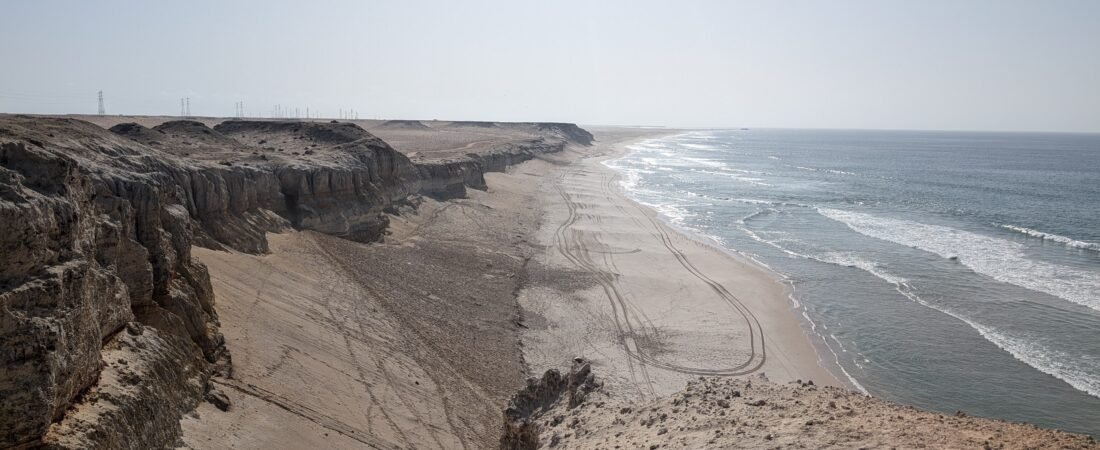
A windswept guide to Morocco’s southernmost escape — where the desert slips into the ocean, and time moves like the tide.
The wind finds you before the land does. It comes through the car window as a warm, salt-scented breath, carrying grains of Sahara sand that sparkle against the blue Atlantic. You are driving south — past the last town, past the last gas station with a Coca-Cola sign, past the point where the map starts to feel like a promise — and then the lagoon opens up: a sheet of turquoise glass protected from the ocean by a thin, golden finger of earth. This is Dakhla. It does not ask you to relax. It asks you to feel small, and grateful for it.
“Dakhla is not a place you rush. It is a place you let happen to you.”
If Morocco were a song, Dakhla would be the long instrumental at the end — the part where the noise drops away and something deeper takes over. It sits on a 40-kilometer peninsula in Morocco’s far south, more than 1,700 kilometers from Tangier, so close to Mauritania that the desert begins to feel like the sea and the sea begins to feel like the desert. For more inspiration on where this place fits into the country’s larger story, start with our complete destinations guide and our visual Morocco photo gallery.
Pace & Vibe: What This Guide Recommends
Best for: Kitesurfers, windsurfers, desert lovers, couples seeking quiet, and anyone who wants Morocco without the crowds.
Recommended pace: Five to seven days. Dakhla is too far for a weekend, and the magic reveals itself only when you stop trying to see everything.
Overall feel: Wild, spacious, and unexpectedly tender. The wind is constant, the light is cinematic, and the silence at night is so complete it feels like a presence.
Budget: Mid-range. Kite camps are the biggest expense; food and local excursions are affordable. Plan roughly €70–150 per day per person.
What Makes Dakhla Unlike Anywhere Else in Morocco
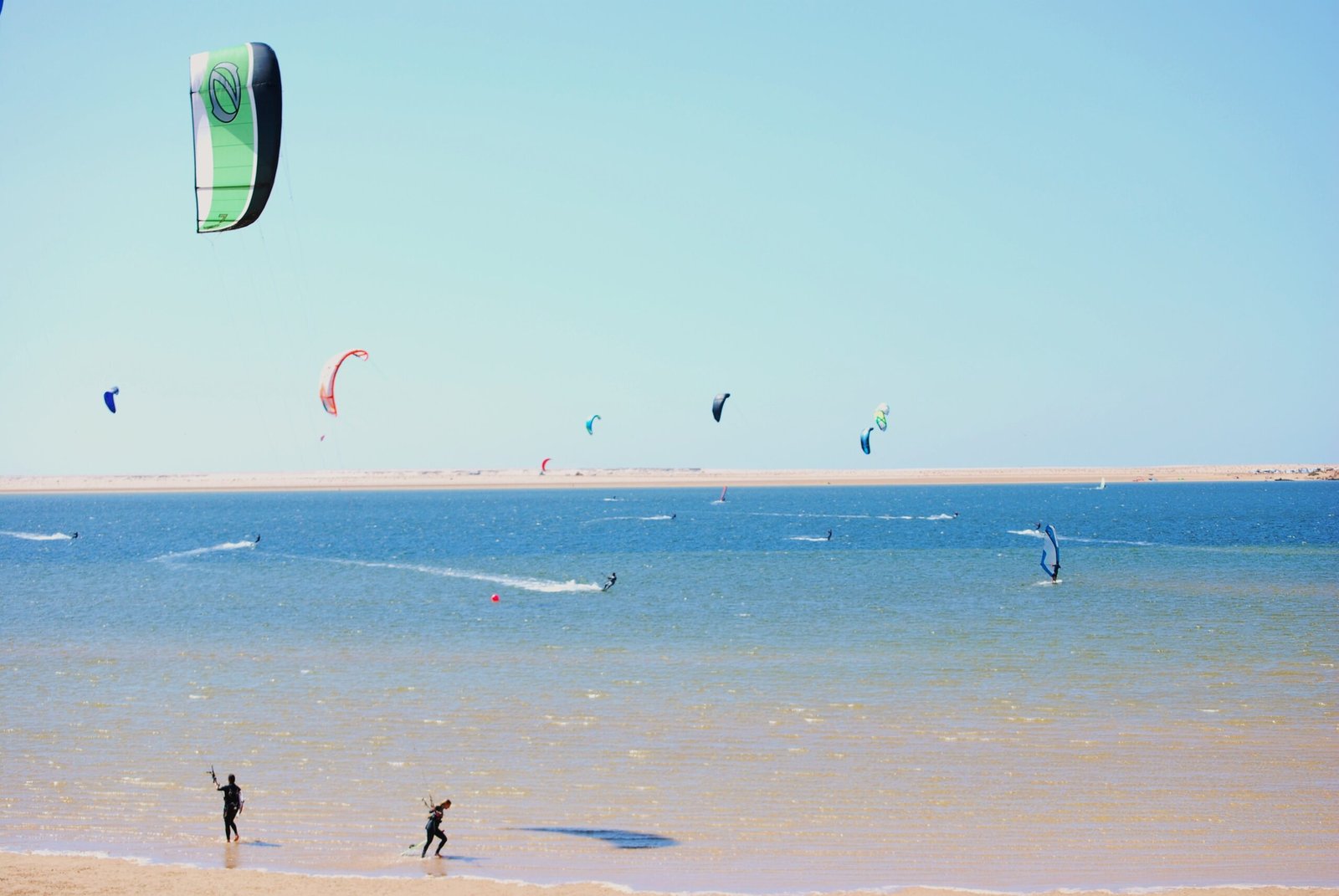
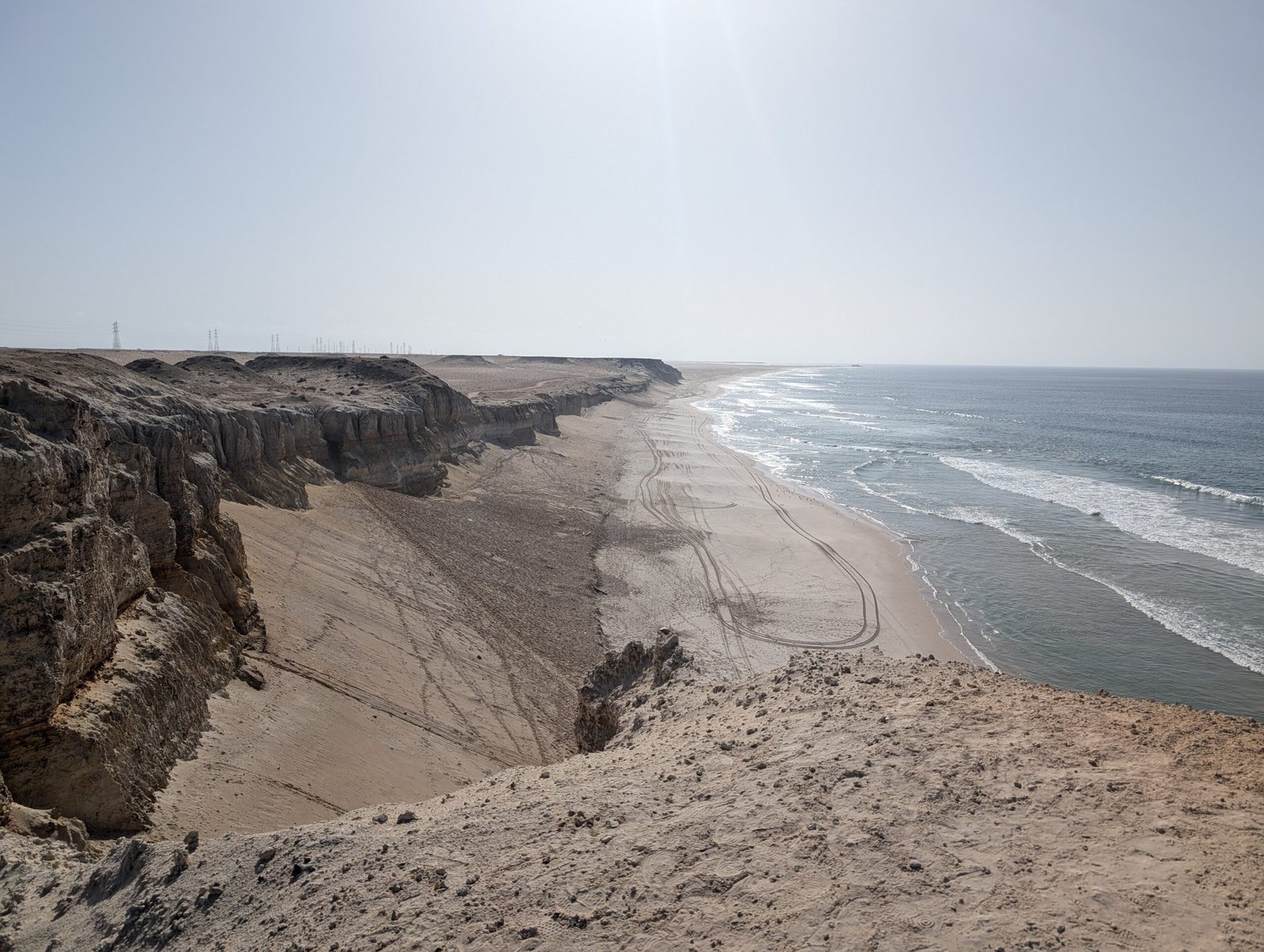
Nowhere else in Morocco does the landscape shift so dramatically in such a small space. On one side of the peninsula, the Atlantic rolls in with long, powerful swells. On the other, the Dakhla lagoon stretches for dozens of kilometers — flat, shallow, and protected from the open ocean by the land itself. The result is one of the world’s best flat-water kitesurfing and windsurfing playgrounds, with trade winds that blow reliably for much of the year.
But Dakhla is not only for wind worshippers. The same geography creates a strange, beautiful stillness. You can stand on a dune and watch flamingos take off from the lagoon. You can eat oysters harvested a few hours earlier while your feet are still in the sand. You can drive until the road ends, then keep driving on sand, until the only things left are sky, wind, and the sound of your own heartbeat.
The human layer matters too. Dakhla is part of the Sahrawi-influenced south, where Hassaniya Arabic and traditional nomadic culture mix with Moroccan coastal life. The people here are reserved at first, generous once trust is built, and deeply connected to a landscape that demands respect.
A Brief History: From Villa Cisneros to the Edge of the Sahara
Dakhla’s modern story begins in 1884, when Spanish settlers established a small fishing post here and named it Villa Cisneros. For decades it remained an isolated outpost, a place of fishermen, missionaries, and traders moving between the Sahara and the Canary Islands. The old Spanish church still stands near the town center, a quiet reminder of that era.
In 1975, as Spain withdrew from Western Sahara, Morocco’s Green March brought thousands of civilians south to assert the country’s claim to the territory. Dakhla became part of Morocco’s administrative south and, eventually, the capital of the Dakhla-Oued Ed-Dahab region. Today it is a growing hub for fishing, tourism, and renewable energy, with a population of roughly 70,000.
The deeper history belongs to the nomadic Sahrawi tribes who moved through these lands for centuries, following water, grazing, and seasonal winds. Their influence is still visible in the tea rituals, the tents that appear on the outskirts of town, and the unhurried rhythm of daily life.
Top Things to Do in Dakhla
1. Kitesurf or Windsurf the Lagoon
This is the headline act, and for good reason. The lagoon’s shallow, flat water and consistent north-northeast trade winds create ideal conditions for beginners and advanced riders alike. Schools and camps line the shore, offering gear rental, lessons, and the simple luxury of launching your kite a few steps from your room.
2. Take a 4×4 to the White Dune
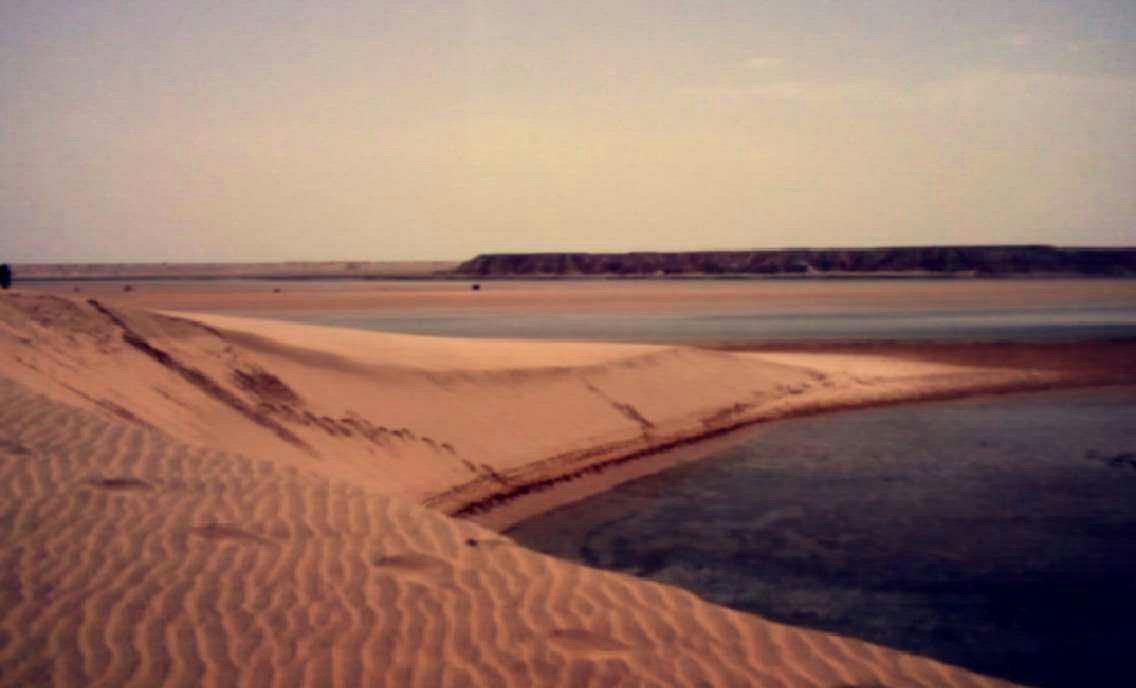
About 20 kilometers from town, the Dune Blanche rises from the lagoon like a crescent moon made of sand. At high tide, water surrounds it, giving the illusion of a floating island. At low tide, you can walk around it, swim in the shallow pools, and take photographs that do not look real. Most tours combine the dune with a stop at Imlili.
3. Visit the Imlili Saltwater Oasis
Roughly 100 kilometers south of Dakhla, Imlili feels like a secret. Here, underground freshwater springs feed a series of saltwater pools in the middle of the desert. Small fish — reportedly the Guinea tilapia — survive in the pools, and migratory birds stop here on their long journeys. It is a place that makes you understand how life finds a way in the harshest landscapes.
4. Eat Oysters Straight From the Farm
Dakhla produces some of Morocco’s finest oysters, farmed in the clean, nutrient-rich waters of the lagoon. A visit to an oyster farm — often combined with a lagoon boat trip — lets you taste them minutes after they leave the water, briny and cold, with lemon and sea air.
5. Spend a Night Under the Stars
Whether you camp on the lagoon shore or deeper in the dunes, the night sky here is extraordinary. With almost no light pollution, the Milky Way arches overhead so clearly it feels close enough to touch. The silence is broken only by wind, waves, and the occasional call of a bird.
Where to Stay in Dakhla
Most visitors choose between kite camps on the lagoon and hotels in or near town. Each has its own rhythm.
Dakhla Attitude — One of the best-known kitesurf camps, with bungalows right on the water, a restaurant, and an easygoing community vibe. Best if you want to kite every day and make friends by sunset.
Dakhla Club Hotel & Spa — A larger hotel option with a pool, spa, and direct lagoon access. Good for travelers who want comfort and wind sports in one place.
La Crique Hotel & Spa — Reportedly one of the more stylish boutique options, with ocean views and a quieter atmosphere.
Sahara Regency Hotel — A long-standing city hotel that works well for travelers who prefer to be in town and explore local restaurants.
PK25 / Lagon Energy — Smaller kite camps and eco-lodges along the lagoon, ideal for dedicated riders and those who want to wake up next to the water.
Where to Eat in Dakhla
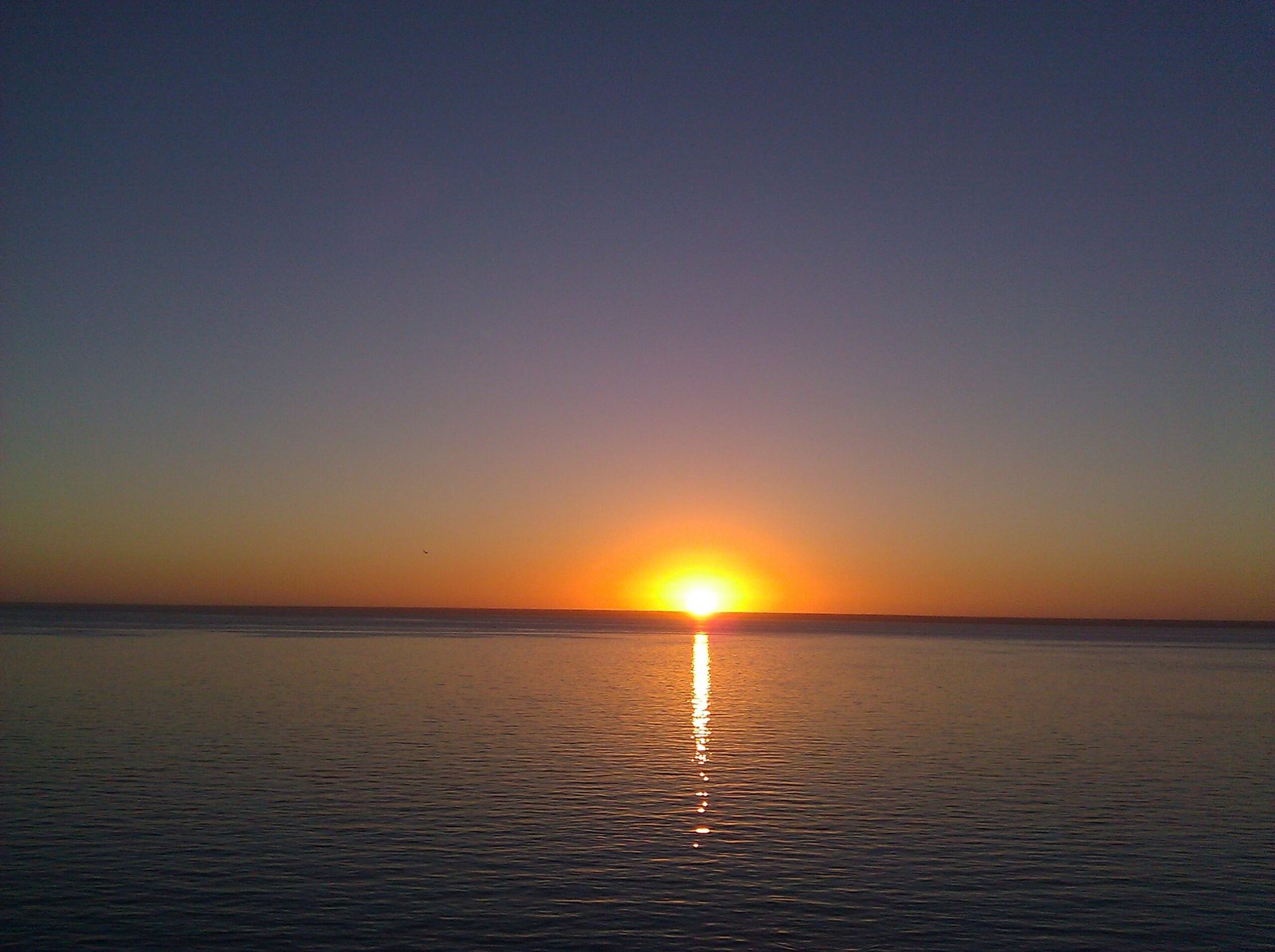
Dakhla’s food is simple, fresh, and rooted in the sea. You do not come here for fine dining; you come here for fish that was swimming this morning.
Beachfront fish grills — Several small restaurants in town and along the coast serve grilled catch of the day, calamari, and shrimp with bread, salad, and harissa. Order what looks fresh, sit outside, and let the meal take two hours.
Oyster farm restaurants — The best way to experience Dakhla’s oysters is at the source. Some lagoon tours include a tasting stop where you can eat oysters, clams, and sea snails with your feet in the sand.
Hotel restaurants — Camps like Dakhla Attitude and Dakhla Club serve reliable meals, often buffet-style, with plenty of fresh produce and seafood. They are convenient after a long session on the water.
Local tea shops — For a slower moment, stop for mint tea and msemen or harcha in a small café. The tea here is poured with the same ceremony you find across Morocco, but somehow it tastes better when the wind is blowing outside.
Don’t Leave Without…
- Watching the White Dune turn gold at sunset, the lagoon water still as glass around it.
- Feeling the wind lift you across the lagoon on a kite or board — even for a few minutes.
- Eating oysters so fresh they still taste of the tide.
- Standing in a place where you can hear the Atlantic on one side and nothing but wind on the other.
- Looking up at night and realizing you have forgotten what real darkness looks like.
Things to Know Before You Go
Fly from Casablanca (CMN) to Dakhla Airport (VIL) with Royal Air Maroc — roughly 2.5 hours. Long-distance buses run from Agadir, but the journey is long; many travelers rent a car or book a tour.
Wind is reliable year-round, strongest from April to September. Water temperatures are pleasant; winters are mild but can be windy and cool in the evenings.
ATMs exist but can be unreliable. Many small restaurants and camps are cash-only. Bring enough dirhams for several days.
Swimwear is fine at camps and beaches, but dress modestly in town and when visiting local communities. A light jacket is useful for windy evenings.
Arabic, Hassaniya, and French are widely spoken. A useful Darija phrase: Shukran bizef — thank you very much.
€70–150 per person, depending on whether you stay in a kite camp and how many excursions you book.
Final Thoughts
Dakhla is not Morocco’s easiest destination. It is far, it is windy, and it does not perform for visitors. But that is exactly why it stays with you. In a world of over-photographed places, Dakhla still feels like a secret shared between the desert and the sea. You arrive thinking you are there for the kitesurfing, the dunes, or the oysters. You leave realizing you were there for the feeling — the strange, beautiful sensation of being very small in a very big landscape, and of wanting to stay that way just a little longer.
If Dakhla calls to you, answer it slowly. Let the wind take you. Let the silence teach you. And when you come back north, you will understand why some travelers never really leave.
Keep Exploring Morocco
Planning a longer trip? Browse our full destinations guide for imperial cities, Sahara treks, and Atlantic surf towns, or get lost in the images on our Morocco photo gallery.