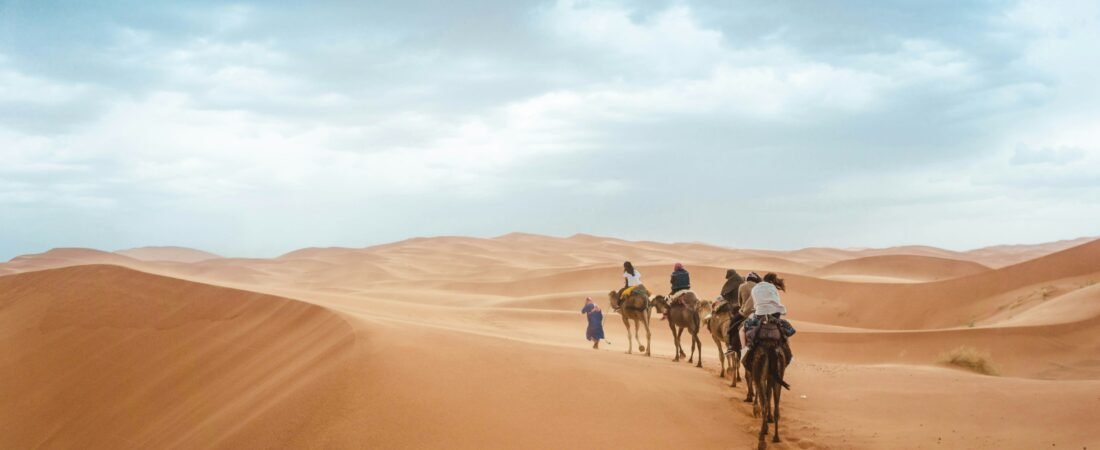
A slow, rocking ride across the dunes of Merzouga and Zagora — one of the oldest ways to meet the Sahara, led by the people who have always known it best.
You climb onto a camel led in a roped line by a Berber guide, and the animal rises in two lurching stages — back legs first, then front — until you are suddenly much higher off the ground than you expected. From there, the desert unfolds at walking pace: the camel rocks gently side to side, the dunes shift color as the sun drops, and the only sounds are footfalls in sand and the occasional low grumble from the animal ahead of you. It is one of the simplest things you can do in Morocco, and also one of the most quietly overwhelming.
“You don’t ride a camel through the Sahara so much as let it carry you somewhere slower than you’re used to moving.”
Why Camel Trekking is Worth It
Camel trekking survives as a Sahara tradition for a practical reason before it is a scenic one: for centuries, camels were the only reliable way to move people and goods across this terrain, and the Amazigh (Berber) guides who lead treks today are often descended from families who worked these same caravan routes. Riding one now is a chance to move through the dunes the way they were crossed long before four-wheel drives existed — unhurried, low to the sand, entirely dependent on an animal that knows the ground better than you do.
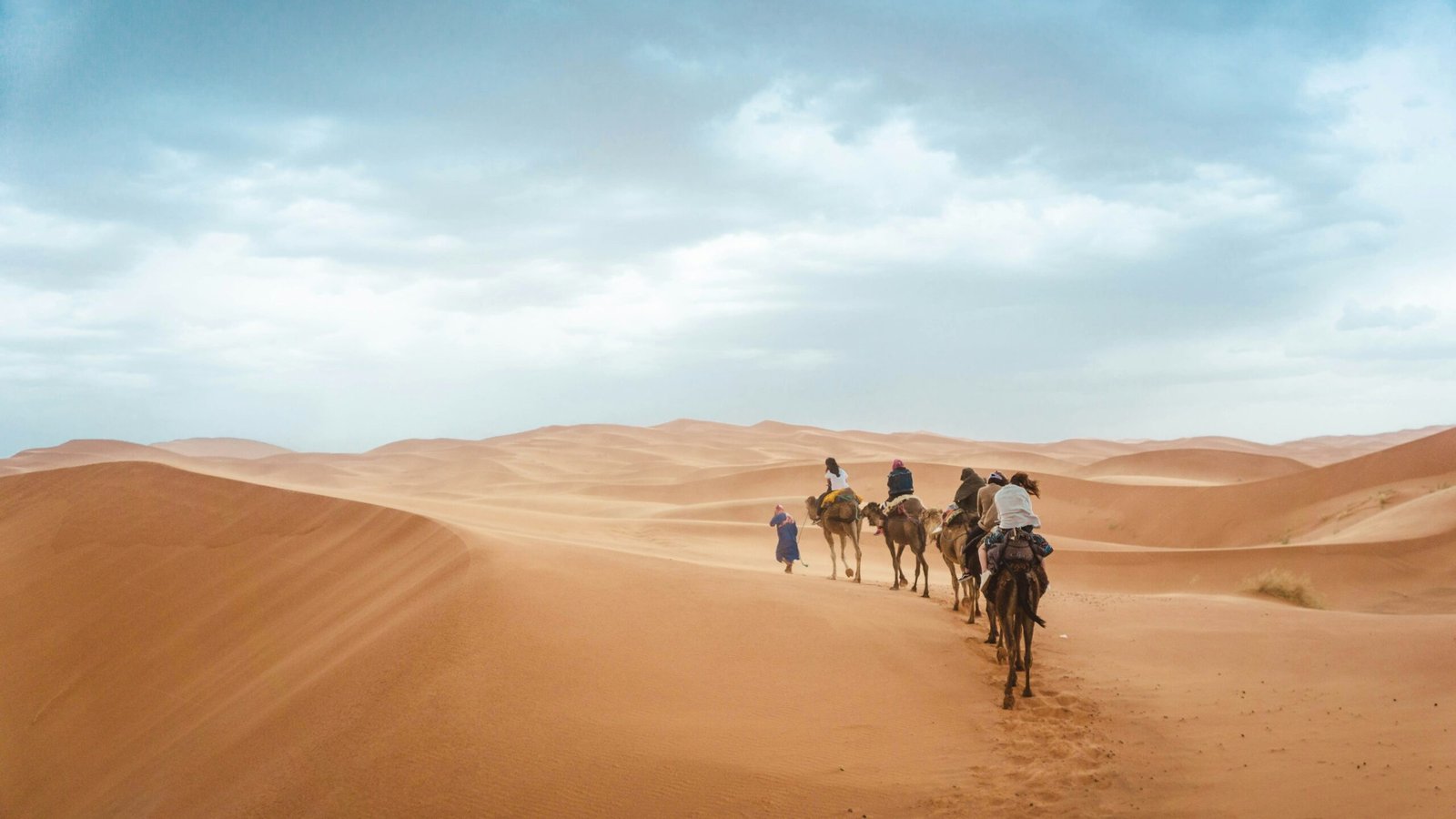
It is also, for most visitors, the closest they will come to real Sahara wilderness. Erg Chebbi near Merzouga and Erg Chigaga near Zagora are two of the few places in Morocco where the dunes reach the scale most people picture when they imagine the Sahara — ridgelines of orange sand rising well over 100 meters, with no roads, buildings, or power lines in sight once you’re an hour out. A short sunset ride can deliver that view in an afternoon; an overnight trek adds a night in a desert camp under a sky with almost no light pollution, which for many travelers ends up being the more memorable half of the experience.
What to Expect
- 01
Mounting up
Camels kneel to let riders climb on, then stand in two abrupt movements. Guides walk you through it beforehand, and the ride itself is slow and stable once underway — no balance or riding experience is needed, though the initial standing motion catches most first-timers off guard.
- 02
The ride into the dunes
Camels are led single-file on a rope by a guide on foot, so there’s no steering to worry about. The pace is a gentle, rolling walk, giving riders time to take in the changing light on the dunes rather than focus on the animal. Most sunset rides last around 1–2 hours round trip.
- 03
Camp, sunset, and sky
Overnight treks end at a Berber-style camp of tents pitched among the dunes, where the evening typically includes a tagine dinner, drumming around a fire, and a chance to climb a nearby ridge for sunset. After dark, with no artificial light for miles, the stars over Erg Chebbi or Erg Chigaga are dense enough to make the Milky Way clearly visible.
Practical Tips
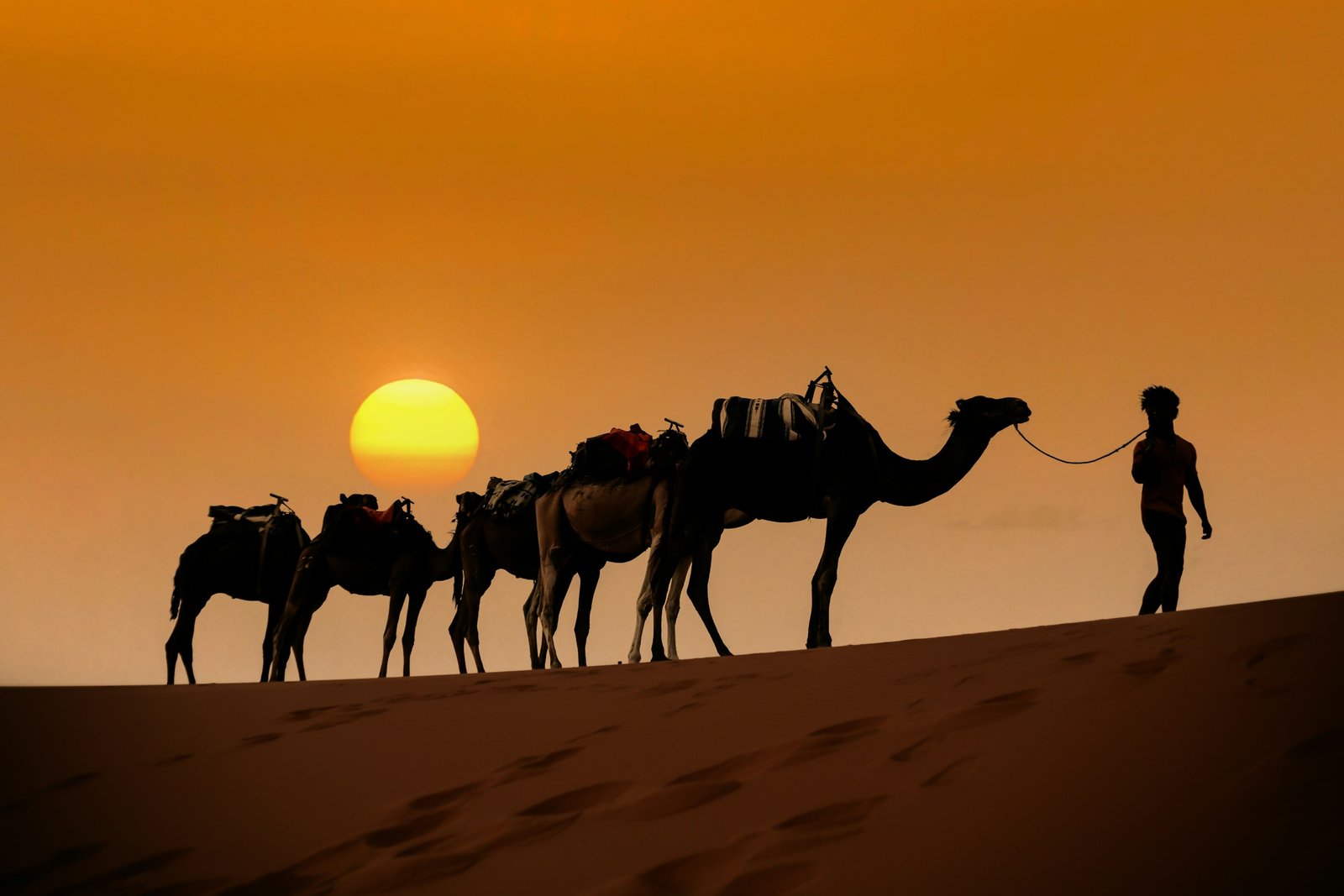
Merzouga and Zagora are the two main gateway towns, both reached by road from Marrakech or Fes (Merzouga is often paired with a multi-day desert tour from Marrakech; Zagora suits shorter two-day trips). Treks can be booked directly through desert camps and local guides, or through platforms like GetYourGuide and Viator, which is useful if you want reviews and confirmed pricing in advance.
A scarf or shesh to cover your head and face against blowing sand, layers for cold desert nights (temperatures can drop sharply after dark even when days are hot), sunscreen, a headlamp, and a basic overnight bag if staying at camp — larger luggage usually stays behind in town.
October through April, when daytime heat is manageable. Summer temperatures in Merzouga and Zagora regularly exceed 40°C (104°F), which makes trekking uncomfortable and camps less pleasant.
A short sunset or sunrise ride runs roughly $20–50 per person. Overnight treks with dinner, a desert camp, and breakfast typically run $60–200 per person, depending on camp comfort level and group size.
Final Thoughts
Camel trekking is not an adrenaline activity, and that is exactly its appeal. It rewards patience with one of the most striking landscapes in Morocco and a direct, low-tech connection to how people have moved through the Sahara for generations. Whether you take a one-hour sunset ride out of Merzouga or commit to a full overnight trek toward Erg Chigaga, the dunes and the silence that comes with them tend to stay with travelers longer than almost anything else on a Morocco itinerary.
Keep Exploring Morocco
Planning a longer trip through the south? Browse our destinations guide for more of the Sahara and beyond, or see what other activities pair well with a desert trek.