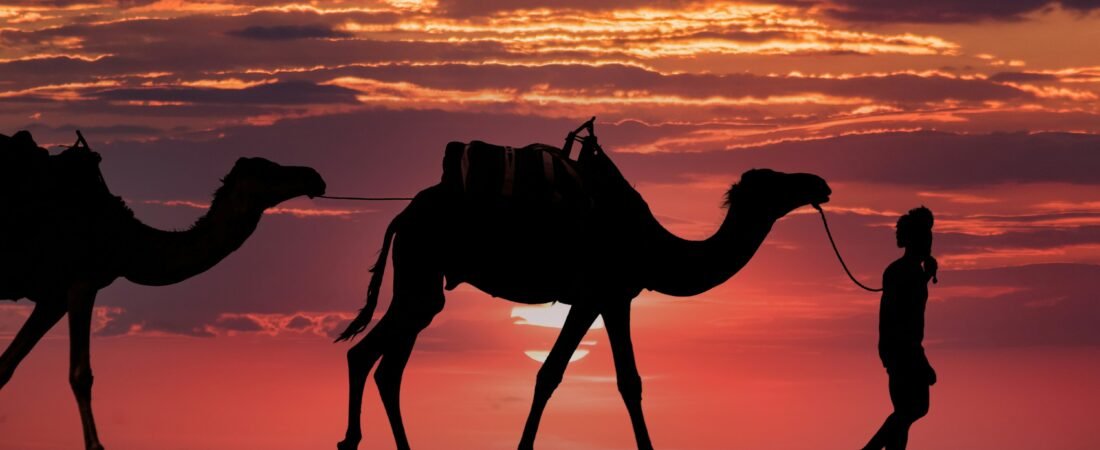
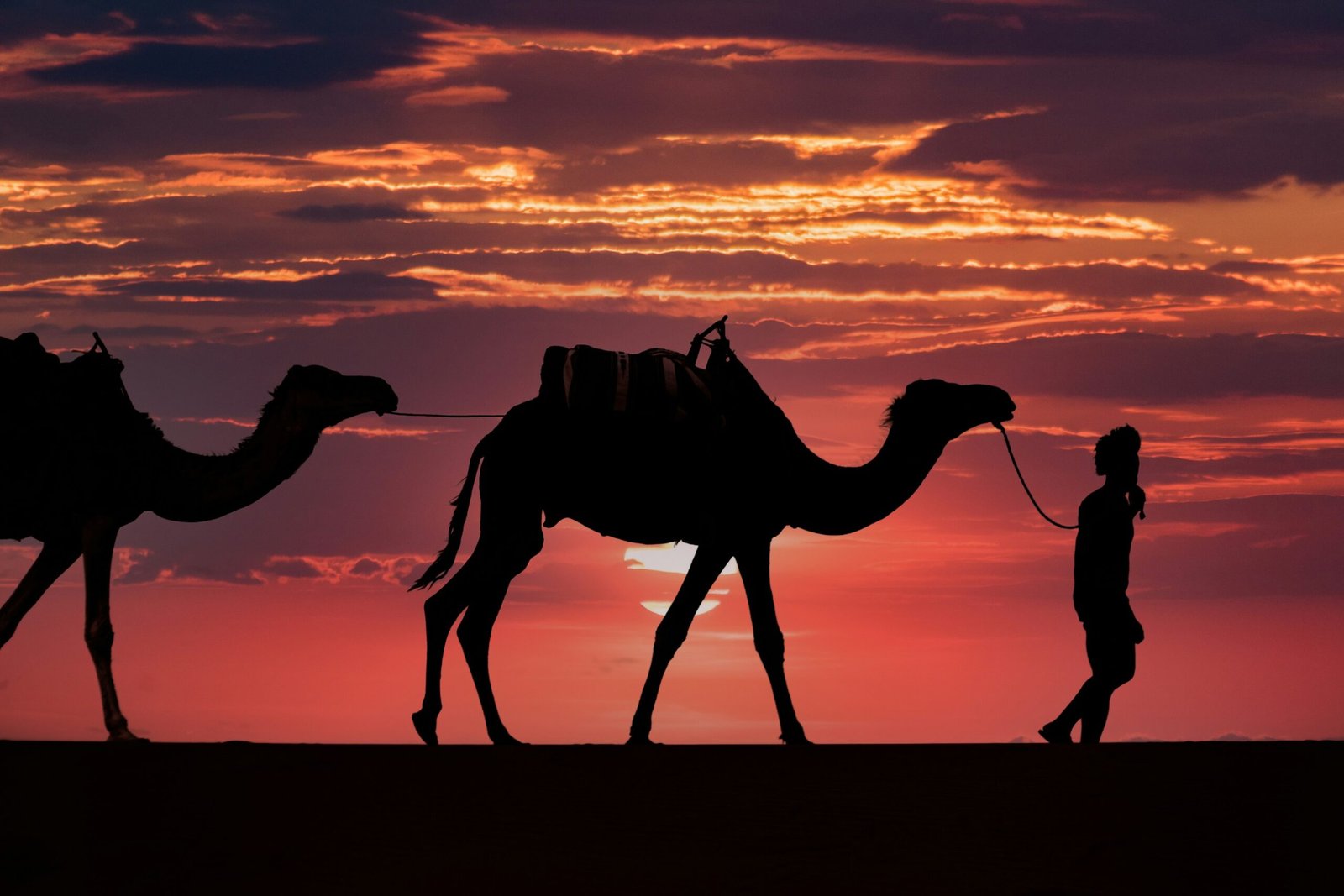
Before the town wakes, a line of camels sets out into the dark — walking toward a sky that is about to catch fire over the dunes of Erg Chigaga.
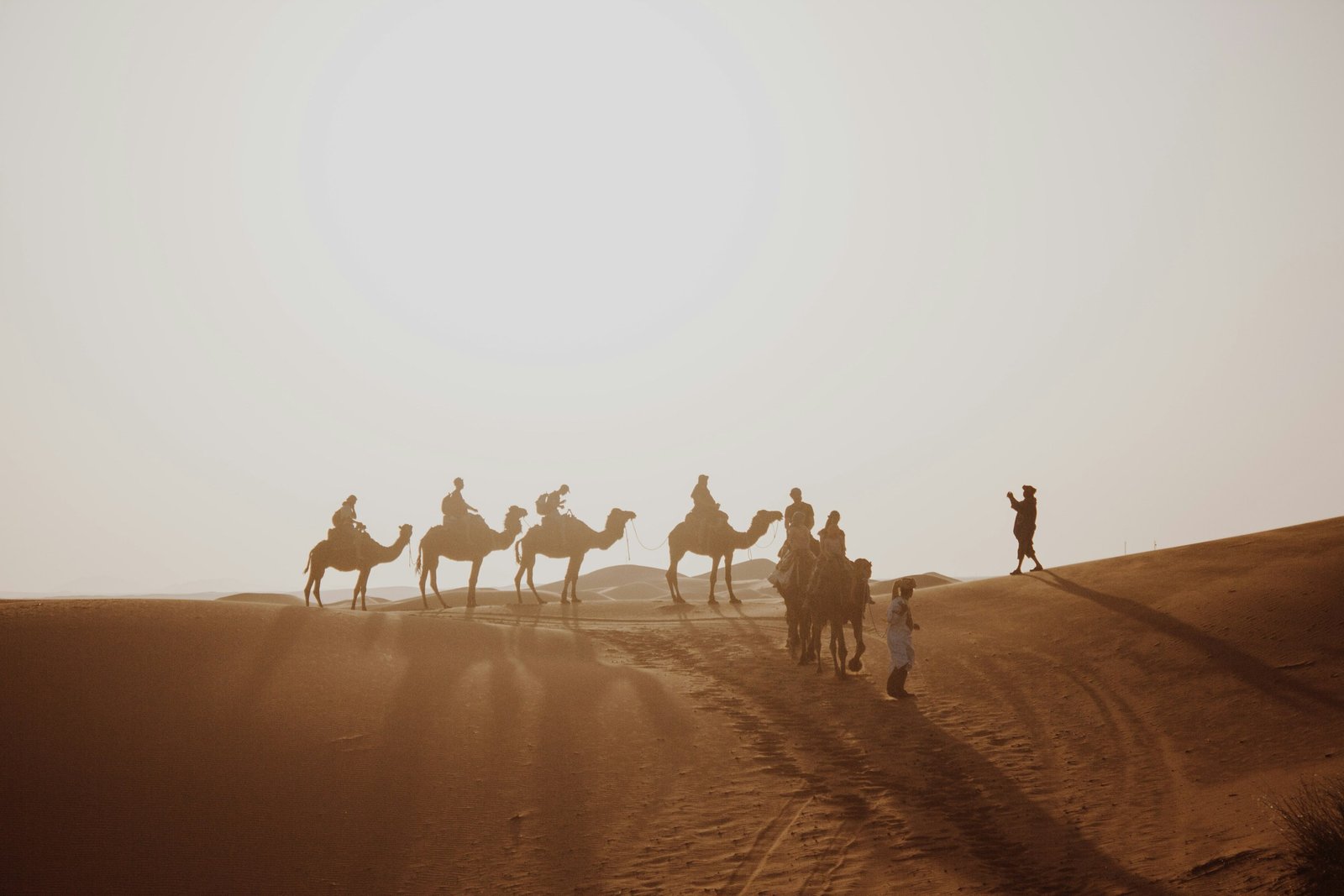
You set off from Zagora before dawn, swaying atop a camel as the desert slowly turns from black to deep orange, the cold night air still clinging to the sand beneath you. The camp fades behind you, the silhouettes of the guide and the animals ahead form a slow-moving line against the horizon, and somewhere past the last dune the sky begins to change color. Near the top, you climb down and finish the last stretch on foot, boots sinking into cool sand, until you reach the crest of Erg Chigaga just in time to watch the sun break over the Sahara.
“You climb the last dune in the dark, and the desert hands you the sunrise like it was made for you alone.”
Why Sunrise Camel Trekking is Worth It
Most visitors to the Moroccan Sahara head for sunset — it is the easier, more sociable option, timed to end the day with a group photo and a warm dinner waiting back at camp. Sunrise asks more of you: an alarm well before daylight, a cold walk to where the camels are kneeling, and the discipline to be patient in silence while the sky slowly does its work. That effort is exactly why it stands apart. The morning desert is nearly empty. There is no line of jeeps kicking up dust, no other groups jostling for the same ridge, just the sound of camel bells, sand shifting underfoot, and the guide’s occasional low word to keep the animals steady.
Erg Chigaga, reached from Zagora, is one of the largest and least developed dune fields in Morocco, which is part of what makes the sunrise version of this experience feel more remote than the more heavily touristed dunes near Merzouga. The trek typically runs as an overnight: you leave Zagora in the afternoon, ride or drive out to a Berber-style camp, sleep under a genuinely dark sky, and wake in the pre-dawn hours for the final push to a high dune. Watching the first light spread across ridge after ridge of sand, with your own long shadow stretching out ahead of you, is the kind of moment that outlasts almost everything else from a Morocco itinerary.
What to Expect
- 01
The Pre-Dawn Departure
Your guide wakes the camp well before sunrise — often as early as 5:00 or 5:30 a.m. — while the desert is still cold and the sky is fully dark. The camels are already kneeling and loaded, and after a short briefing you mount up and set off in single file, following the guide’s lead rope by starlight or the beam of a headlamp.
- 02
The Slow Climb to the Ridge
The ride out is unhurried — camels move at a walking pace, and the point is not speed but the gradual shift of the sky from black to indigo to orange. Near the highest dune, the guide has you dismount and finish the last climb on foot, since a camel’s gait on a steep slope is harder on both rider and animal than simply walking the final stretch.
- 03
Sunrise Over Erg Chigaga
At the crest, you sit and wait as the horizon lightens, then watch the sun’s edge appear and spill color across dune after dune. Most treks build in twenty to thirty minutes at the top before the walk back down to camp for a Berber breakfast of flatbread, olive oil, and sweet mint tea.
Practical Tips
Most trekkers arrive in Zagora by bus, grand taxi, or private transfer from Marrakech or Ouarzazate, then join a tour that includes 4×4 transport partway into the desert before switching to camels for the final approach to camp. Book through a local operator in Zagora, a riad, or platforms like GetYourGuide and Viator — look for tours that specifically mention Erg Chigaga and a sunrise option.
A warm layer for the pre-dawn cold (desert nights and early mornings can drop close to freezing in winter), a headscarf or buff against blowing sand, sturdy closed shoes for the walk up the dune, a headlamp, and a reusable water bottle. Skip anything you would not want to get sand in.
October through April brings the most comfortable temperatures for riding and camping; midsummer heat (June–August) can make the daytime legs of the journey uncomfortable, though sunrise itself is cooler year-round.
A 2-day/1-night trek from Zagora typically runs $60–150 per person, depending on group size, camp comfort level (shared vs. private tents), and whether meals and 4×4 transfers are included. Private tours and upgraded camps sit at the top of that range.
Final Thoughts
A sunrise camel trek asks for an early alarm and a willingness to be cold and a little sore, but it trades that discomfort for one of the quietest, most cinematic moments Morocco has to offer. If a single image should represent a Sahara trip, it is this one: a line of camels silhouetted against a sky turning from black to orange, with nothing else moving for miles.
Pair it with a night in Zagora or a longer loop through the Draa Valley, and you have one of the most memorable 48-hour stretches of any Morocco itinerary.
Keep Exploring Morocco
Planning more of your trip? Browse our full destinations guide for imperial cities, coastal towns, and Sahara adventures, or explore other activities across the country.
Share Your Experience
Been here? Leave a star rating and a short review to help other travelers.