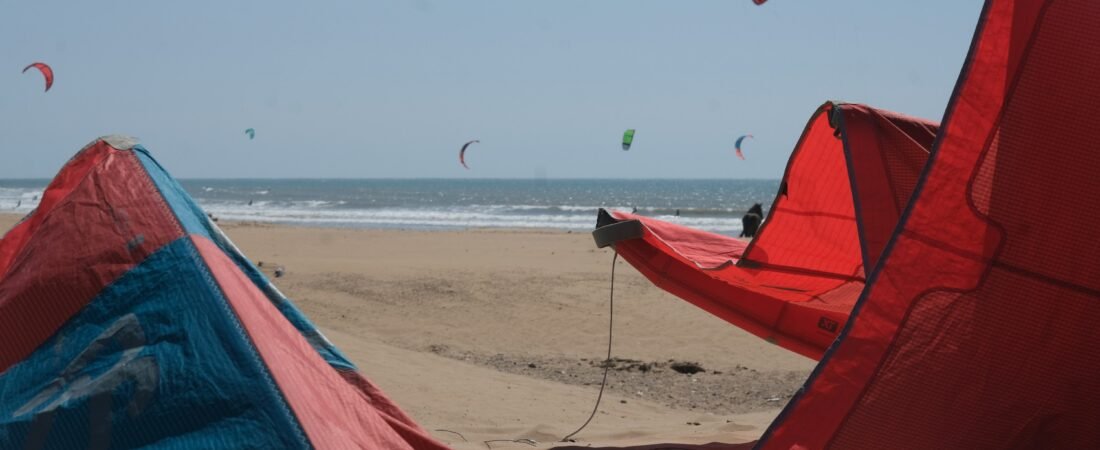
Where the Sahara’s heat pulls a steady Atlantic wind ashore, and a medina town becomes one of the world’s great kite classrooms.
You harness Essaouira’s near-constant Atlantic trade winds to launch across the water, kite snapping taut overhead as the ramparts of the old medina blur into a pale smudge behind you. Or you head south to Dakhla, where a flat, turquoise lagoon trades wave chop for glassy, beginner-friendly water. Either way, the wind here does most of the work — you just have to learn to listen to it.
“You don’t fight Essaouira’s wind. You borrow it, for as long as it’s willing to carry you.”
Locals call it the Alizé — the same trade wind system that has shaped this stretch of Atlantic coast for centuries, once filling the sails of trading ships and now filling the kites of riders from every corner of the world. For more on how Essaouira fits into a wider Morocco itinerary, see our complete destinations guide and our Morocco photo gallery.
Why Kitesurfing is Worth It
Essaouira has earned its nickname, “The Wind City of Africa,” honestly. As the interior plains of Morocco heat up under the sun, the rising hot air pulls in cooler air off the Atlantic, and the local coastline funnels that airflow into a wind that is unusually steady by global standards. Through the peak season — roughly April to October — the Alizé tends to build through the morning and settle into a strong, reliable afternoon breeze, often in the 15 to 30 knot range on good days. For a sport that lives and dies by consistency, that kind of dependability is rare, and it’s a big part of why Essaouira has become a fixture on the international kitesurfing map rather than a niche curiosity.
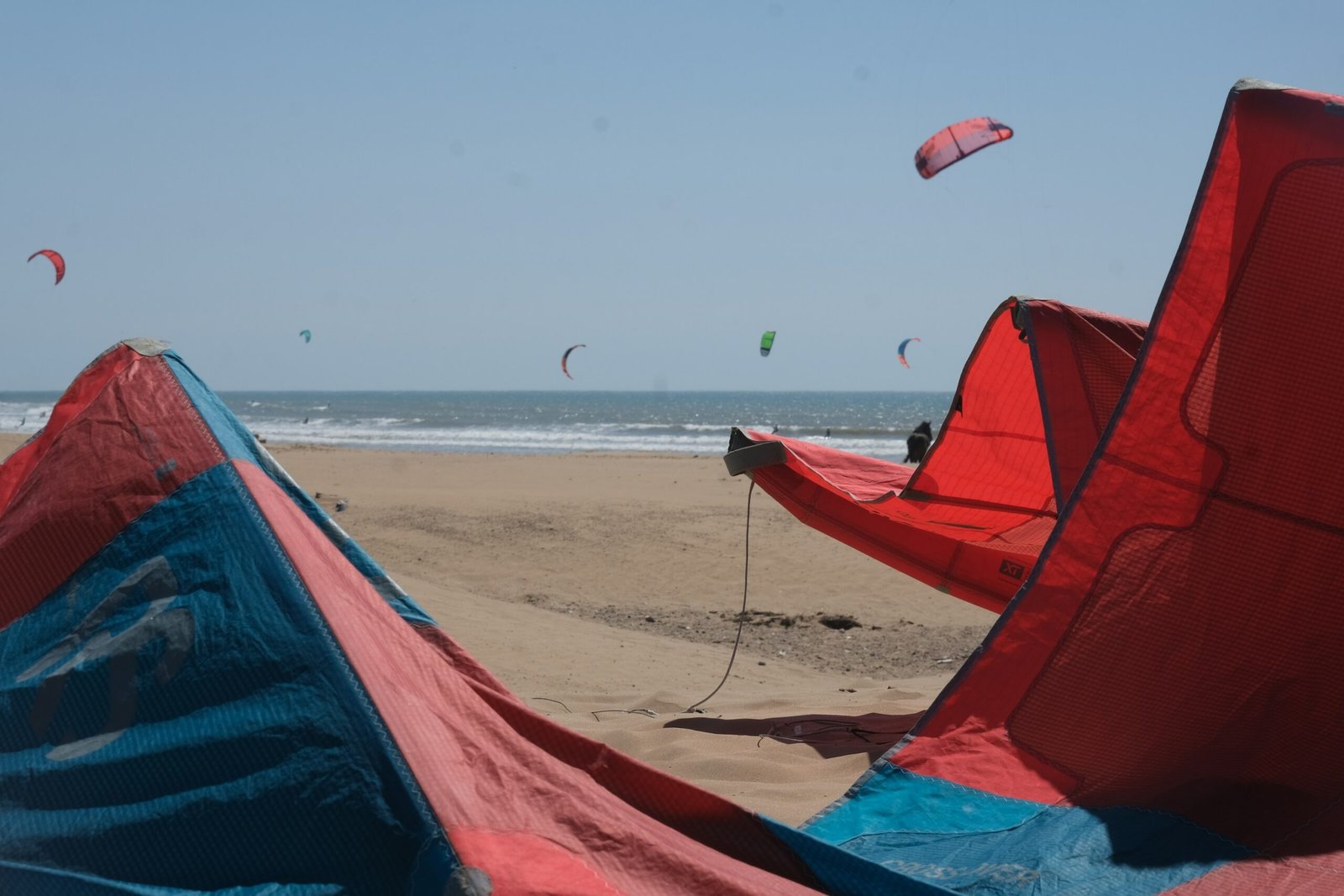
What makes the experience worth it isn’t only the wind, though — it’s the setting it blows through. You launch from a wide, hard-packed beach south of town, with the fortified 18th-century medina and its Portuguese-influenced ramparts standing watch in the distance, fishing boats bobbing in the harbor, and the scent of grilled sardines drifting from the port stalls. Few kite destinations pair genuinely world-class wind with a UNESCO-listed old town you can wander at sunset, tired arms and salt-crusted hair included. Dakhla, further south, offers its own version of the appeal — a flat lagoon so still it feels tailor-made for first-timers — but Essaouira’s blend of consistent wind, dramatic coastline, and lived-in Moroccan culture is what keeps riders coming back year after year.
What to Expect
- 01
Kite Control on the Sand
Every lesson starts on the beach, not the water. You’ll fly a small trainer kite in figure-eights, learning how the bar steers, how the wind window works, and how much power a kite can generate before you ever strap in a board. It looks simple from the boardwalk. It rarely feels simple the first time the kite tugs back.
- 02
Body-Dragging and Getting Up
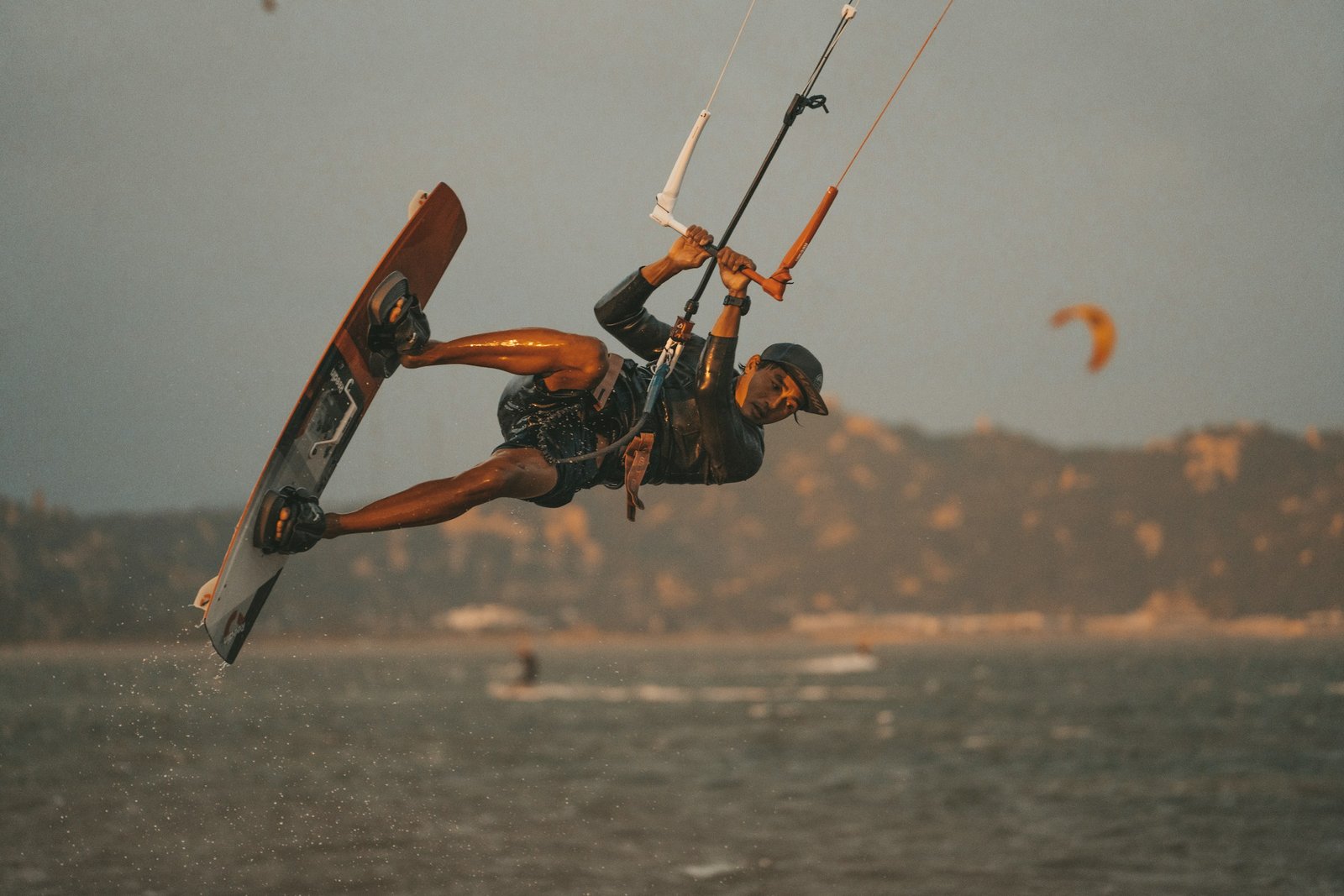
Next comes body-dragging through the shallows to get a feel for how the kite pulls you, followed by the moment most beginners remember most vividly: strapping onto the board, angling it against the wind, and finally popping up out of the water for the first wobbly, exhilarating seconds of a real ride.
- 03
Riding the Bay or the Lagoon
Once you can hold an edge and ride upwind, the real reward opens up — carving across Essaouira’s bay with the medina in the background, or, if you’ve made the trip south, gliding over Dakhla’s flat lagoon where the water is so calm that intermediate riders start experimenting with jumps and transitions.
Practical Tips
Fly into Essaouira-Mogador Airport (direct seasonal flights from Europe) or drive roughly 2.5–3 hours from Marrakech. Kite schools cluster along the beach south of the medina; book lessons or a full camp package a few weeks ahead during peak season (June–August), when spots fill fast.
A wetsuit top or spring suit (the Atlantic runs cooler than you’d expect for Morocco), sunscreen, a hat and windbreaker for the walk to the beach, reef shoes if you’re gear-shy, and a dry bag for your phone. Most schools supply kites, boards, and harnesses.
April through October for the strongest, most consistent Alizé winds, with June to August the windiest stretch. Winter (November–March) still works, especially for beginners, with softer wind and far fewer people on the beach.
Private or small-group lessons run roughly $70–100 per day. Week-long kite camps — lodging, meals, and daily coaching bundled together — typically run $500–550 per person, making them the better value if you’re serious about progressing past the basics.
Final Thoughts
Kitesurfing in Essaouira isn’t a spectator sport you admire from a café terrace, though plenty of people do exactly that first. It’s a full-body negotiation with wind that has been blowing across this coastline for longer than the town’s ramparts have stood. Whether you spend a week wobbling through your first water starts on Essaouira’s bay or trade the swell for Dakhla’s flat-water lagoon, you leave with salt in your hair, sore forearms, and a genuine understanding of why sailors and riders alike have never stopped coming back to this wind.
Keep Exploring Morocco
Planning a longer trip? Browse our full destinations guide for imperial cities, Sahara treks, and Atlantic surf towns, or discover more activities and adventures across Morocco.