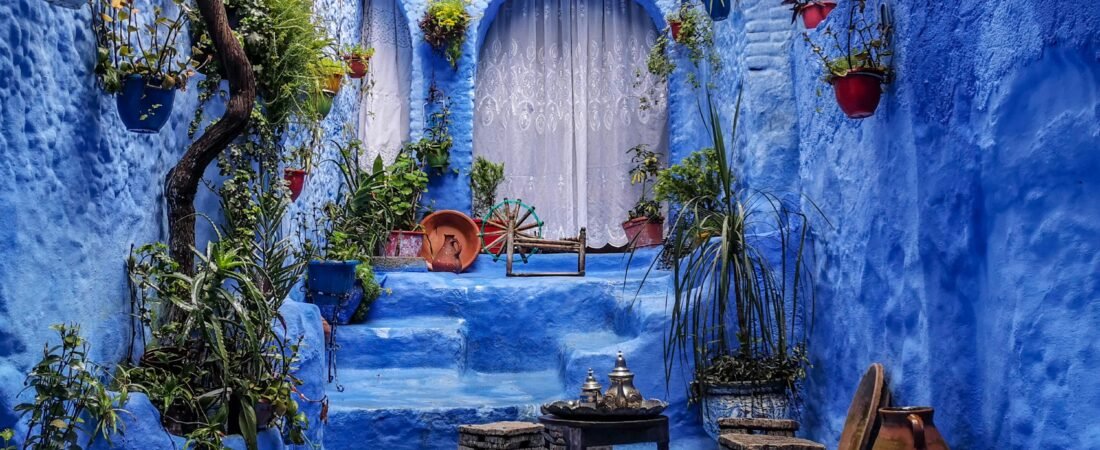
High in the Rif Mountains, where every wall, door, and alley carries its own shade of blue.
High in the Rif Mountains of northern Morocco, Chefchaouen unfolds like a watercolor dream. Every wall, door, and winding alley seems to carry a shade of blue—from pale sky to deep indigo—that glows in the mountain light. If you are planning a trip to Morocco, this small city deserves a place near the top of your list. It is calm, photogenic, and unlike anywhere else in the kingdom. For a broader overview of routes, visas, and logistics, see The Complete Morocco Travel Guide.
Chefchaouen is compact enough to explore on foot, yet layered enough to reward a slow pace. You do not need a packed itinerary here. The city rewards wandering, sipping mint tea on a terrace, and watching local life move at its own rhythm. Whether you are a photographer, a hiker, or simply someone who wants to breathe cooler mountain air, Chefchaouen offers a gentle escape from Morocco’s busier cities.
What Makes Chefchaouen Special
The first thing you notice is the color. The medina’s blue-washed streets are the city’s signature, and their origin is wrapped in tradition. Some accounts trace the practice to Jewish settlers who arrived in the 1930s and used blue as a spiritual color reminiscent of the sky. Others say the blue helps repel mosquitoes or simply keeps the narrow streets cool. Whatever the reason, the result is mesmerizing.
Chefchaouen sits at roughly 600 meters above sea level, which gives it a noticeably milder climate than coastal or desert destinations. The surrounding Rif Mountains rise in green folds, and on clear days you can see peaks stretching toward the Mediterranean. The city was reportedly founded in 1471 by Moulay Ali Ben Moussa Ben Rached El Alami as a small fortress to resist Portuguese expansion. Over time, it grew into a trading and spiritual center, and its Andalusian influence is still visible in the architecture of the old town.
Unlike the imperial cities, Chefchaouen feels intimate. The pace is slower, the shopkeepers are less pushy, and the medina is small enough that you are unlikely to get truly lost for long. That softness is part of its charm.
“In the early morning, before the day-trippers arrive, the alleys feel almost silent, and the blue seems to deepen around you.”
Top Things to Do
-
01
Wander the Blue Medina
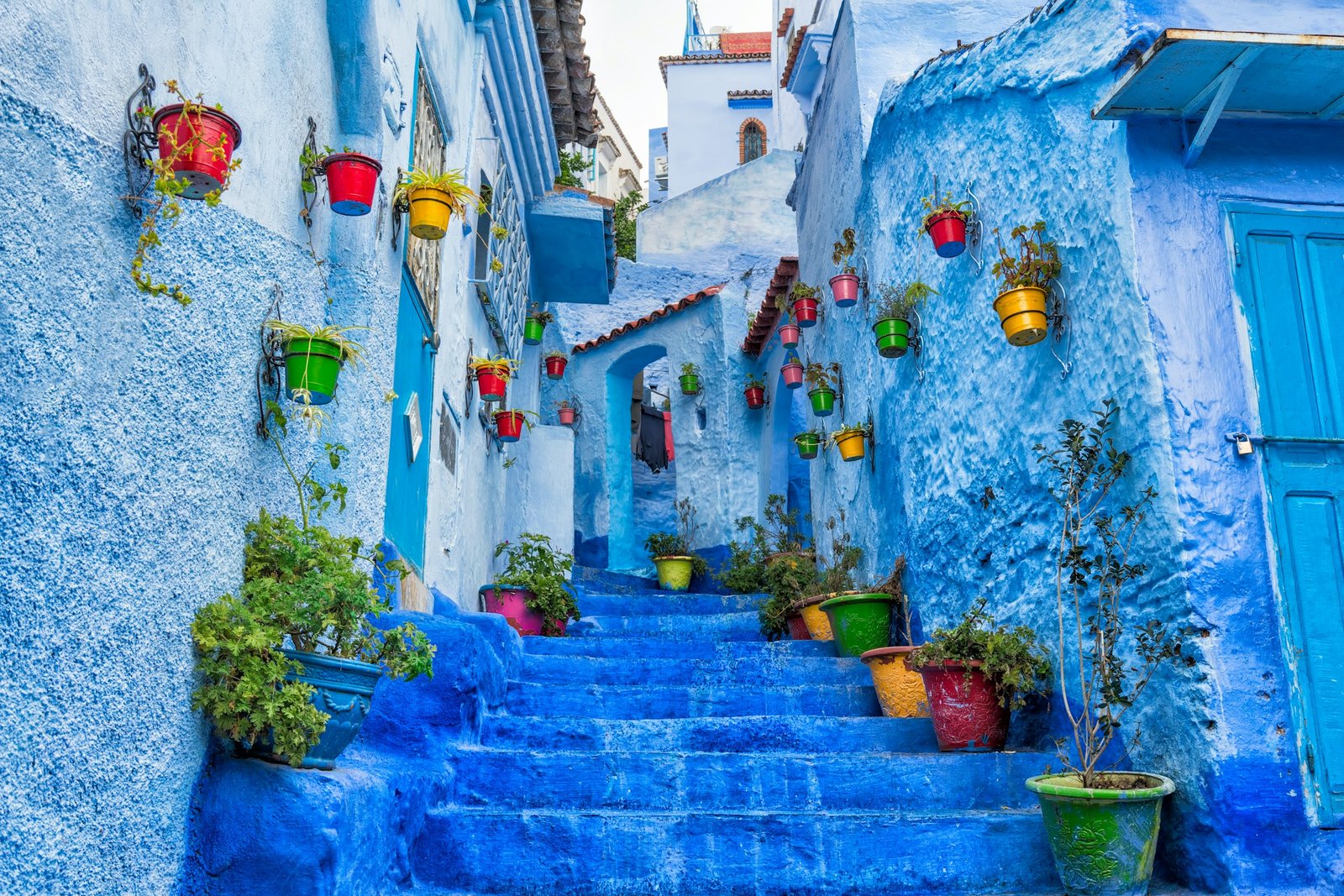
This is the main event. Start early, bring a camera, and let yourself get lost in the painted alleys around the main square, Plaza Uta el-Hammam. Look for details: bright pots of geraniums, handwoven rugs draped over doorways, and cats napping on blue steps. The best light is usually in the first two hours after sunrise.
-
02
Relax in Plaza Uta el-Hammam
The medina’s central square is lined with cafés and restaurants, all facing the striking Kasbah. It is a good place to rest, people-watch, and enjoy a glass of fresh orange juice or mint tea. The square comes alive in the early evening when locals and visitors gather.
-
03
Visit the Kasbah
The 15th-century fortress at the heart of the medina houses a small ethnographic museum, a garden, and a tower with views over the blue rooftops. The climb to the tower is short, and the panorama is worth it. Allow about an hour for a relaxed visit.
-
04
Hike in the Rif Mountains
Several trails lead out of the city and into the surrounding hills. A popular half-day walk takes you to the Spanish Mosque, perched on a hillside about 45 minutes above the medina. The path is straightforward and the sunset views back toward the blue city are excellent. For longer hikes, you can arrange a guide through your guesthouse or a local trekking outfit.
-
05
Shop for Local Crafts
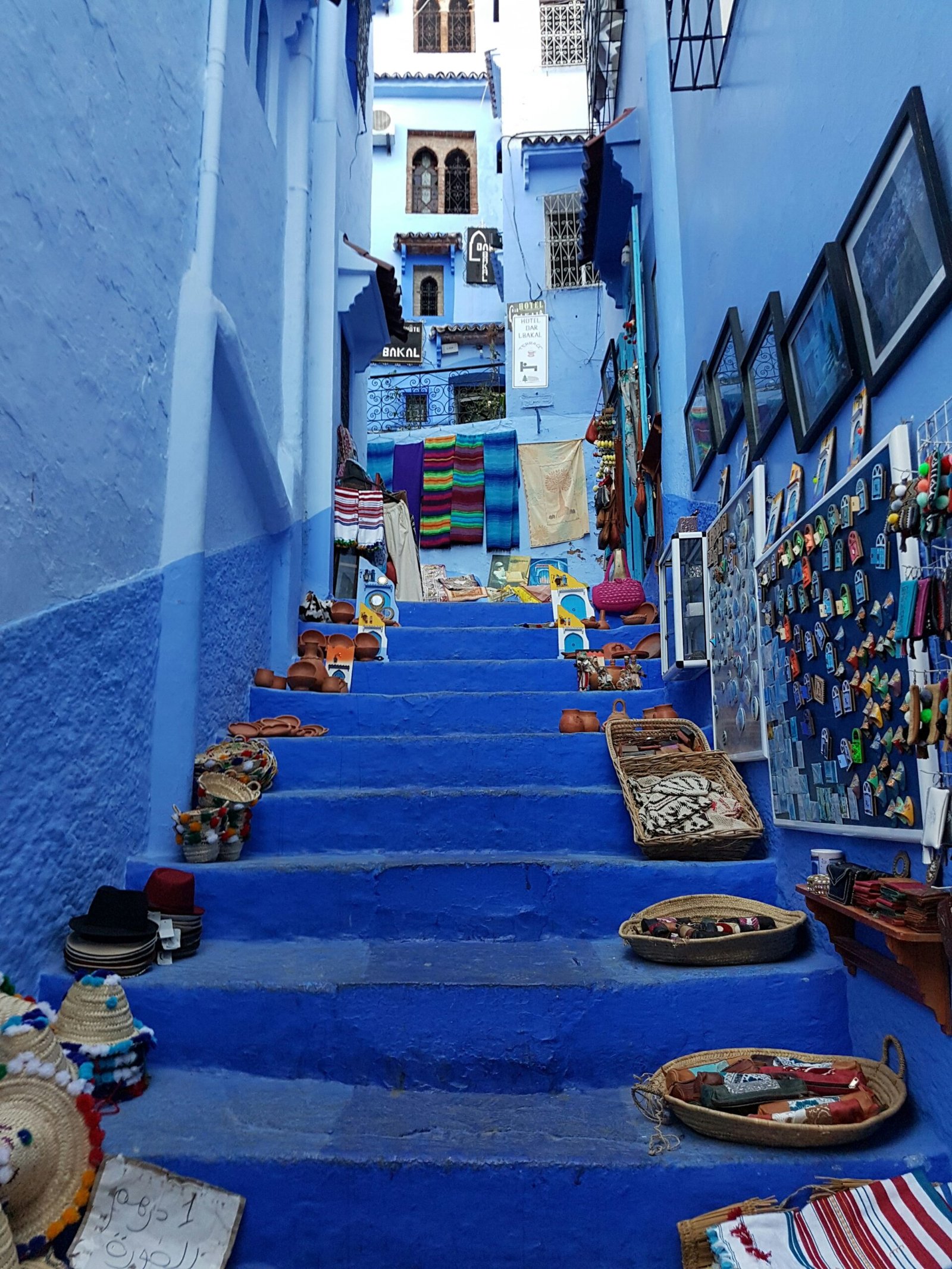
Chefchaouen is known for wool garments, particularly the striped “jellaba” worn in the region, as well as woven blankets, leather goods, and Berber rugs. Prices are often lower than in Marrakech or Fez, and bargaining is expected but usually relaxed.
Practical Tips
Reachable by bus from Tangier, Tetouan, and Fez. The journey from Tangier takes around two and a half to three hours by road. If you’re building a longer itinerary, see our guide to the Best Places to Visit in Morocco.
One full day is enough to see the medina, but two days is ideal — the extra time lets you hike, slow down, and experience the city once the day-tripper crowds leave.
Chefchaouen is more conservative than some coastal resorts. Lightweight layers work well, and modest dress is appreciated outside the tourist core. Comfortable walking shoes are essential for the uneven cobblestones and steep lanes.
Spring and autumn are the most pleasant seasons, with clear skies and comfortable temperatures. Summers are warm but rarely oppressive thanks to the elevation. Winters can be chilly and rainy, so pack a jacket.
The blue walls make Chefchaouen a photographer’s dream, but be respectful — avoid photographing people, especially women and children, without permission, and look before shooting into private doorways or courtyards.
Final Thoughts
Chefchaouen is not a place you rush through. Its magic lives in the quiet moments: the sound of footsteps echoing down a blue alley, the scent of bread from a neighborhood oven, the sight of mountains turning gold at sunset. It is a city that asks you to slow down and look closely. For many visitors, that is exactly what makes it unforgettable.
If you are putting together a Chefchaouen Morocco travel guide for your own trip, keep it simple. Give yourself time to wander, choose a guesthouse inside the medina if you can, and do not overplan. Sometimes the best experience in Chefchaouen is simply standing in a patch of blue light and letting the city do the rest.
Keep Exploring Morocco
Chefchaouen is just one stop. See where else to go and what to do once you’re there.