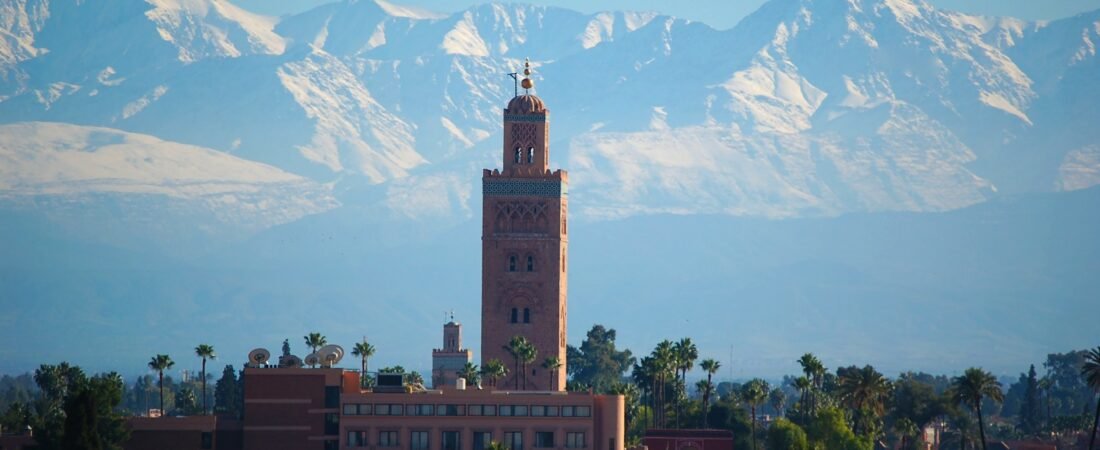
A first-timer’s guide to the Red City — its souks, its rooftop tagines, its blue gardens, and the feeling that follows you home.
The light hits you first. Not the people, not the donkey carts, not the call to prayer winding down from the Koutoubia Mosque. It is the light — thick, warm, the color of burnt honey — pouring over walls that have glowed pink-red for nearly a thousand years. You step out of the taxi into a current of motorbikes, mint tea steam, and someone asking if you want a henna tattoo, and you realize, with a little jolt, that Marrakech does not welcome you. It pulls you in.
“This is not a city you visit. It is a city you feel.”
If you are planning your first trip, start with our complete Morocco travel guide and our curated list of the best places to visit in Morocco. But if you want to understand why Marrakech makes people cancel flights, extend riad stays, and return with stories they still tell years later — read on.
Pace & Vibe: What This Guide Recommends
Best for: First-timers, food lovers, culture seekers, and anyone who wants Morocco’s most iconic city without feeling rushed.
Recommended pace: 3 full days in Marrakech, plus one day trip to the Atlas Mountains or Aït Benhaddou. The medina rewards slow walking; the palaces and gardens need unhurried mornings.
Overall feel: Intense, colorful, generous, and unforgettable. Marrakech is not relaxing in a beach-chair sense, but it is deeply energizing. You will sleep well.
Budget: Mid-range. You can eat phenomenally for little, but riads, guided tours, and the Majorelle/YSL tickets add up. Plan roughly €80–150 per day per person for a comfortable trip.
Why Marrakech Gets Under Your Skin
There is a reason seasoned travelers get dreamy-eyed when you say the name. Marrakech is a city of opposites that somehow fit together: a muezzin’s call over a rooftop DJ set, a Berber grandmother selling dates beneath a neon sign, a palace courtyard so quiet you can hear a fountain ripple while, three alleys away, a scooter honks its way through a herd of sheep.
You will feel overstimulated and then, five minutes later, deeply peaceful. You will get lost in the medina, laugh about it, and discover a leather worker who invites you for mint tea. You will eat a tagine that costs less than your airport coffee and remember it for years. Marrakech teaches you that travel is not about checking boxes. It is about surrendering to a place.
Before we go deeper, here is a question: do you want the polished, Instagram version of Marrakech, or the real one? The good news is, you can have both — if you know where to look.
Did You Know? Marrakech Is Hiding Hollywood in Plain Sight
- Jardin Majorelle, the famous cobalt-blue garden, was saved from becoming a hotel complex by fashion designer Yves Saint Laurent, who bought it in 1980. His ashes were scattered there after his death, and the garden now feels like his final, beautiful love letter to the city.
- Winston Churchill painted in Marrakech more than half a dozen times. He called it “the most lovely spot in the whole world,” and reportedly talked Franklin D. Roosevelt into visiting during the 1943 Casablanca Conference.
- The desert and kasbahs near Marrakech have starred in Gladiator, Game of Thrones, The Mummy, and Lawrence of Arabia. When you stand at the gates of Aït Benhaddou at sunset, you are standing on a set that has convinced millions of people they were somewhere ancient and mythical.
For more context on the kingdom’s deeper story, read our full About Morocco page.
What Makes Marrakech Unlike Anywhere Else
Marrakech was founded in 1070 by the Almoravid dynasty under Yusuf ibn Tashfin. For long stretches of history, it was one of the most powerful cities in North Africa — a hub of trade, scholarship, and Islamic art that drew merchants from Timbuktu, Granada, and Cairo.
That legacy lives in the medina, a dense UNESCO-listed labyrinth of souks, madrasas, palaces, and riads enclosed by ancient ramparts. The city gets its nickname, the Red City, from the local sandstone and pisé used to build its walls. In the late afternoon, when the sun drops toward the Atlas Mountains, the whole medina seems to glow from within.
But what really sets Marrakech apart is the contrast. One moment you are squeezed into a narrow lane lined with leather poufs and copper lamps; the next you are sipping mint tea in a quiet riad courtyard where the only sound is a fountain. The city is loud and serene, ancient and stylish, overwhelming and welcoming — often within the same block.
A Brief History: From Berber Empire to Modern Jewel
Marrakech’s story is the story of Morocco itself. The Almoravids founded it as a military camp and trading post. The Almohads turned the Koutoubia Mosque into one of the most elegant minarets in the Islamic world. The Saadians built the Tombeaux Saadiens and the Bahia Palace with marble imported from Italy and gold from Sudan.
Then came the Alaouites, the dynasty that still rules Morocco today. They moved the capital to Fez and Meknès at different times, but Marrakech never lost its pull. It became a symbol of the south — wealthy, proud, and fiercely independent.
In the 20th century, Morocco passed through the French and Spanish protectorates before regaining independence in 1956. Marrakech emerged as a global destination: hippies came in the 1960s, fashion designers in the 1970s, digital nomads in the 2020s. Through it all, the medina stayed the same — a living museum where people still live, work, pray, and laugh exactly as their grandparents did.
Top 5 Restaurants in Marrakech (Ranked)
These are not the fanciest restaurants in town. They are the ones that deliver flavor, atmosphere, and a genuine sense of place. Click “Reviews, photos & video” under each listing to see what real travelers are saying.
1. Terrasse Bakchich — The Hidden Rooftop Gem
Tucked away on rue Talâa near the Bahia Palace, this small rooftop restaurant feels like a secret. Locals and in-the-know travelers come for the rabbit tagine and lamb tangia, slow-cooked until the meat falls apart at the touch of a fork. The terrace is simple, the service is warm, and the mint tea is poured from a height that would make a circus performer proud.
See reviews on TripAdvisor →
Reviews, photos & video
Traveler feedback highlights:
- “Very good tagines. We had vegetarian and meat variants, both were delicious. Moroccan tea also nice.” — TripAdvisor review
- “Delicious eaten on the roof with a view over the medina.” — TripAdvisor review
- “Very honest prices, we came out at €30 for two people with drinks and dishes.” — TripAdvisor review
- Ranked as one of the “10 best places to eat in Marrakech” by The Guardian.
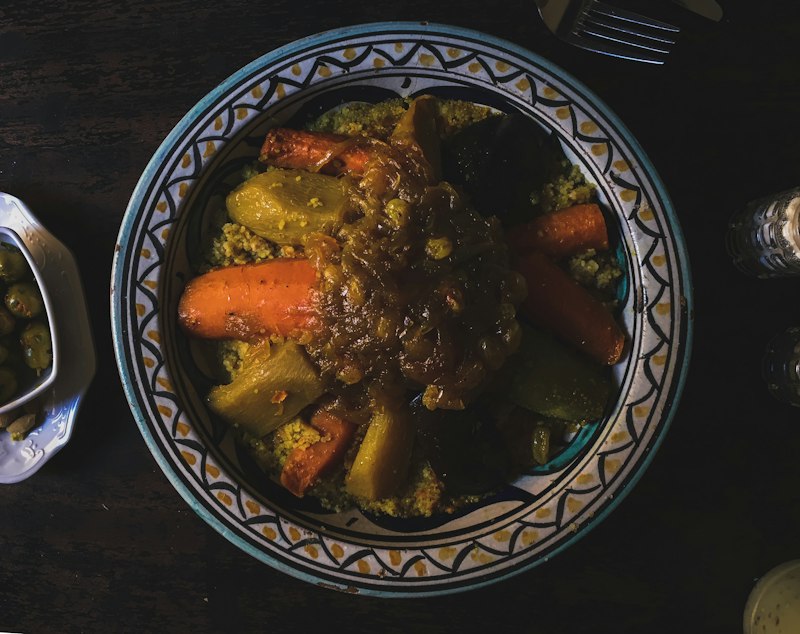
Photo: Unsplash — Moroccan tagine
2. Chef Lamine Hadi Mustapha — For the Mechoui Experience
If you eat lamb even occasionally, this is a pilgrimage. The restaurant slow-roasts whole sheep in an underground pit until the meat is so tender it is eaten by hand with khobz and a salt-cumin mix. Mechoui is traditionally a Friday dish, but here you can experience it in its most authentic form. Go early, because the best cuts disappear fast.
See reviews on TripAdvisor →
Reviews, photos & video
Traveler feedback highlights:
- Widely described as the legendary mechoui spot near Jemaa el-Fnaa, famous for whole slow-roasted lamb.
- Travelers consistently praise the melt-off-the-bone tenderness and the simple, no-frills atmosphere.
- Social media reels on Instagram regularly feature the underground pit and hand-torn lamb platters.
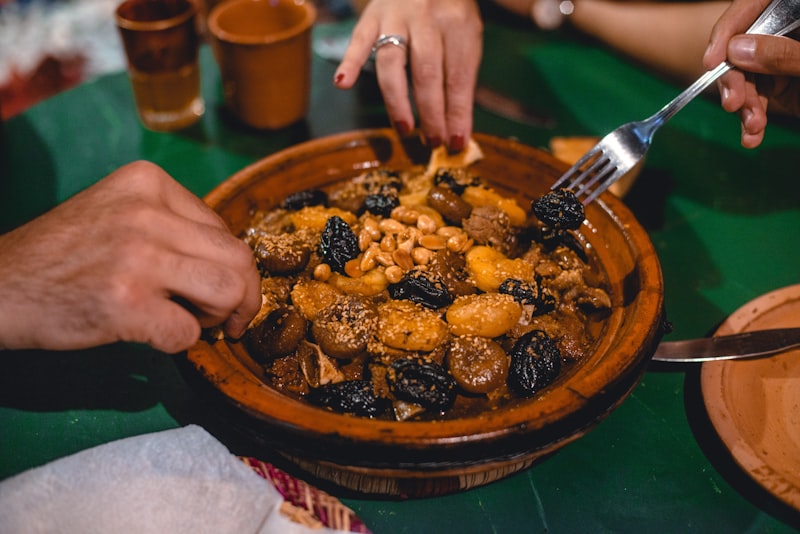
Photo: Unsplash — Moroccan slow-cooked lamb
3. Dar L’hssira — Royal Couscous in a Quiet Medina Corner
About a five-minute walk from the House of Photography museum, Dar L’hssira serves traditional dishes in a calm, beautifully tiled dining room. The standout is royal couscous, loaded with lamb, beef, chicken, and merguez sausage, served with a light, fluffy couscous that soaks up every drop of broth. Start with harira soup and briouat pastries.
See reviews on TripAdvisor →
Reviews, photos & video
Traveler feedback highlights:
- Frequently called a “tucked away gem” by visitors who appreciate the friendly service and generous portions.
- Recommended for travelers who want couscous before Friday or a quieter alternative to the Jemaa el-Fnaa food stalls.
- Instagram posts highlight the traditional tiled interior and colorful mezze spreads.
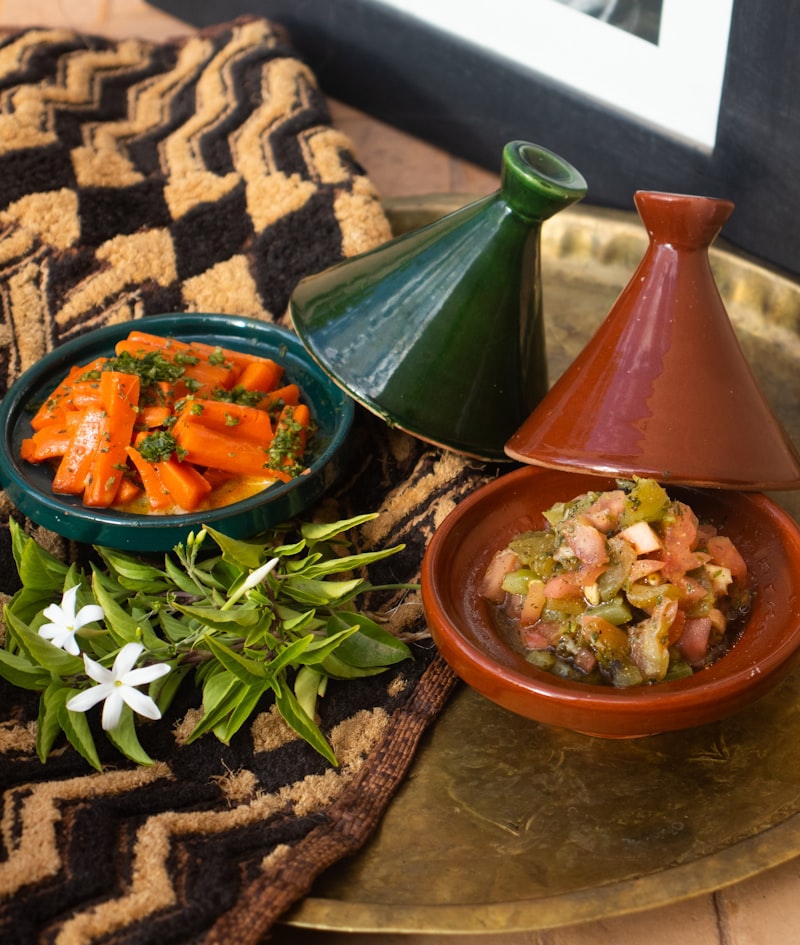
Photo: Unsplash — Moroccan couscous
4. Snack Adam — Moroccan Comfort Food Done Right
Sometimes you want tagine. Sometimes you want a Moroccan taco — a wrap filled with meat, french fries, cheese, and a creamy sauce that has no business being this good. Snack Adam, just off Jemaa el-Fnaa, is where locals grab a quick, satisfying meal. Try the tacos, the pastilla, and the salade Marocaine.
See reviews on TripAdvisor →
Reviews, photos & video
Traveler feedback highlights:
- Praised by budget travelers for fast, filling meals near the main square.
- Moroccan “tacos” are repeatedly described as surprisingly delicious and addictive.
- A good stop for families or anyone who needs a break from slow-cooked tagines.
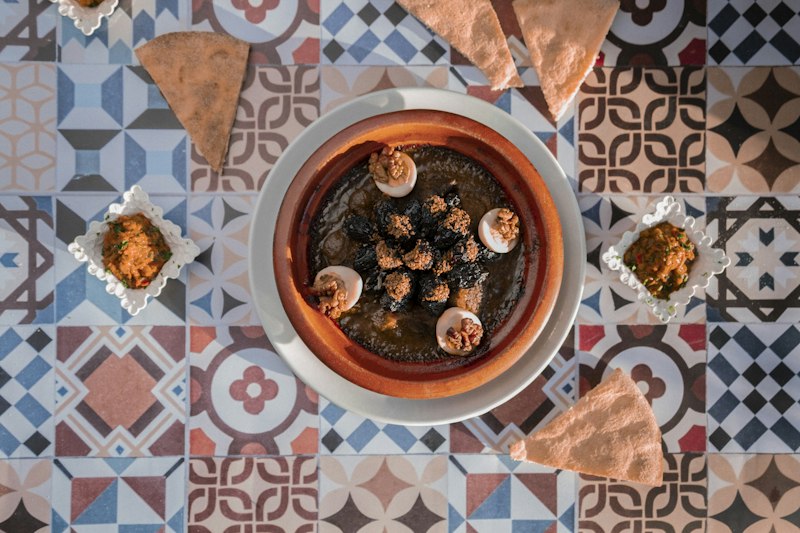
Photo: Unsplash — Moroccan-style street food
5. Cafe des Epices — Spice Square People-Watching
Located on Rahba Lakdima, the old spice square, this cafe is perfect for breakfast or a midday break. Order Moroccan eggs, a sandwich, or just mint tea, and watch the medina theater unfold below: vendors hauling sacks of cumin, motorbikes squeezing through impossible gaps, cats sunbathing on ancient stones.
See reviews on TripAdvisor →
Reviews, photos & video
Traveler feedback highlights:
- Long-running TripAdvisor favorite for rooftop seating and prime people-watching over the spice market.
- Visitors mention the calm atmosphere after the chaos of the souks.
- YouTube reviews often call it “the best place to take a break in the medina.”
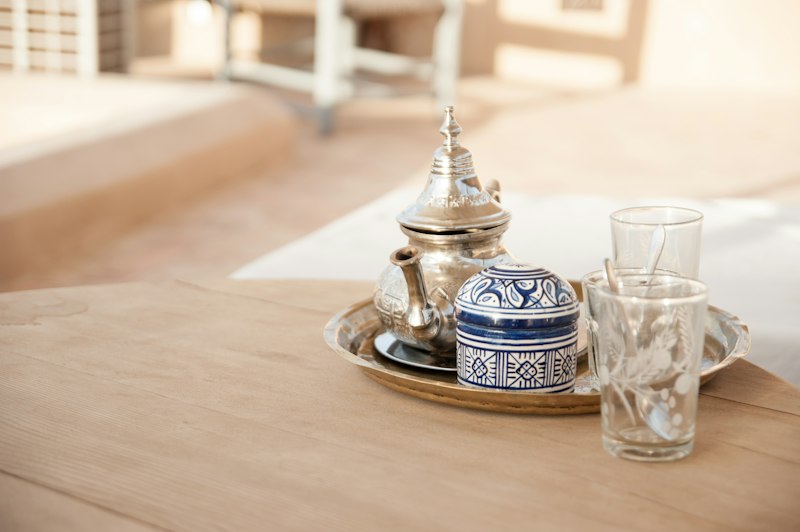
Photo: Unsplash — Moroccan mint tea
Top 5 Things to Do in Marrakech (Ranked)
1. Lose Yourself in Jemaa el-Fnaa at Sunset
Nothing prepares you for the transformation. By day, the square is a dusty plaza with orange-juice stalls and snake charmers. By night, it becomes one of the greatest open-air theaters on earth: storytellers, Gnawa musicians, henna artists, food stalls grilling merguez and sardines, and smoke rising into the warm air. Do not just pass through. Sit down. Order tea. Watch.
Reviews, photos & video
Traveler feedback highlights:
- “The heartbeat of Marrakech. Chaotic, magical, and completely unforgettable.” — common sentiment across TripAdvisor and travel blogs.
- Nighttime food stalls are consistently rated the best way to experience local street food.
- Tip from repeat visitors: pick a rooftop cafe before sunset to watch the square change personality.
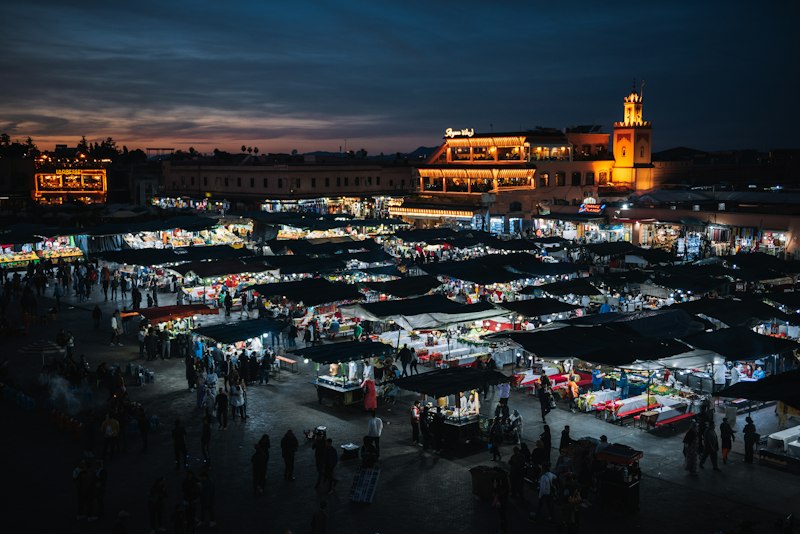
Photo: Unsplash — Jemaa el-Fnaa aerial view
2. Wander the Medina Souks
The souks are not a single market. They are a web of specialized quarters: the leatherworkers, the metalworkers, the carpet sellers, the spice merchants. You will get lost. That is the point. Let yourself be led by curiosity, not a map. If a shopkeeper offers tea, accept. The best conversations in Marrakech happen over a glass of mint tea.
Reviews, photos & video
Traveler feedback highlights:
- “Overwhelming in the best possible way. Every turn is a photo, every vendor has a story.” — traveler review
- Bargaining is expected; starting at 40% of the asking price is the standard advice.
- Many visitors recommend hiring a local guide for the first visit to avoid total disorientation.
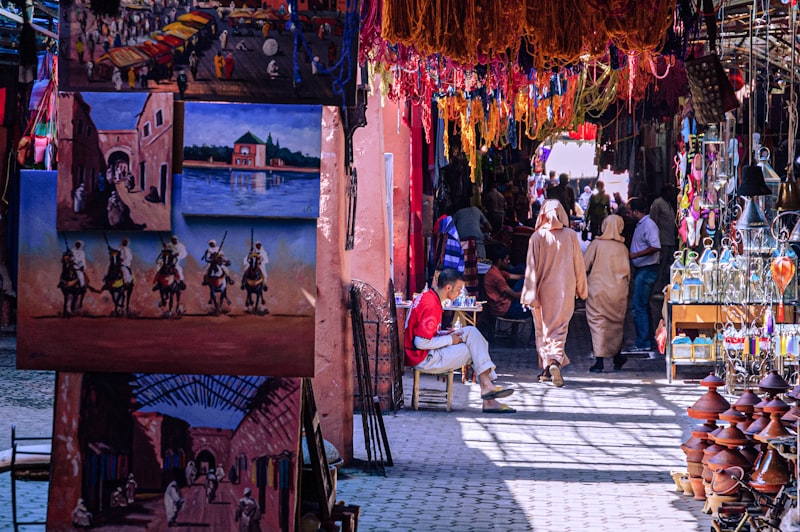
Photo: Unsplash — Marrakech souk
3. Visit Jardin Majorelle and the YSL Museum
The electric-blue villa, the bamboo groves, the cacti standing like sculptures — Jardin Majorelle is a visual exhale after the intensity of the medina. Next door, the Yves Saint Laurent Museum traces the love affair between the designer and Morocco. Buy tickets in advance; lines can be long.
Reviews, photos & video
Traveler feedback highlights:
- “Nicely designed and maintained gardens, similar to those of Generalife in Granada, Spain. It’s a good place to recoup from the intensity of the market atmosphere.” — TripAdvisor featured review
- Visitors consistently say it is beautiful but crowded; early morning tickets are strongly recommended.
- The YSL Museum is often described as thoughtfully curated and deeply moving for fashion and design lovers.
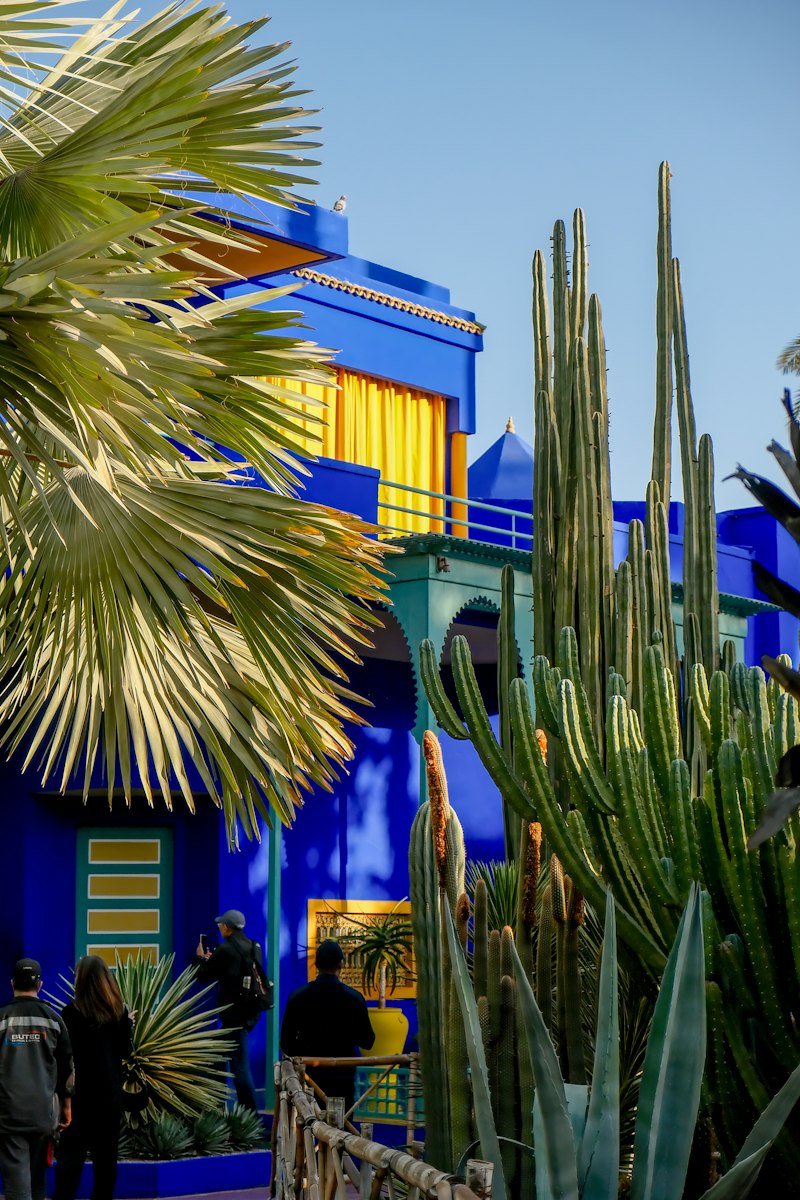
Photo: Unsplash — Jardin Majorelle
4. Stand Before the Koutoubia Mosque
The 77-meter minaret is the compass of the city. Built in the 12th century during the Almohad period, it is said to have inspired the Giralda in Seville. Non-Muslims cannot enter the mosque, but the surrounding gardens are open to everyone and offer a quiet place to sit beneath orange trees and listen to the fountains.
Reviews, photos & video
Traveler feedback highlights:
- “The visual anchor of Marrakech. You can see it from almost everywhere in the medina.” — common traveler note
- The gardens are praised as a free, peaceful escape from the medina intensity.
- Photographers recommend sunset for the warm light on the sandstone minaret.
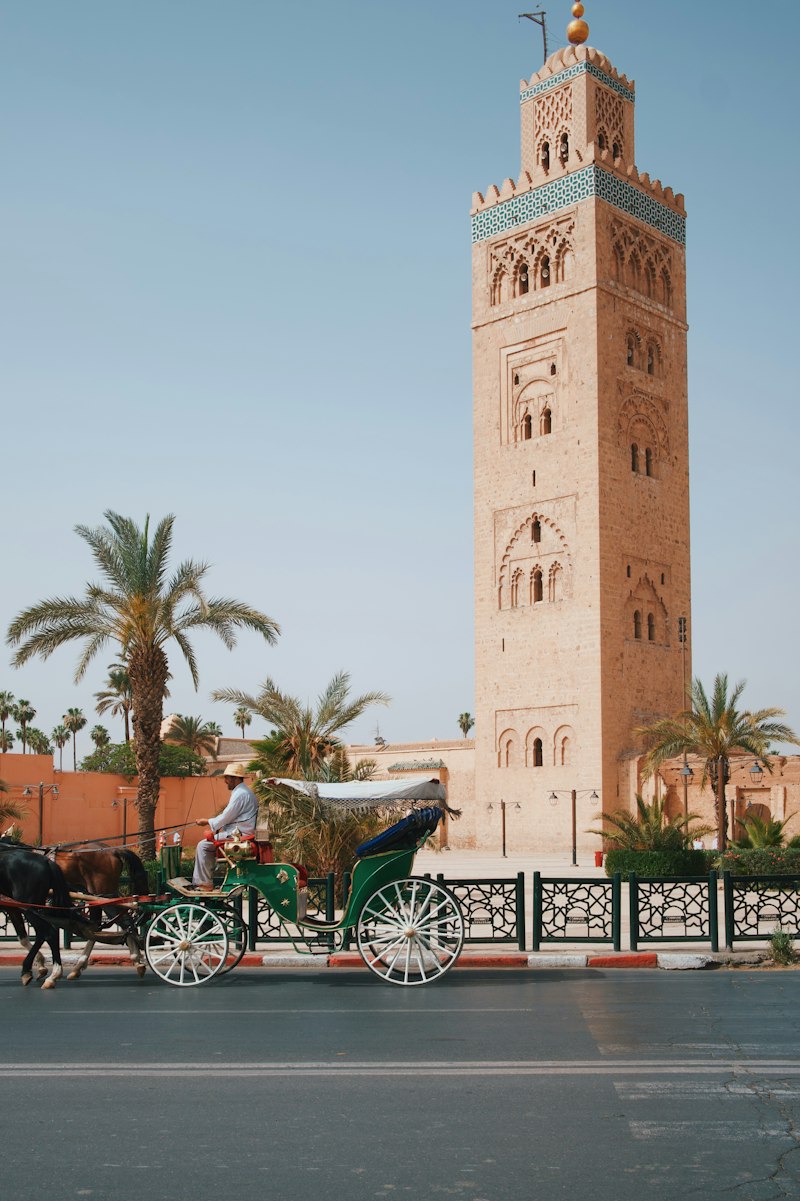
Photo: Unsplash — Koutoubia Mosque
5. Step Inside Bahia Palace and Ben Youssef Madrasa
These two sites show the height of Moroccan craftsmanship. Bahia Palace dazzles with its painted cedar ceilings, zellige tilework, and hidden courtyards. The Ben Youssef Madrasa, once one of the largest Islamic colleges in North Africa, is quieter, more intimate, and deeply moving. Stand in the central courtyard and imagine the students who lived and studied here for centuries.
Reviews, photos & video
Traveler feedback highlights:
- Bahia Palace holds a TripAdvisor Travelers’ Choice award and is routinely called one of Morocco’s most beautiful palaces.
- Visitors warn that it gets crowded by mid-morning; arrive at opening for the best experience.
- Ben Youssef Madrasa is often described as a hidden masterpiece — smaller crowds and some of the finest tilework in the country.
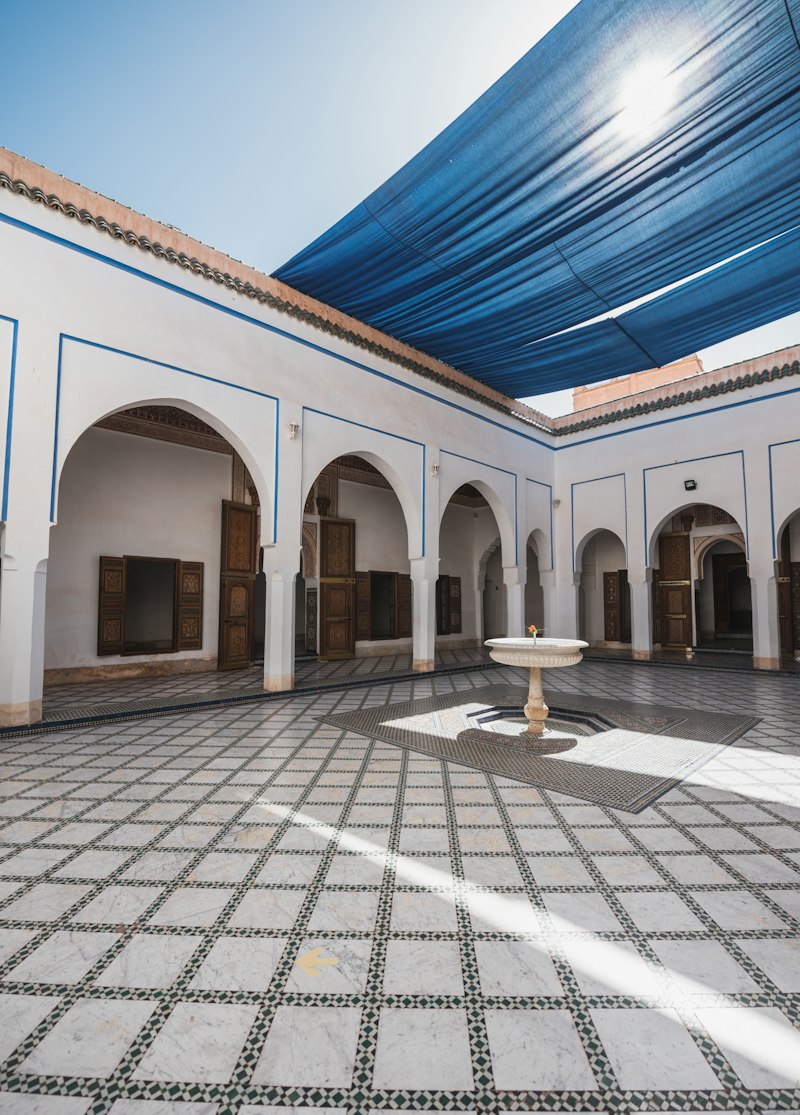
Photo: Unsplash — Bahia Palace
See Marrakech Through a Traveler’s Eyes
Sometimes the fastest way to feel a destination is to travel it with someone who is already in love with it. This Marrakech vlog by Reigne Or Shine walks through three perfect days in the Red City — from medina mornings to desert sunsets — and captures the energy that still photographs rarely can.
Where to Stay in Marrakech
The big decision is medina or Ville Nouvelle.
Stay in the medina if you want atmosphere. A riad — a traditional house built around an interior courtyard — puts you inside the action. You step out into the souks and retreat at night to a quiet, tiled sanctuary. Riads range from budget guesthouses to luxury palaces like La Mamounia and Royal Mansour.
Stay in Gueliz or Hivernage if you want calm, wider streets, modern cafes, and easier taxi access. This is the French-built new city, with art galleries, boutique shops, and a more contemporary pace.
For a first visit, we recommend the medina. Yes, it is intense. But waking up in a riad, eating breakfast on a rooftop, and hearing the call to prayer echo across the Red City is the Marrakech experience you came for.
A Perfect Day in Marrakech
7:00 AM — Rooftop breakfast. Bread, olive oil, honey, fresh orange juice, and mint tea as the city wakes up below you.
9:00 AM — Bahia Palace. Arrive early to beat the crowds and the heat.
11:00 AM — Ben Youssef Madrasa. A short walk away, this is one of the most beautiful interiors in Morocco.
1:00 PM — Lunch at Terrasse Bakchich. Rabbit tagine on the rooftop.
3:00 PM — Jardin Majorelle. Pre-booked tickets. Wander slowly.
6:00 PM — Jemaa el-Fnaa. Find a rooftop cafe and watch the square transform.
8:00 PM — Dinner in the square. Pick a busy food stall, order grilled meats, and eat surrounded by smoke, music, and strangers who feel like friends.
Practical Tips for Your First Visit
Moroccan dirham (MAD). Euros are sometimes accepted, but dirhams are best. ATMs are widely available.
Shoulders and knees covered, especially outside tourist sites. It shows respect and reduces unwanted attention.
In the souks, start at about 40% of the asking price and negotiate with humor.
Agree on the price before they start, and avoid the aggressive ones.
Petite taxis are cheap but often refuse to use the meter. Negotiate beforehand or use ride-hailing apps where available.
March to May and September to November, when temperatures are mild and the light is golden.
The Atlas Mountains, Essaouira, and Aït Benhaddou are all doable from Marrakech and add completely different dimensions to your trip.
What You Will Carry Home With You
Marrakech is not a place you photograph and forget. It stays with you. You will remember the sound of your footsteps on tilework laid by hand six hundred years ago. The smell of cumin and orange blossom. The way a stranger smiled when you tried your first Arabic phrase. The feeling of being overwhelmed and then, suddenly, completely at home.
If Morocco is a kingdom of stories, Marrakech is the story you will tell most often. So go. Get lost. Eat too much. Say yes to the tea. And when you come back, you will understand why Winston Churchill kept returning to paint the light.
Keep Exploring Morocco
Planning the rest of your trip? Read our complete Morocco travel guide and discover more destinations on our best places to visit in Morocco page.