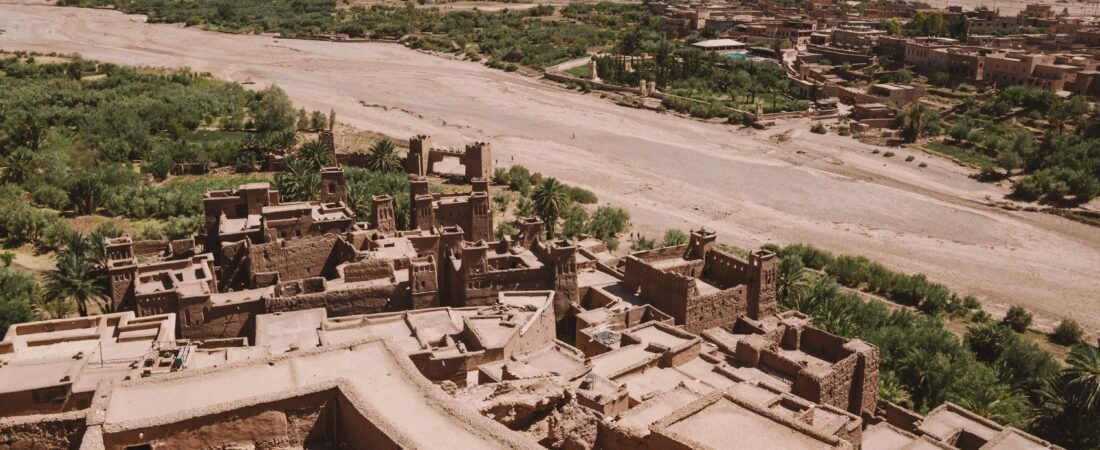
A UNESCO-listed earthen ksar rising from the Ouarzazate desert, where centuries of caravan history meet Hollywood’s favorite backdrop.
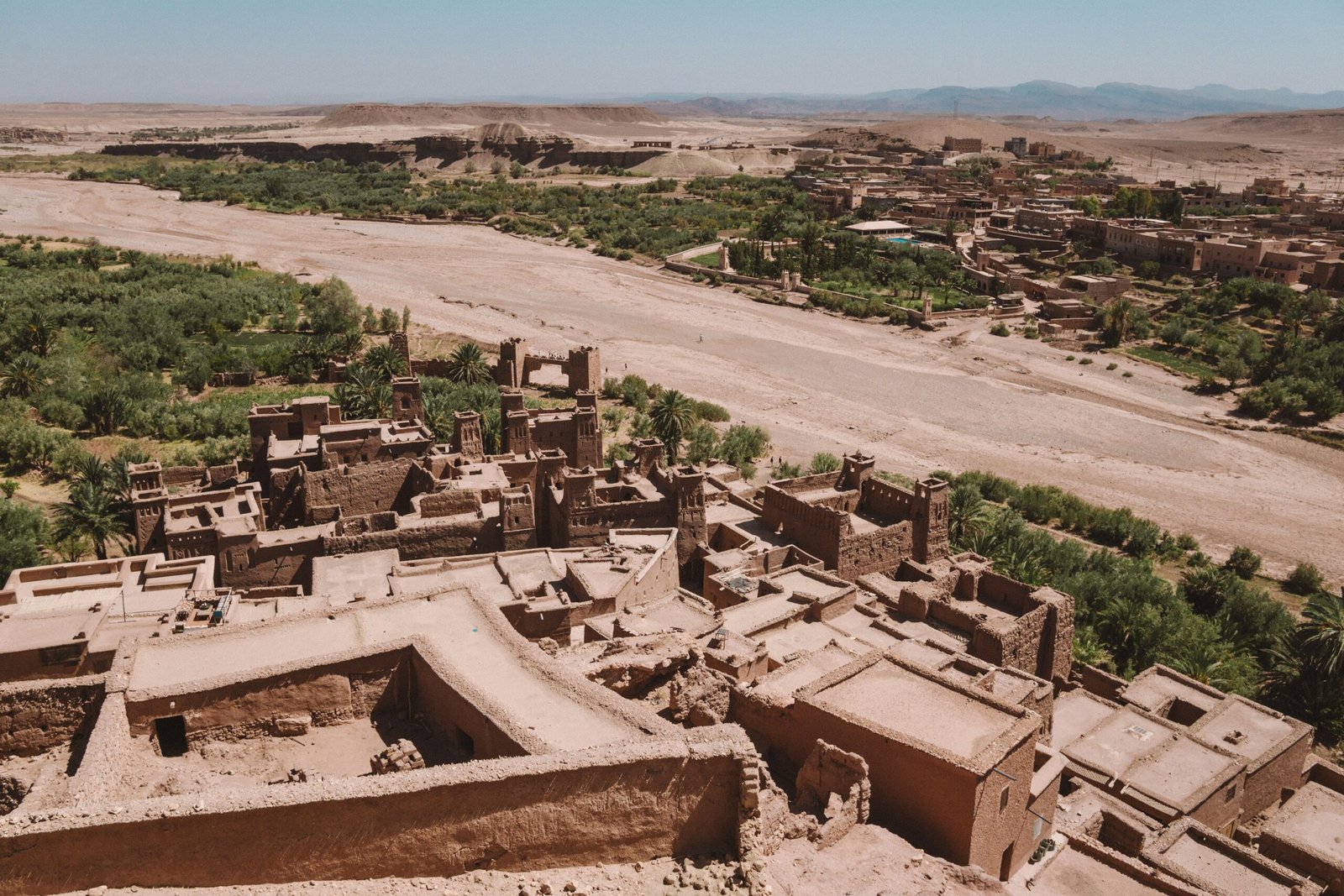
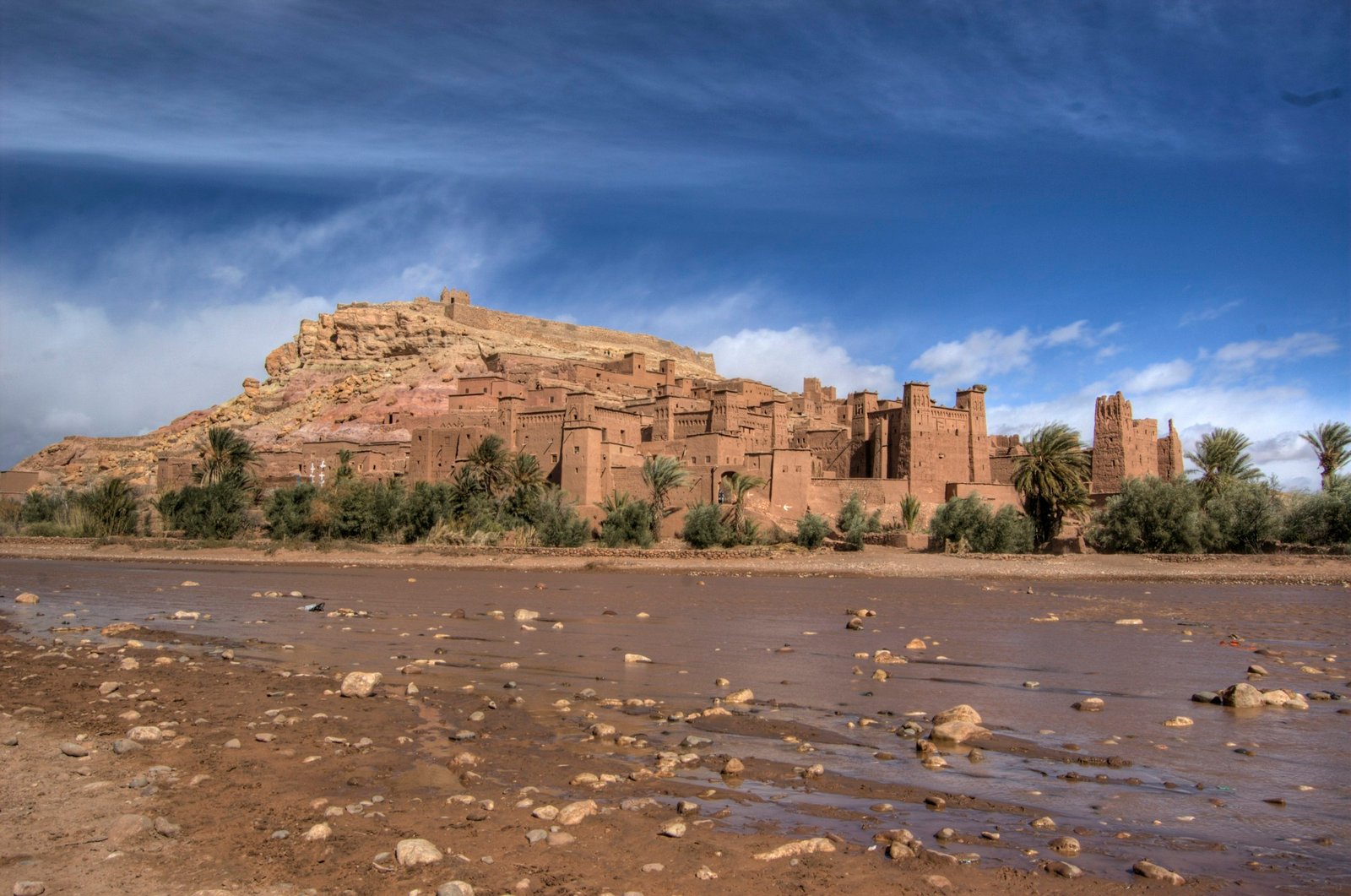
Long before it appeared behind Russell Crowe or Peter O’Toole, Ait Benhaddou was a working stop on the caravan road between the Sahara and Marrakech — a cluster of fortified earthen homes, or kasbahs, clustered together into a ksar and defended by corner towers studded with triangular motifs. Cross the dry bed of the Asif Ounila river on a footbridge of stones and rope, and you climb through a maze of red-clay alleys that have barely changed in centuries, until you reach the ruined agadir, or communal granary, at the very top, where the whole valley opens out below you.
“Ait Benhaddou does not need special effects. The light and the clay do all the work.”
If Morocco’s imperial cities show off in marble and zellige tile, Ait Benhaddou tells its story in earth. For more inspiration on where this ksar fits into the country’s larger story, browse our complete destinations guide.
What Makes Ait Benhaddou Special
Ait Benhaddou sits on the old trans-Saharan trade route, at the foot of the High Atlas along the road that continues over the Tizi n’Tichka pass toward Marrakech. Caravans carrying salt, gold, and spices once rested here on the journey between the desert and the city, and the ksar’s fortified design — thick earthen walls, few windows, and defensive towers — reflects a landscape where protecting goods and water mattered as much as comfort. While the site’s origins reach back further, most of the kasbahs standing today are believed to date from around the 17th century onward, built and rebuilt in rammed earth, mud brick, and wood using techniques passed down through generations.
What makes the ksar remarkable today is how alive it still feels despite being only sparsely inhabited. A handful of families remain within the old walls, while most residents now live in the newer village across the river, earning a living from agriculture, crafts, and tourism. Because mud architecture erodes with every rainy season, the buildings require constant upkeep, and UNESCO recognition in 1987 helped bring attention and restoration support to a site that is, quite literally, dissolving and being rebuilt at the same time.
Ait Benhaddou’s other claim to fame is on-screen. Its dramatic silhouette and malleable architecture have made it one of the most filmed locations in North Africa, standing in for ancient Rome, Jerusalem, Central Asia, and fictional cities across decades of cinema and television — including scenes associated with Lawrence of Arabia, Gladiator, Kingdom of Heaven, and HBO’s Game of Thrones, among many other productions. Nearby Ouarzazate, sometimes nicknamed “Ouallywood,” houses the film studios that keep this corner of Morocco in steady rotation for location scouts.
Top Things to Do in Ait Benhaddou
- 01
Cross the Asif Ounila on the footbridge
The river is dry for much of the year, and a simple footbridge of stones, sandbags, and rope carries visitors across to the ksar’s entrance. In wetter months guides sometimes ferry visitors across for a small fee — either way, this crossing is the classic first view of the towers rising ahead.
- 02
Climb to the agadir at the summit
A narrow path winds up through the ksar past private kasbahs, small workshops, and mud-brick homes to the ruined communal granary, or agadir, at the top. The climb is short but steep, and it rewards you with a sweeping view over the valley and the newer village on the opposite bank.
- 03
Wander the old town’s alleys
Beyond the postcard silhouette, the ksar is a genuine warren of covered passageways, carved wooden doors, and small shops selling rugs, fossils, and paintings made with local pigments including saffron and henna. Take your time and look up at the details in the earthen relief work.
- 04
Catch it at sunrise or sunset
The clay walls change color dramatically through the day, glowing deep orange and pink as the sun drops toward the Atlas foothills. Photographers generally rate early morning and late afternoon light as the most dramatic, and the site is markedly quieter outside midday tour-bus hours.
- 05
Pair it with Ouarzazate and the Atlas Studios
Most visitors combine Ait Benhaddou with a stop in Ouarzazate, roughly 30 minutes away, home to the Atlas Film Studios and the Taourirt Kasbah. It is an easy way to round out a half-day or full-day trip from Marrakech.
Practical Tips
Ait Benhaddou is about 30 minutes from Ouarzazate and roughly 3.5–4 hours from Marrakech via the scenic Tizi n’Tichka pass. Most travelers join a day trip from Marrakech or stop here en route to the Sahara.
Spring (March–May) and autumn (October–November) bring mild daytime temperatures. Summers are very hot, and the exposed clay alleys offer little shade.
A small entry fee applies to visit the ksar, and local guides are readily available at the entrance — helpful for context on the architecture and film history, though not strictly required to wander the site.
Sturdy, closed shoes are essential for the uneven stone paths and steep climb to the granary. Bring sun protection, water, and a layer for cooler mornings and evenings.
A handful of small riad-style guesthouses sit just outside the ksar with views across the river, or you can base yourself in Ouarzazate for more hotel options.
Final Thoughts
Ait Benhaddou rewards travelers who slow down enough to notice the details. It is easy to treat it as a quick photo stop on the road to the desert, but the ksar holds up to a longer visit — the climb to the granary, the quiet alleys away from the entrance, the light changing on the clay walls as the afternoon wears on. Whether you know it from a film scene or are seeing it for the first time, it remains one of the most striking examples of earthen architecture left standing in North Africa.
Combine it with Ouarzazate, the Draa Valley, or a longer loop into the Sahara, and Ait Benhaddou becomes not just a stop but a genuine highlight of a Morocco itinerary.
Keep Exploring Morocco
Planning a longer trip? Browse our full destinations guide for imperial cities, Sahara treks, and Atlas Mountain villages, or find your next activity for the road.