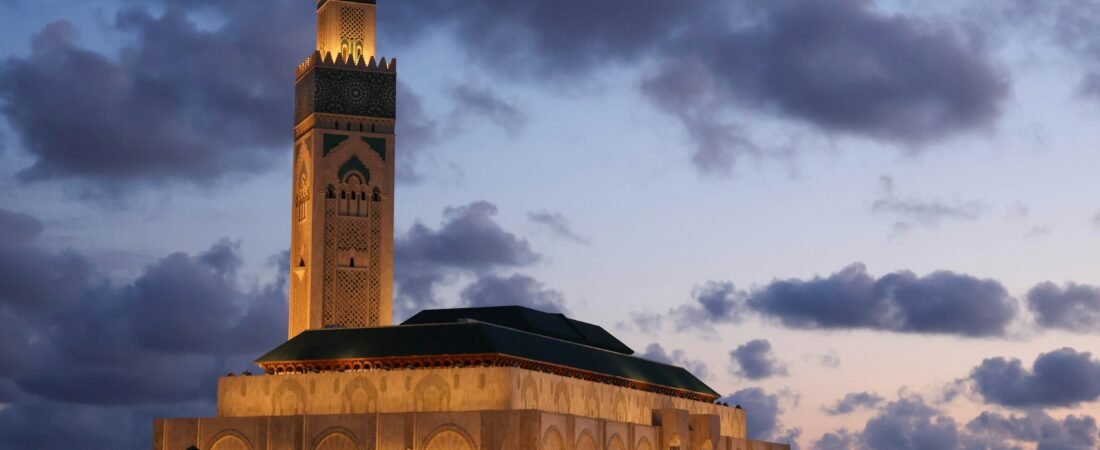
Morocco’s largest city and beating economic heart, where Art Deco boulevards meet the Atlantic and one of the world’s grandest mosques rises straight out of the sea.
Casablanca does not try to charm you the way Marrakech or Chefchaouen do. It is bigger, faster, and unapologetically modern — a working port city of glass towers, French colonial facades, and traffic that never quite stops. But give it a day and the city reveals its own kind of beauty: the pale geometry of Art Deco apartment blocks catching the evening light, the call to prayer rolling off the Atlantic from the world’s second-tallest minaret, and a corniche where Casablancais families stroll every night of the week. This is Morocco’s economic capital, and it feels like it.
“Casablanca is Morocco with its sleeves rolled up — a city that works for a living, and is beautiful anyway.”
Casablanca is Morocco’s largest city and its undisputed economic capital, the commercial and industrial engine of the country even though Rabat holds the government. It sits on the Atlantic coast in the Casablanca-Settat region, home to well over three million people in the city proper and several million more across the wider metropolitan area — making it one of the largest cities in Africa. For more on where it fits into a wider Moroccan itinerary, see our complete destinations guide and our visual Morocco photo gallery.
Pace & Vibe: What This Guide Recommends
Best for: First-time arrivals flying into Morocco, architecture lovers, business travelers, and anyone curious about the country’s modern, cosmopolitan side.
Recommended pace: Two to three days is enough to see the highlights; most travelers pass through on the way to Marrakech, Fez, or Rabat.
Overall feel: Urban, energetic, and international — closer to a Mediterranean business capital than a postcard medina town.
What Makes Casablanca Special
Casablanca’s character comes from its layered history. Berbers settled the site as early as the seventh century, but the city as it looks today was largely rebuilt in the 18th century by Sultan Mohammed ben Abdallah after the original settlement, Anfa, had been destroyed. The name “Casablanca” — Spanish for “white house” — stuck after Spanish and Portuguese traders used the port for centuries. When France took control of Morocco under the protectorate in 1912, it chose Casablanca as the country’s commercial hub while Rabat became the political capital, a division of roles that still holds today.
That French period left an extraordinary architectural legacy: entire boulevards of Art Deco and Mauresque-style buildings, built rapidly in the 1920s and 1930s by French architects blending European modernism with Moroccan motifs. Downtown Casablanca is now considered one of the best-preserved collections of Art Deco architecture anywhere in the world, second only to Miami by some counts, though much of it awaits restoration.
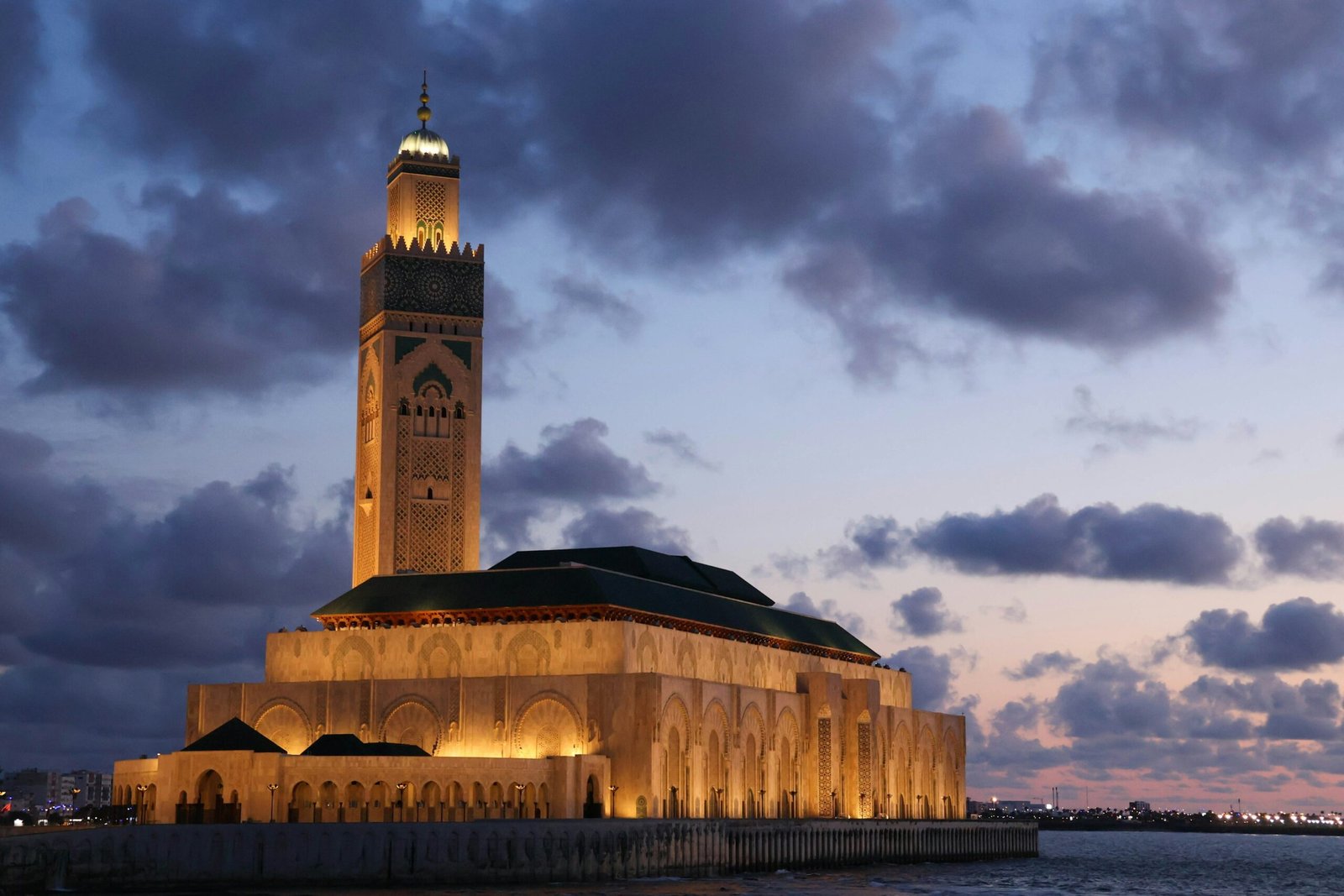
Then there is the Hassan II Mosque, completed in 1993 on a promontory jutting into the Atlantic. Its minaret stands 210 meters tall — the tallest minaret ever built at the time of construction and still one of the tallest religious structures in the world — and the mosque can hold tens of thousands of worshippers, with a retractable roof and a laser beam atop the minaret aimed toward Mecca. It is also one of the only mosques in Morocco that non-Muslim visitors can enter on a guided tour. Casablanca is also forever linked, at least in name, to the 1942 Hollywood film “Casablanca” — even though the movie was shot entirely on a Warner Bros. studio lot in California and never filmed a single scene in the city itself.
Beyond the landmarks, Casablanca is simply where Morocco does business. Banks, shipping companies, and multinational headquarters cluster around Boulevard Mohammed V and the Twin Center towers, while the old Medina — small and unpolished compared to Fez or Marrakech — sits quietly behind the port, a reminder of the fishing town this once was. At night, the Corniche in Ain Diab fills with families, joggers, and beach clubs facing the Atlantic surf, and the contrast between glass-and-steel skyline and centuries-old alleyways is, for many visitors, the most memorable thing about the city.
Top Things to Do in Casablanca
- 01
Hassan II Mosque
Morocco’s largest mosque and one of the few open to non-Muslims, with guided tours covering its cedar ceilings, marble floors, and Atlantic-facing terrace. Built between 1986 and 1993, its minaret is the tallest in the world.
- 02
The Corniche & Ain Diab
Casablanca’s seafront promenade, lined with cafes, beach clubs, and restaurants facing the Atlantic. It is the best place to see how Casablancais actually spend a Sunday afternoon.
- 03
The Old Medina
A small, walled quarter near the port dating back to the 18th century — quieter and less touristy than the medinas of Fez or Marrakech, with narrow lanes, small shops, and a working fishing-town feel.
- 04
Habous Quarter (New Medina)
Built by the French in the 1930s as a planned “new medina,” this neighborhood mixes Moroccan architecture with orderly colonial-era urban design. Known for bookshops, spice stalls, and traditional bakeries.
- 05
Place Mohammed V & the Art Deco Downtown
The city’s grand colonial-era square, surrounded by the central Post Office, courthouse, and other early-20th-century landmarks. Wander the surrounding streets to see Casablanca’s famous Art Deco facades.
Practical Tips
Mohammed V International Airport (CMN) is Morocco’s main international gateway, connected to the city center by train (roughly 30–45 minutes) and served by frequent trains from Rabat, Marrakech, Fez, and Tangier.
April to June and September to November bring mild, dry weather; summers are warm but tempered by the Atlantic, and winters are mild but rainy.
Casablanca is Morocco’s most cosmopolitan city, so dress is generally relaxed, though modest clothing is still appreciated in the Medina and required inside the Hassan II Mosque.
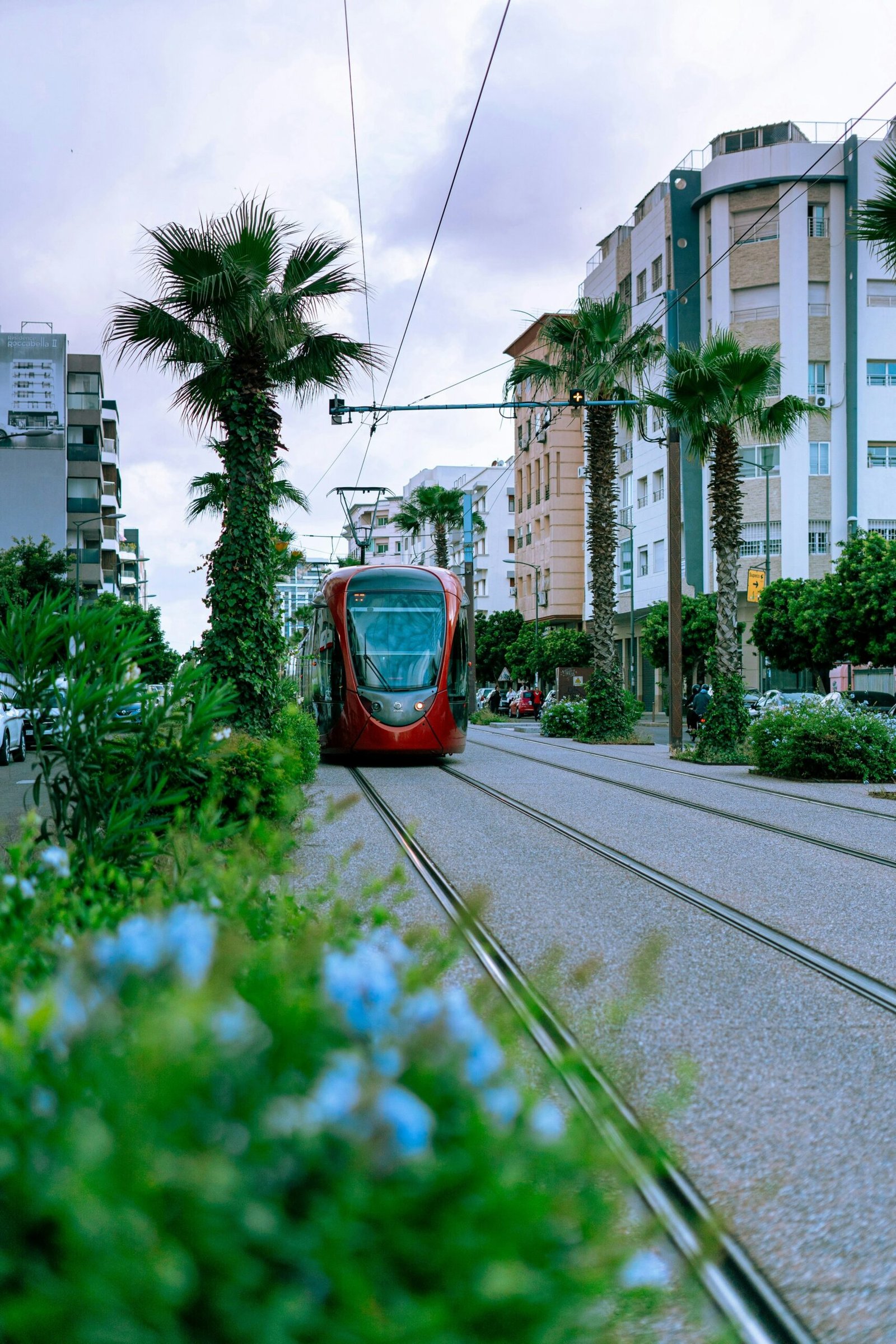
The city has a modern tramway network plus petit taxis (red, metered) for shorter trips; traffic can be heavy, so allow extra time between sights.
Final Thoughts
Casablanca will not seduce you the way the imperial cities do, and it isn’t trying to.
What it offers instead is a real, working portrait of contemporary Morocco — a city of commerce, Art Deco elegance, and one genuinely awe-inspiring mosque perched on the edge of the Atlantic. Most travelers pass through on their way somewhere else. Give it even one full day, and you’ll understand why plenty of them wish they’d stayed longer.
Keep Exploring Morocco
Planning a longer trip? Browse our full destinations guide for imperial cities, Sahara treks, and Atlantic surf towns, or get lost in the images on our Morocco photo gallery.