A whitewashed Atlantic port that trades Marrakech’s heat for sea wind, fresh seafood, and centuries of unhurried, salt-worn charm.
The wind hits you the moment you step off the bus — a cool, briny blast off the Atlantic that instantly peels away every layer of Marrakech heat you have been carrying for days. Essaouira does not ease you in. It grabs you by the collar, blows your hair sideways, and shows you a Morocco that most travelers never find: unhurried, salty, creative, and genuinely beautiful in a way that has nothing to do with being photogenic and everything to do with being alive.
This whitewashed port city on Morocco’s Atlantic coast is the country’s best-kept summer secret. When Marrakech bakes at 42C and Fes feels like a furnace, Essaouira stays breezy and mild, cooled by trade winds that have been doing the same job for centuries. In this guide, you will discover what makes this UNESCO-listed medina unlike anywhere else in Morocco, where to eat the freshest seafood of your life, and the experiences you will be telling people about for years.
What Makes Essaouira Unlike Anywhere Else in Morocco
Most Moroccan medinas feel like puzzles designed specifically to disorient you. Essaouira’s does not. Built in 1765 on orders from Sultan Mohammed III, the city was redesigned by French architect Theodore Cornut — one of the very few European architects entrusted with shaping a Moroccan imperial city. The result is a medina with an unusually logical grid layout, wide enough streets to actually see the sky, and a personality that fuses North African tradition with a distinctly Atlantic, almost Andalusian, openness.
Essaouira has always attracted creative souls. Jimi Hendrix reportedly stayed nearby in the late 1960s — you will see his face on cafe walls across the medina. Orson Welles filmed parts of Othello on these ramparts in 1952. More recently, HBO’s Game of Thrones used the Skala de la Ville fortifications as a stand-in for Astapor. But Essaouira’s artistic identity runs deeper than celebrity cameos — the city has one of Morocco’s most active galleries and woodworking traditions, with thuya wood carved into extraordinary furniture and boxes that you will not find at the same quality anywhere else in the country.
A Brief History of Essaouira
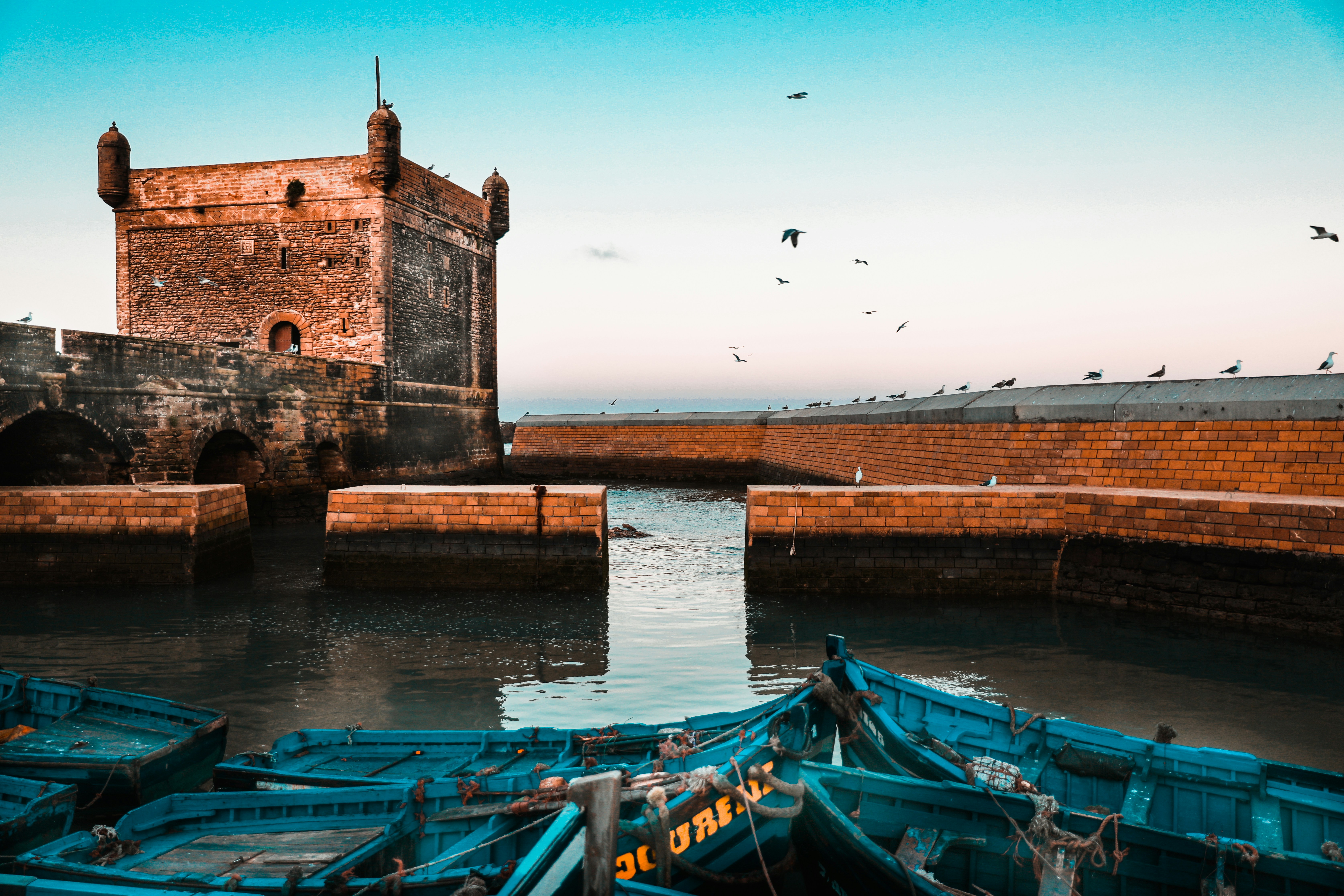
Long before the French architect arrived, this coastline was known to the Phoenicians, who established a purple dye production site here around the 7th century BC — harvesting murex shellfish from the nearby islands to produce the imperial purple that colored Roman togas. The Romans called the offshore islands the Purple Islands and used them as a dye works for the empire. You can still see the ruins on Ile de Mogador, the larger island visible from the port.
The Portuguese built the first significant fortifications in the 16th century, calling the settlement Mogador — a name that stuck in local usage for centuries and still appears on road signs. It was Sultan Mohammed III who transformed Mogador into a commercial powerhouse in 1765, making it Morocco’s primary Atlantic trading port and a hub for Jewish merchants who handled a significant portion of Morocco’s exports. By the 19th century, the city was one of the most cosmopolitan in North Africa. That layered identity — Amazigh, Arab, Jewish, Portuguese, French — is what gives Essaouira its unusual depth.
“It grabs you by the collar, blows your hair sideways, and shows you a Morocco that most travelers never find.”
Top Things to Do in Essaouira
Summer is the right season to do all of this. The winds are strong but the temperature is perfect, and the crowds are a fraction of what Marrakech endures.
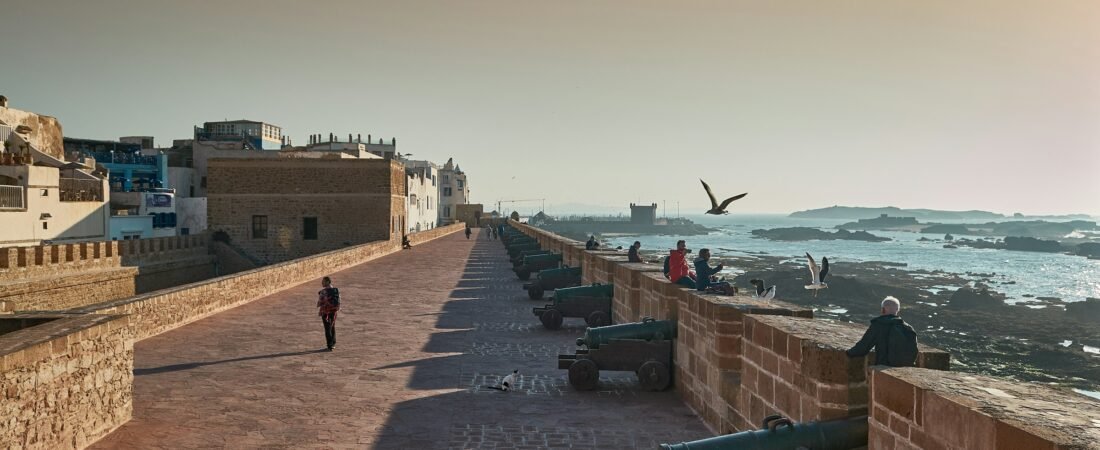
Walk the Skala de la Ville (the sea ramparts)
The 18th-century cannons still point out to sea along this dramatic clifftop fortification. Come at sunset when the Atlantic turns copper and the medina walls glow. Free to enter; arrive in the hour before sunset for the best light.
Explore the Port
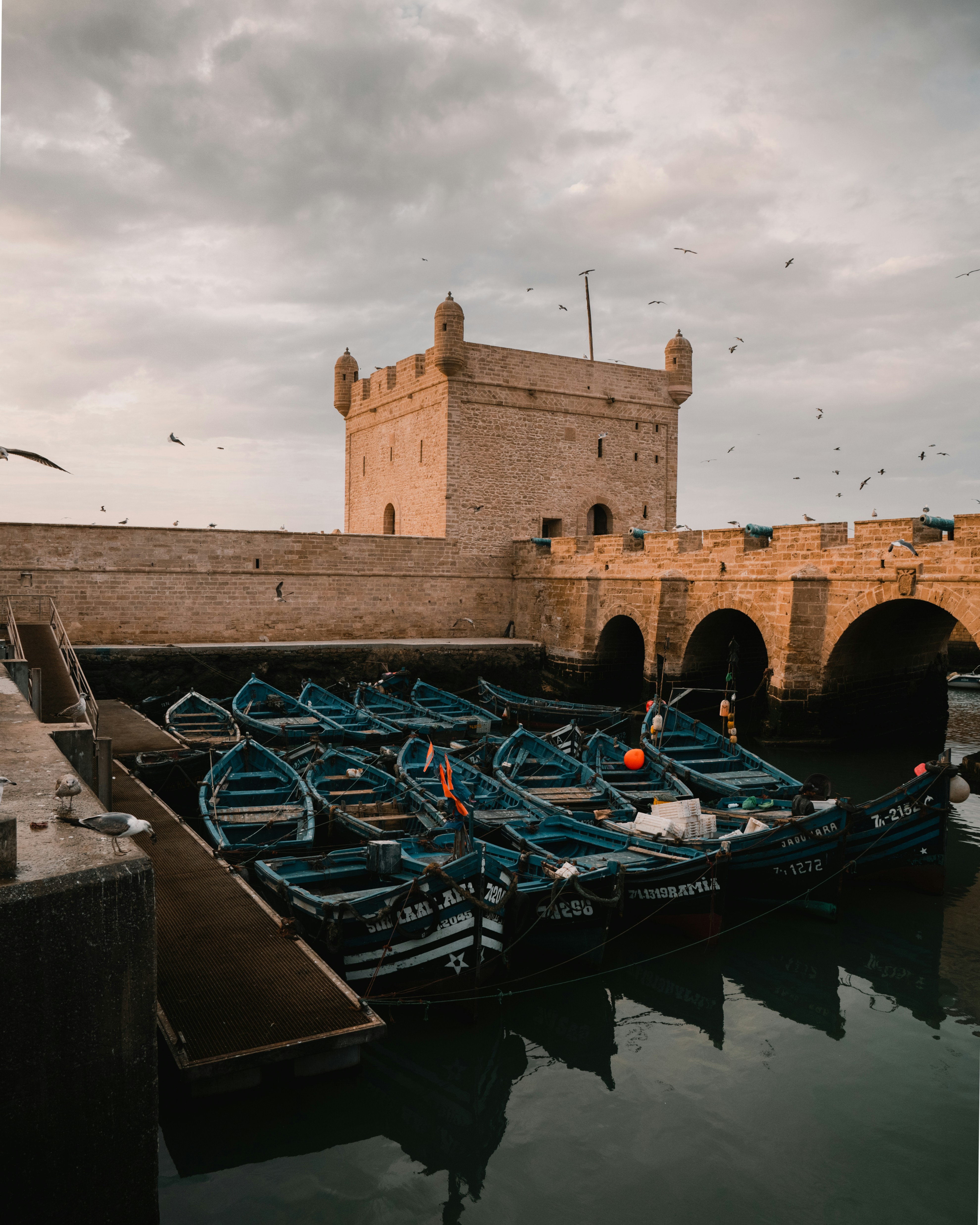
Essaouira’s working fishing port is not a tourist attraction — it’s an actual port where actual fishermen bring in actual fish. Walk through in the morning before 10am to see the catch unloaded, the auction underway, and cats stationed strategically at every corner. This is the real Morocco, no staging required.
Surf or Kiteboard at Plage de Sidi Kaouki
About 25km south of town, Sidi Kaouki is one of Morocco’s premier kite and surf spots, with consistent Atlantic swells and a long, near-empty beach. Several surf schools operate here with equipment rental and lessons for all levels. A taxi from Essaouira costs around 100-150 MAD each way.
Visit an Argan Cooperative
Essaouira sits within one of the few regions on earth where argan trees grow naturally. Women’s cooperatives in and around the city produce and sell genuine cold-pressed argan oil. Visiting a cooperative rather than a tourist shop means your money goes directly to the women who produced it.
Shop Thuya Wood Workshops
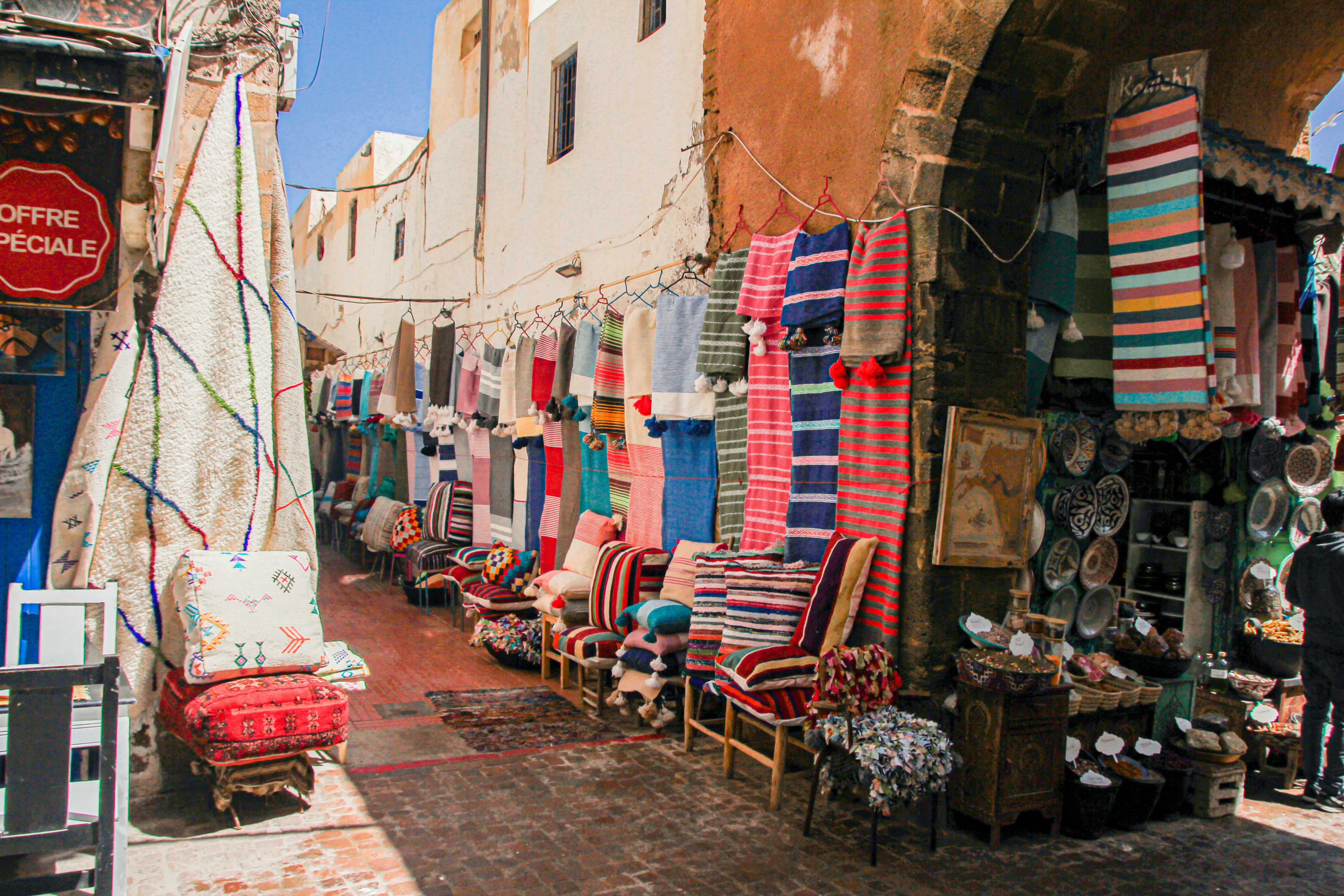
The woodworkers of Essaouira work with thuya, a fragrant resin-rich wood from the nearby Atlas foothills, producing intricate boxes, chess sets, and furniture of extraordinary quality. The workshops along the ramparts are not tourist traps — craftsmen are actually working here.
Hear Gnawa Music at Night
Essaouira is the world capital of Gnawa music — a trance-inducing spiritual tradition brought to Morocco by sub-Saharan enslaved Africans centuries ago. You will hear it in restaurants, in squares, at the annual Gnaoua World Music Festival held in June.
Where to Eat: Best Restaurants in Essaouira
Taros — The most iconic spot in the medina, Taros sits on the top floor of a rampart-side building on Place Moulay Hassan with rooftop terraces overlooking the Atlantic. Moroccan classics, fresh fish, excellent cocktails. $$
Umia — A small, beautifully designed restaurant in the medina renowned for its creative take on Moroccan cuisine — small plates, excellent flavors, thoughtful sourcing. Reservations essential in summer. $$
Les Chandeliers — An Essaouira institution near the medina walls, known for traditional tagines cooked low and slow and one of the best-value fixed menus in town. $$
Port Fish Market Grills — Walk into the port market, choose your fish, prawns, or squid, and one of the adjacent grills will cook it for you. Fresh off the boat, grilled on coals, eaten at a plastic table with bread and harissa. $
Caravane Cafe — One of the most beloved breakfast and lunch spots in the medina, with excellent msemen (flaky pan bread) and fresh-pressed orange juice. $
Where to Stay: Best Hotels and Riads in Essaouira
Riad Lyon-Mogador — Beautifully restored riad in the heart of the medina with a sea-view rooftop terrace and attentive service. Mid-range pricing that feels like a luxury experience. $$
Casa.b Mogador — A design-forward boutique property favored by architecture and design enthusiasts. Modern Moroccan aesthetic, immaculate rooms. $$$
Dar Halima — A genuinely stunning budget riad in the medina, earning consistent rave reviews for its price-to-quality ratio. $
Sofitel Essaouira Mogador Golf and Spa — The most complete luxury property outside the medina walls, with a spa, multiple pools, and direct beach access. $$$$
Don’t Leave Without…
- Eating chermoula-marinated fish straight off the grill at the port market — it tastes like the Atlantic itself
- Standing on the Skala de la Ville at exactly the moment the sun drops below the sea horizon
- Buying one piece of thuya wood from a craftsman’s workshop, not a tourist shop — watch it being made
- Wandering the Mellah (the old Jewish quarter) at dawn when no tourists are awake
- Spending one evening in a cafe where a Gnawa musician is playing — let the music find you
Things to Know Before You Go
The CTM or Supratours bus from Marrakech takes roughly 2.5-3 hours, with tickets around 90-110 MAD. Private taxi transfers run about 500-700 MAD each way. There is no train to Essaouira.
Essaouira is Morocco’s best summer destination — the wind keeps temperatures comfortable when the interior is scorching. September and October offer the most balanced conditions: warm, sunny, calmer winds, fewer tourists.
More relaxed than Fes or Marrakech, but modest dress is respectful in the medina. Women traveling alone report Essaouira as one of the easiest cities in Morocco for independent female travelers.
Essaouira is significantly cheaper than Marrakech. A generous daily budget — riad accommodation, two restaurant meals, activities — runs about $60-80 at mid-range. Street food and port lunches can keep you under $20 a day for food alone.
Bezzaf d’rih (BEZ-zaf duh-REE) — Very windy. Locals will laugh warmly and agree every single time.
Final Thoughts
Essaouira rewards slowness in a way few places in Morocco do.
You don’t need an itinerary here — you need a couple of days, comfortable shoes, and the willingness to let the wind push you through whatever street it wants to. The city has been absorbing travelers for centuries: Portuguese sailors, Saharan caravans, Gnawa musicians, Jimi Hendrix, and now you. Every one of them left a trace on these whitewashed walls.
If you have been chasing the real Morocco through Marrakech’s tourist infrastructure and Fes’s exhausting medina hustle, Essaouira is where you finally find it — unhurried, unselfconscious, and genuinely alive in a way that no amount of Instagram filters can fully capture.
Keep Exploring Morocco
Planning a longer Morocco trip? Our Complete Morocco Travel Guide covers everything from visas to regional planning, and our Best Places to Visit in Morocco page will help you decide where Essaouira fits in your itinerary. Essaouira deserves at least three days — plan accordingly.