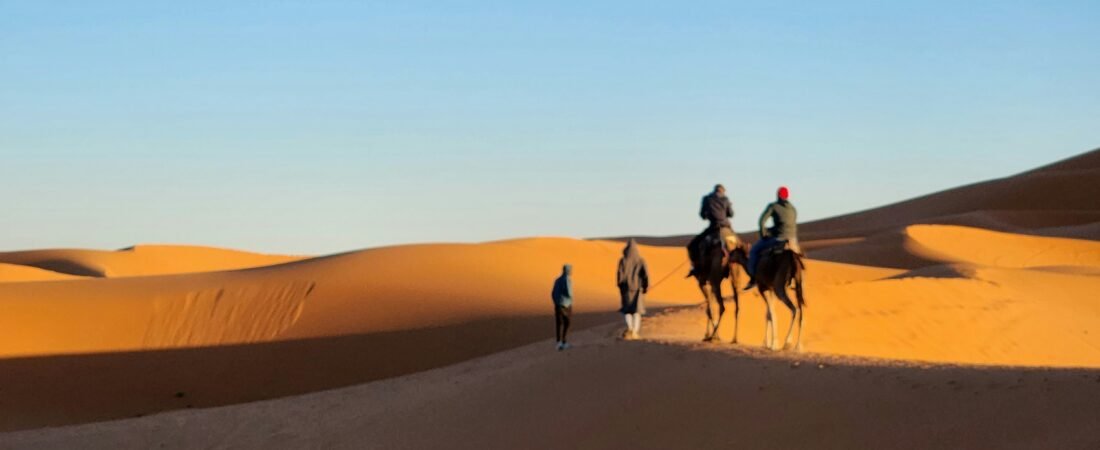
Saddle up for Morocco’s oldest way of covering ground — through palm groves, along wild Atlantic sand, and out toward dunes that turn gold at dusk.
You’ll saddle up for a guided ride through Marrakech’s palm groves, canter along the open sand of Essaouira’s beach, or set out from Merzouga toward the dunes at golden hour. It is one of the few Moroccan experiences that changes character completely depending on where you do it — quiet and shaded under palms, wind-whipped and salty by the ocean, or hushed and amber-lit in the Sahara. Whichever version you choose, a horse slows your pace to something closer to how this land was actually traveled for centuries.
“The horse does not care about your itinerary. For an hour, it sets the rhythm, and Morocco simply happens around you.”
Why Horseback Riding is Worth It
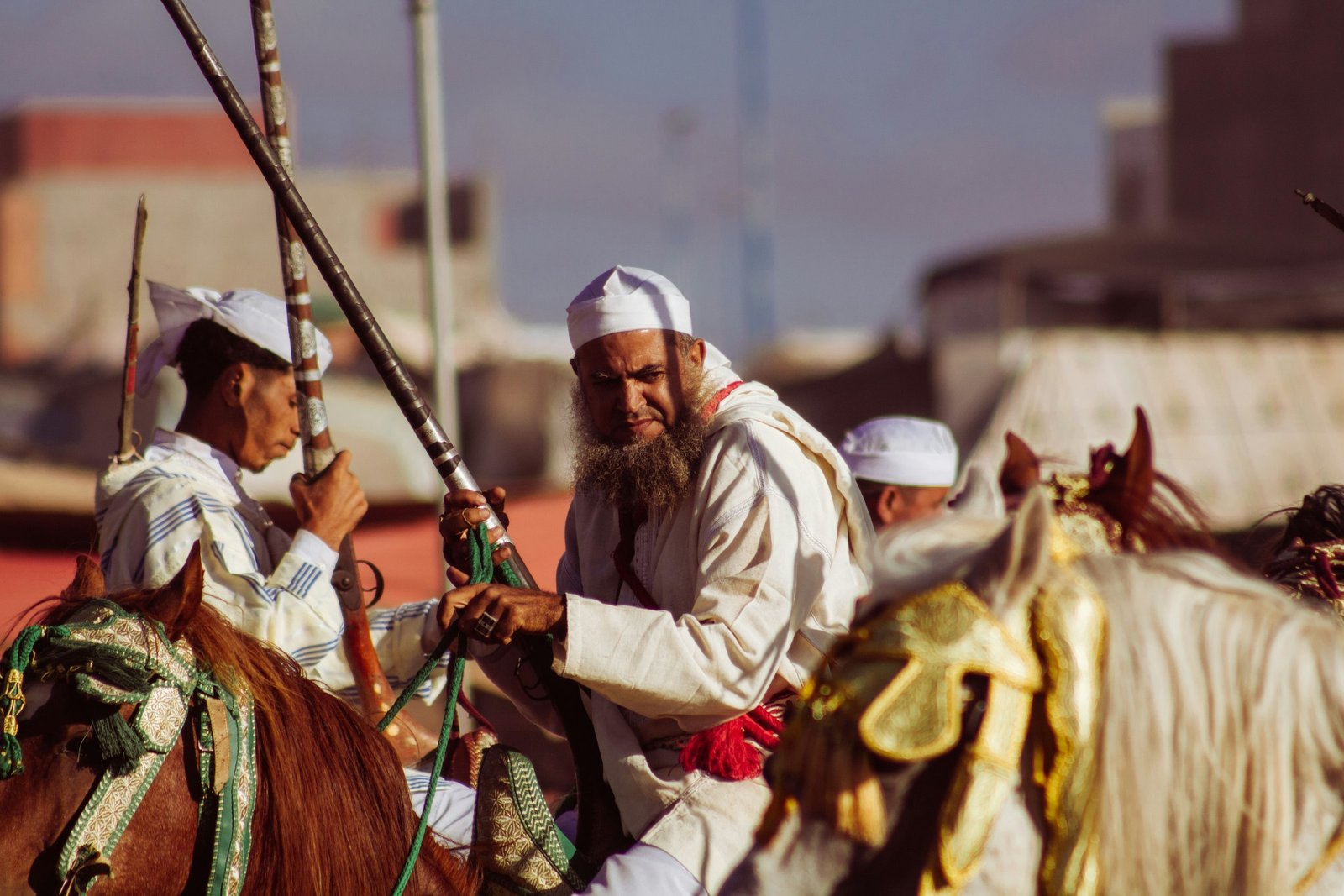
Morocco has a long, layered relationship with horses. The Arabian and Barb bloodlines that shaped the country’s equestrian culture are still visible today in the fantasia — the thunderous cavalry charge performed at festivals across the country, where lines of riders in traditional dress gallop in formation before firing rifles into the air in unison. That heritage means horses here are not a tourist prop bolted onto a destination; they are woven into how Moroccans have marked celebrations, journeys, and status for generations. Riding, even for an afternoon, puts you in loose contact with that history.
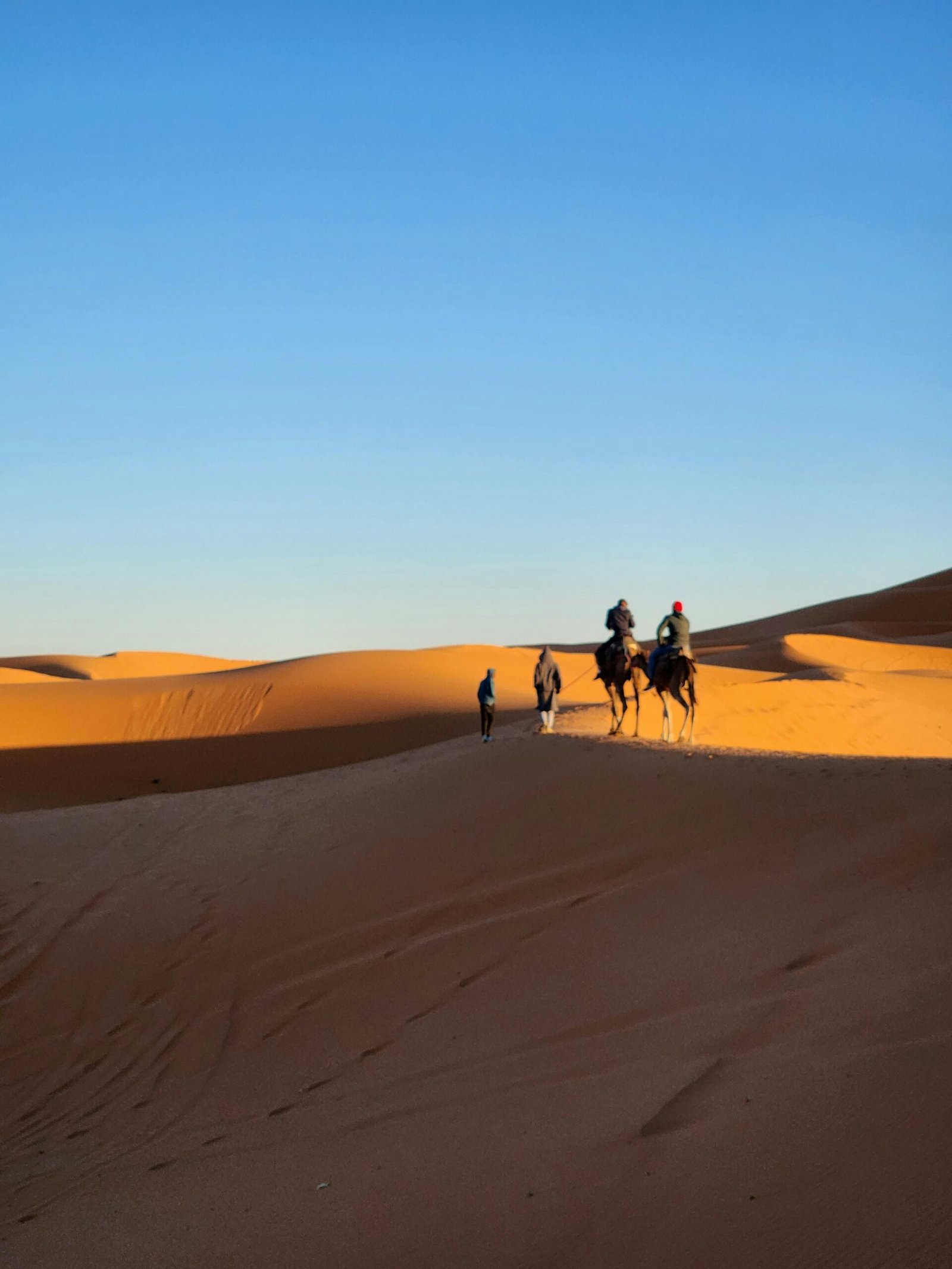
It is also simply a different way to see the country’s landscapes. A guided ride through the Marrakech palm groves (the Palmeraie) shows you a green, irrigated world just outside a red desert city, with old ksour and mudbrick walls visible between the trees. On the Atlantic coast, cantering along Essaouira’s wide beach with a sea breeze coming off the water is a favorite for both first-timers and experienced riders because the flat, hard-packed sand is forgiving and the scenery is dramatic. In the far south, riding out from Merzouga toward the Erg Chebbi dunes at sunset turns a ten-minute drive into something closer to a small pilgrimage, with the dunes shifting from ochre to rose to violet as the light drops.
What to Expect
- 01
Marrakech’s Palm Groves
Most rides begin at a stable on the edge of the Palmeraie, a few minutes outside the medina. Guides lead small groups along sandy tracks between date palms, past mudbrick walls and the occasional grazing goat. It is an easy, unhurried ride well suited to beginners, and a good way to see rural Marrakech without renting a car.
- 02
Essaouira’s Atlantic Beach
Here the ride trades shade for open sky. Outfitters based near the port take riders along the long, flat beach south of the medina, with the option to pick up the pace to a trot or canter where the sand is firm. The wind that makes Essaouira famous for kitesurfing is the same wind that makes this ride feel exhilarating rather than sleepy.
- 03
Merzouga and the Erg Chebbi Dunes
From desert camps around Merzouga, sunset rides head out toward the base of the dunes, often as an alternative to the more common camel trek. Horses move faster than camels, so you cover more ground and reach a vantage point for the sunset with time to spare before the light fades and the temperature drops.
Practical Tips
Stables in the Marrakech Palmeraie and Merzouga desert camps can usually be booked same-day through your riad or camp host; Essaouira operators cluster near the beach and port and take walk-ups as well as advance bookings through local tour desks or getyourguide-style platforms.
Closed-toe shoes with a small heel, long trousers to avoid chafing, sunscreen and a hat or scarf, and a light layer for desert rides after sunset when temperatures drop quickly.
Morning or late-afternoon rides avoid the midday heat, especially in Marrakech and Merzouga; October through April offers the most comfortable riding temperatures countrywide.
A 1-hour guided ride typically runs $30–40 per person; 2-hour rides or sunset dune outings in Merzouga run closer to $50–60, usually including a guide and, for desert rides, tea afterward.
Final Thoughts
Horseback riding is not the headline activity most travelers plan their Morocco trip around, but it deserves a spot on the list. Whether it’s an easy trot through palm shade, a windswept canter by the Atlantic, or a slow procession toward dunes lit orange at dusk, an hour or two in the saddle gives you a different rhythm and a different view of a country usually seen from a car window or a medina alley. Book it as an add-on to whichever base you’re already staying in, and let the horse set the pace for a while.
Keep Exploring Morocco
Planning more of your trip? Browse our full destinations guide or discover more activities & adventures across the country.