Morocco’s imperial city of a thousand walls — where Sultan Moulay Ismail built on a scale meant to rival Versailles.
Meknes does not announce itself the way Marrakesh or Fez do. There is no wall of touts at the gate, no overwhelming first plunge into the souk. Instead, the city reveals itself slowly — through a monumental gate that stops you mid-step, through a square that opens up like a held breath, through granaries so vast they feel built for giants rather than horses. This was once the capital of an empire, willed into being by a single sultan with an appetite for scale that still, centuries later, has no real rival in Morocco.
“Meknes was built by a man who wanted Morocco to have its own Versailles — and for a while, it did.”
What Makes Meknes Special
Meknes began, like many Moroccan cities, far more humbly than it would end up. It was founded in the 11th century by the Almoravids as a military settlement, one of many small strongholds scattered across the region. For centuries it remained a modest provincial town, its fate no different from dozens of others across the Maghreb.
Everything changed under Sultan Moulay Ismail, who ruled Morocco from 1672 to 1727 and chose Meknes as his imperial capital. Determined to build a city that reflected the power of his Alaouite dynasty, he commissioned monumental gates, miles of defensive walls, vast granaries, stables built to house thousands of horses, and a royal palace complex on a scale unmatched anywhere else in the country. Historians often describe his ambition for Meknes as a Moroccan answer to Louis XIV’s Versailles — a contemporary, in fact, with whom Moulay Ismail exchanged diplomatic correspondence.
That imperial-era city — its walls, gates, granaries and palaces — is what earned the historic center of Meknes its inscription as a UNESCO World Heritage Site in 1996. Walking through it today, you move through streets planned by a ruler who thought in terms of centuries, not seasons.
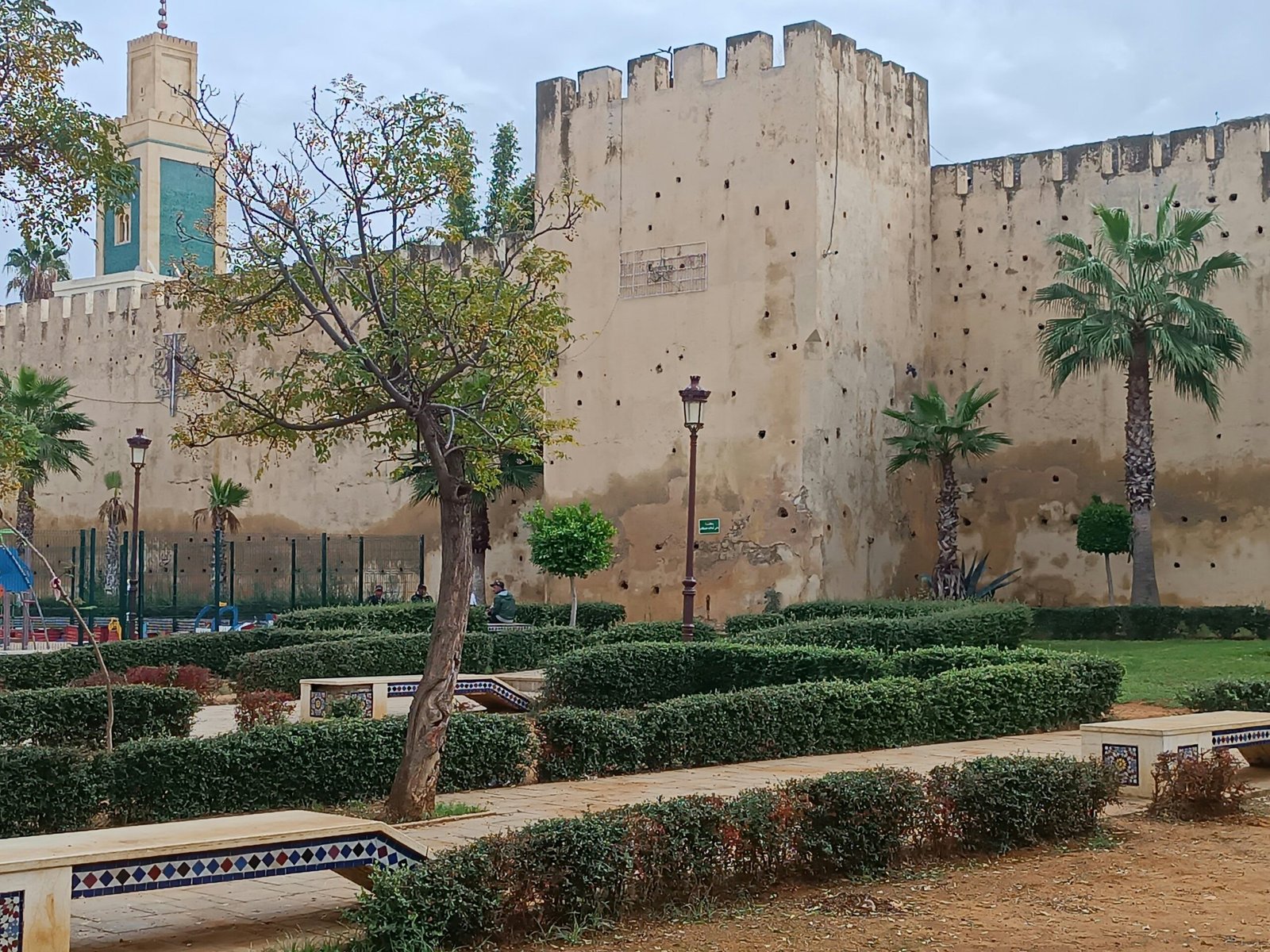
Unlike Marrakesh, Meknes rarely feels crowded. It is a working Moroccan city first and a tourist destination second, which means the medina’s cafes, tanneries, and souks cater as much to residents as to visitors. That balance gives Meknes an unhurried, authentic character that rewards travelers willing to slow down and look closely at the details — the carved cedar doors, the zellij tilework, the sheer thickness of walls built to withstand both time and siege.
Top Things to Do in Meknes
- 01
Bab Mansour
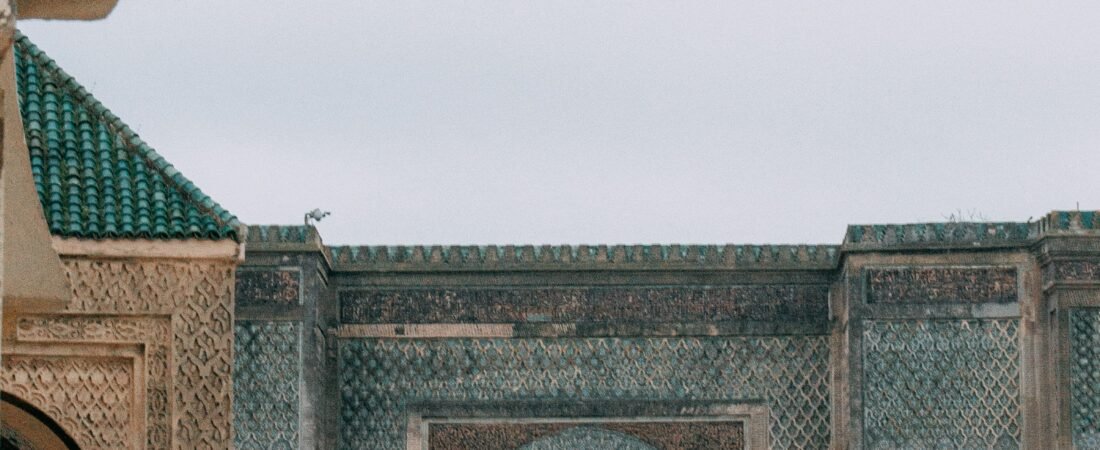
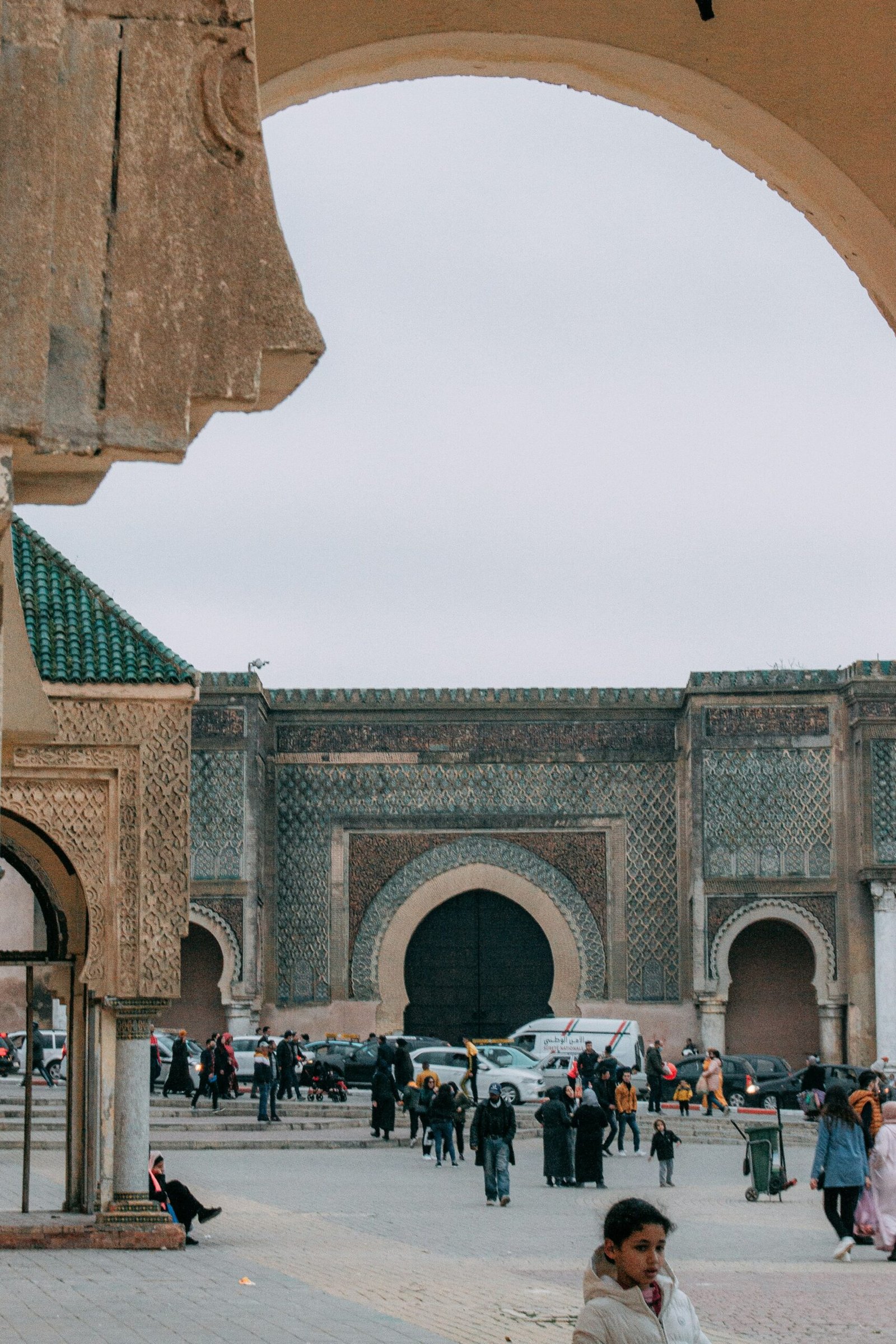
Meknes’s grand imperial gate was commissioned by Moulay Ismail and completed in 1732 under his son and successor, Moulay Abdellah. Its horseshoe arch, dense zellij tilework, and Koranic inscriptions make it one of the most celebrated gateways in North Africa — a fitting introduction to the scale the sultan built at.
- 02
Place El Hedim
This open square just outside Bab Mansour was created by Moulay Ismail between 1672 and 1674, after he had the houses that previously stood there demolished — hence its name, which translates roughly to “the demolition.” Today it is the beating heart of the medina, ringed by cafes and alive with vendors, musicians, and storytellers by evening.
- 03
Heri es-Souani (Royal Stables & Granaries)
Built to support Moulay Ismail’s cavalry and household, these granaries and stables were designed to store grain for long sieges and to house thousands of horses under one roof. The thick pise walls kept the interior cool year-round, and even in partial ruin — much of the surrounding palace complex was destroyed in the 1755 earthquake — the scale of the vaulted halls is genuinely humbling.
- 04
Moulay Ismail Mausoleum
The final resting place of the sultan who built imperial Meknes is one of the few religious sites in Morocco open to non-Muslim visitors, who may enter the outer courtyards and antechambers (though not the burial chamber itself). Modest dress and removing your shoes at the threshold are expected.
- 05
Day Trip to Volubilis
About half an hour north of Meknes lie the ruins of Volubilis, Morocco’s best-preserved Roman archaeological site and a UNESCO World Heritage Site in its own right since 1997. Mosaic floors, standing columns, and the old triumphal arch make it an easy and worthwhile half-day addition to a Meknes stay.
Practical Tips
Meknes sits on ONCF’s main rail line, with frequent direct trains connecting it to Casablanca, Rabat, and Fez — the ride from Fez takes well under an hour, making Meknes an easy add-on to a Fez visit.
The medina and Place El Hedim are best explored on foot. Petit taxis are cheap and plentiful for reaching the train station or the Ville Nouvelle.
The Moroccan Dirham (MAD). Cards are accepted at larger hotels and restaurants, but cash is essential in the medina and souks.
Moroccan Arabic (Darija) and Amazigh (Berber) are widely spoken, alongside Modern Standard Arabic and French; English is common in tourist-facing businesses.
Spring (April–May) and fall (September–November) bring mild, comfortable temperatures. Summers can climb past 35°C, while winter days are pleasant but nights turn cold.
Final Thoughts
Meknes rewards patience. It does not perform for visitors the way some of Morocco’s more famous cities do, and that is precisely its appeal. Spend a day wandering from Bab Mansour to Place El Hedim, stand inside the cool, cavernous granaries of Heri es-Souani, and pair it with an afternoon among the ruins of Volubilis, and you come away with a clearer sense of just how ambitious Morocco’s imperial past really was — built, in this case, by one sultan’s singular vision of what a capital could be.
Keep Exploring Morocco
Planning a longer trip? Browse our full destinations guide for imperial cities, coastal towns, and desert adventures, or find your next activity.