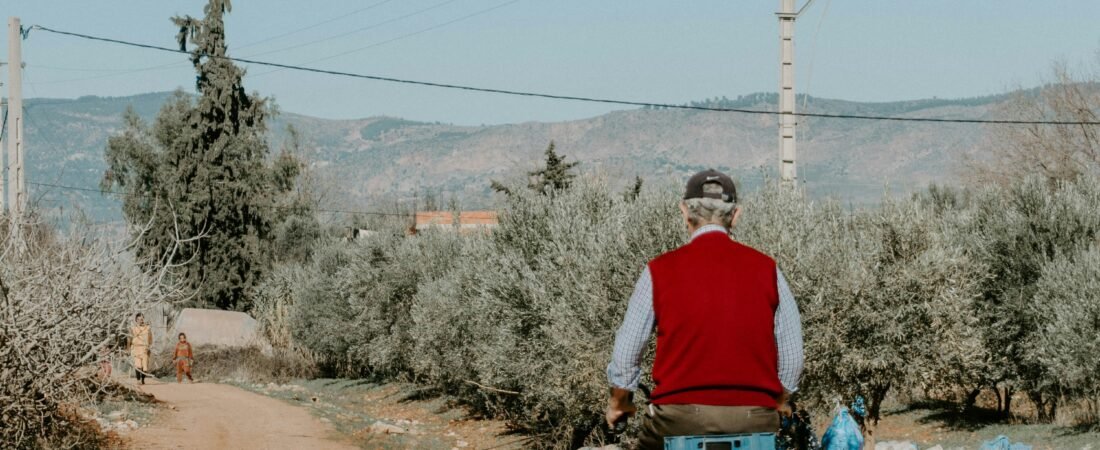
Two wheels, one country, wildly different terrain — from Berber footpaths in the High Atlas to the sunbaked mesas outside Marrakech.
You’ll pedal rocky singletrack through Berber villages and terraced valleys around Imlil, or roll across the flat-topped mesas of the Agafay Desert with the Atlas peaks on the horizon. It’s a strange, satisfying contrast: one ride smells of walnut trees and woodsmoke, the next kicks up ochre dust under a sky that never seems to end. Whichever direction you point your handlebars, Morocco turns out to be one of North Africa’s most underrated mountain biking destinations.
“You climb through a village on a mule track, and twenty minutes later you’re flying down a ridge with nothing but rock, sky, and the Atlas below you.”
Why Mountain Biking is Worth It
The High Atlas has quietly become one of the best places in North Africa to ride a bike off-road, and it’s easy to see why once you’re on the trail. The range is riddled with centuries-old mule and shepherd paths that connect villages tucked into the folds of the mountains — trails that were never built for bikes but happen to make superb singletrack. Around Imlil and the Ourika Valley, riders climb through walnut groves and terraced barley fields, pass through hamlets built from the same pink-brown stone as the cliffs around them, and drop back down through switchbacks that reward a bit of technical skill with big, open views of Toubkal and its neighboring peaks.
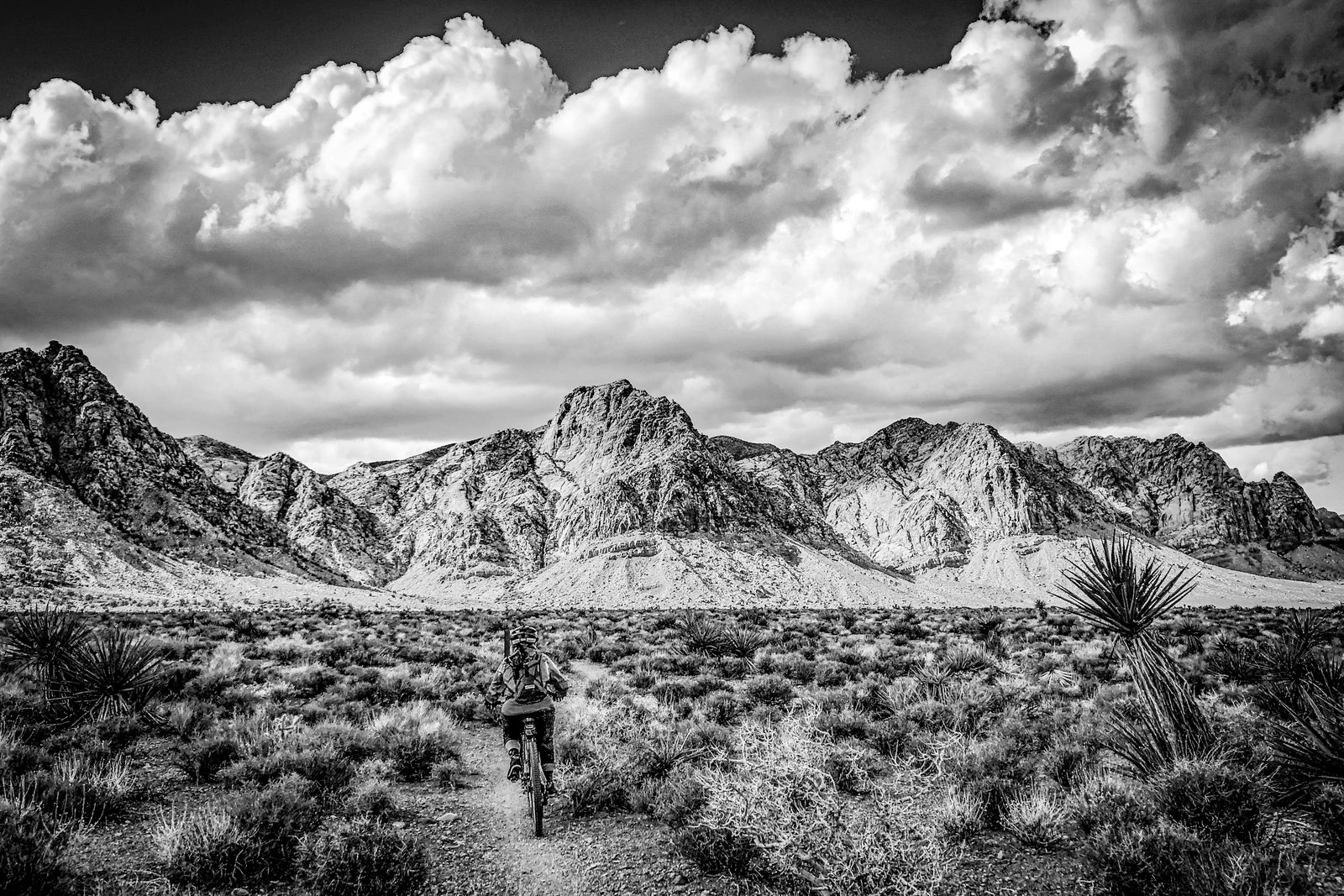
A short drive in the other direction, the Agafay Desert offers something completely different: rocky, semi-arid plateaus with almost no vegetation, wide sightlines, and enough varied terrain — flats, rollers, the odd rocky drop — to suit riders who want speed and space rather than technical climbing. Because Agafay sits barely 40 minutes from Marrakech, it’s become a popular half-day add-on for travelers who don’t have time for a full Atlas expedition but still want to feel dust under their tires and mountains on the horizon. Together, the two settings mean a mountain biking trip here can flex between demanding mountain singletrack and easygoing desert cruising, often within the same visit.
What to Expect
- 01
Warming Up in the Ourika Valley
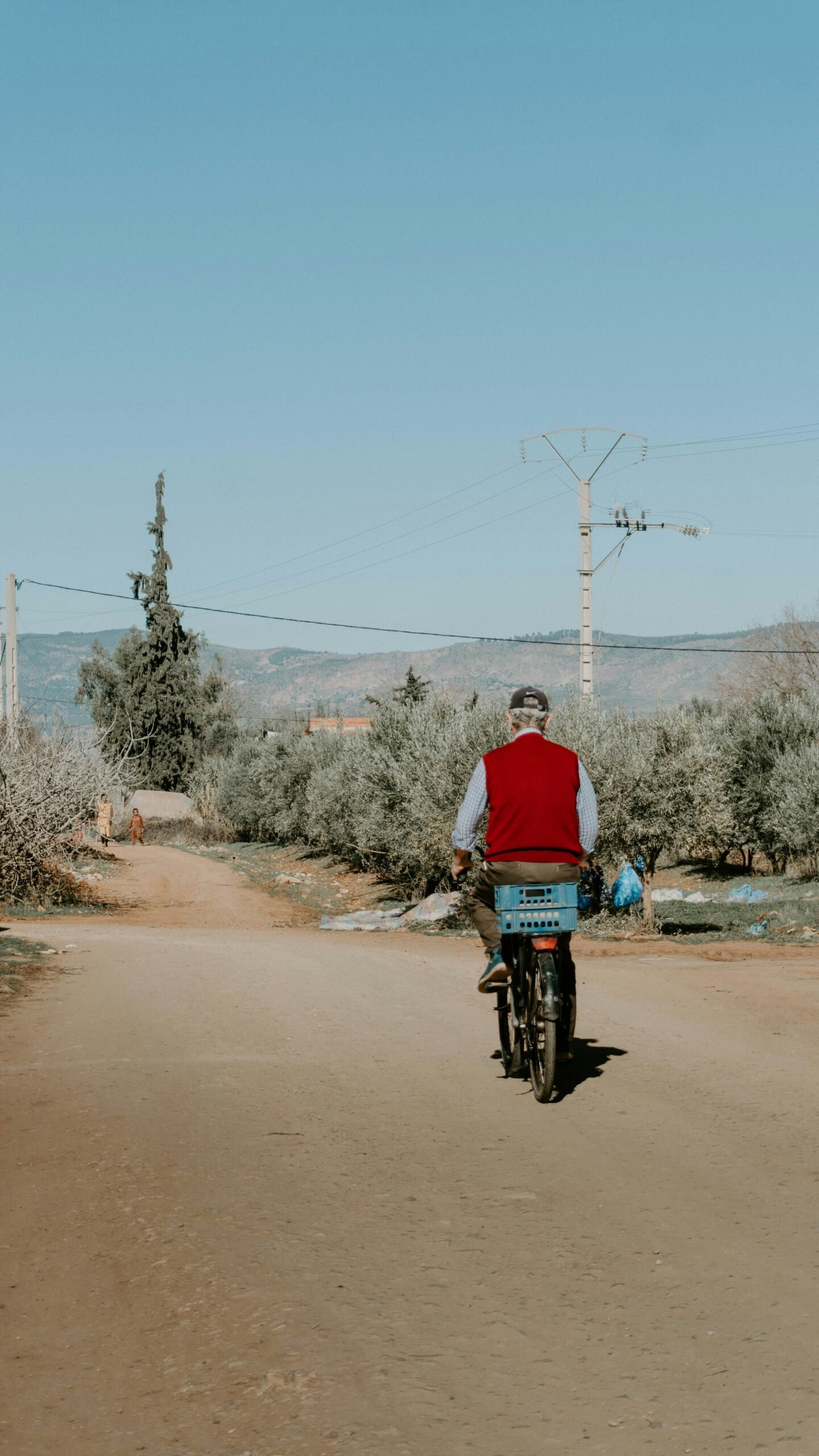
Most Atlas rides ease you in along the valley floor — packed dirt roads, low river crossings, and orchards of walnut and cherry trees. It’s a gentle way to find your rhythm and get used to the altitude before the trail tilts upward toward the villages higher on the slopes.
- 02
Singletrack Through Berber Villages
The real character of Atlas riding shows up on the technical stretches above Imlil, where narrow paths thread between stone houses, irrigation channels, and terraced fields. Expect loose rock, tight switchbacks, and the occasional mule train coming the other way — plus an invitation for mint tea if you slow down long enough to say hello.
- 03
Wide-Open Miles on the Agafay Mesas
Swap the mountain switchbacks for something flatter and faster: Agafay’s hard-packed plateaus and rocky mesas let riders open up and cover ground quickly, with the jagged silhouette of the High Atlas sitting on the horizon for almost the entire ride — especially dramatic in the golden light near sunset.
Practical Tips
Imlil is roughly 1.5 hours from Marrakech, the Ourika Valley about 45 minutes, and Agafay closer to 30–40 minutes — all easily reached by car or with a local guide/operator who provides transport. Guided rides are strongly recommended in the Atlas, since trail-finding through village paths and irrigation channels isn’t intuitive for first-timers.
Padded shorts, gloves, a helmet (usually provided by operators, but bring your own if you’re particular), sunglasses, high-SPF sunscreen, and a hydration pack. Layers matter in the mountains, where mornings can be cold even when afternoons turn warm.
Spring (March–May) and fall (September–November) offer the most comfortable temperatures in both the mountains and the desert. Summer heat can be brutal at Agafay’s lower elevation, while winter can bring snow and cold to the higher Atlas trails.
Expect roughly $40–60 for a half-day ride (bike, helmet, and guide included) and $70–90 for a full day, sometimes including lunch or transport from Marrakech. Multi-day Atlas biking trips with overnight stays cost more and are worth booking through an established operator.
Final Thoughts
Mountain biking in Morocco rewards travelers who want their adventure with a side of contrast — one day grinding up a rocky mule track between mud-brick villages, the next flying across a desert mesa with the same mountains now reduced to a distant blue line. Whether you’re an experienced rider chasing technical singletrack or a curious first-timer looking for a scenic half-day out of Marrakech, the terrain here has room for both, and the landscapes make sure you won’t forget the ride.
Keep Exploring Morocco
Ready to plan the rest of your trip? Browse more outdoor activities and adventures, or explore other destinations across the country.