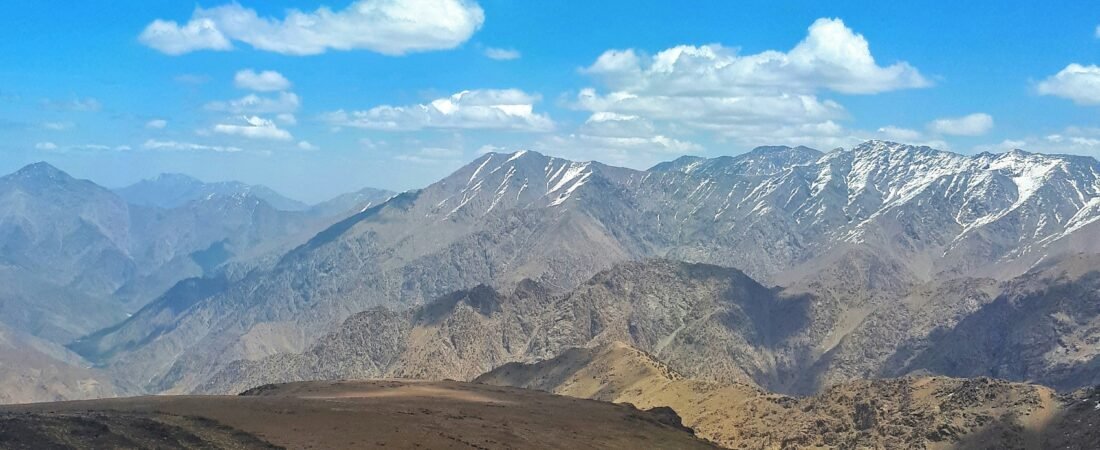
Following mule trains and stone paths from Imlil to the summit of North Africa’s highest peak.
You set off from the Berber village of Imlil, following mule trains and stone-walled paths up into the High Atlas toward Mount Toubkal, North Africa’s highest peak at roughly 4,167 meters. The trail climbs steadily through walnut groves and terraced fields before the landscape turns to bare scree and granite, and within a couple of hours the noise of the valley has completely disappeared behind you. By the time you reach the high refuge, Marrakech feels like a different country entirely.
“You follow the mule trains up from Imlil, and somewhere past the last trees, North Africa’s highest peak stops being an idea and starts being a mountain you have to climb.”
Most trekkers arrive in Imlil by grand taxi or private transfer from Marrakech, a drive of about an hour and a half that ends where the road does. From there it’s on foot, or on the back of a mule if you’d rather save your legs for the summit day. For more on where this trek fits into a wider Morocco itinerary, see our destinations guide and our roundup of activities and adventures across the country.
Why Trekking Mount Toubkal is Worth It
At 4,167 meters, Jebel Toubkal is the highest point in North Africa and the centerpiece of Toubkal National Park, a protected reserve of granite peaks, glacial valleys, and Berber villages that has drawn mountaineers since the early 20th century. What makes it remarkable is its accessibility: unlike most peaks of comparable height, Toubkal requires no technical climbing skill to reach the summit in summer conditions. It’s a demanding uphill walk over loose rock and scree rather than a mountaineering route, which is why it draws everyone from seasoned hikers to determined first-timers willing to put in two long days of effort.
That accessibility changes completely once snow arrives. From roughly November through May, the upper mountain holds snow and ice, and the standard route becomes a genuine winter mountaineering objective requiring crampons, an ice axe, and the judgment to use them. Guides in Imlil switch gear and approach accordingly, and solo winter attempts without proper equipment and experience are a leading cause of accidents on the mountain. Whichever season you choose, the reward is the same: a 360-degree view from the roof of North Africa, with the High Atlas folding away toward the Sahara on one side and the Toubkal massif’s jagged neighbors on the other.
What to Expect
- 01
Imlil, Mules, and the First Climb
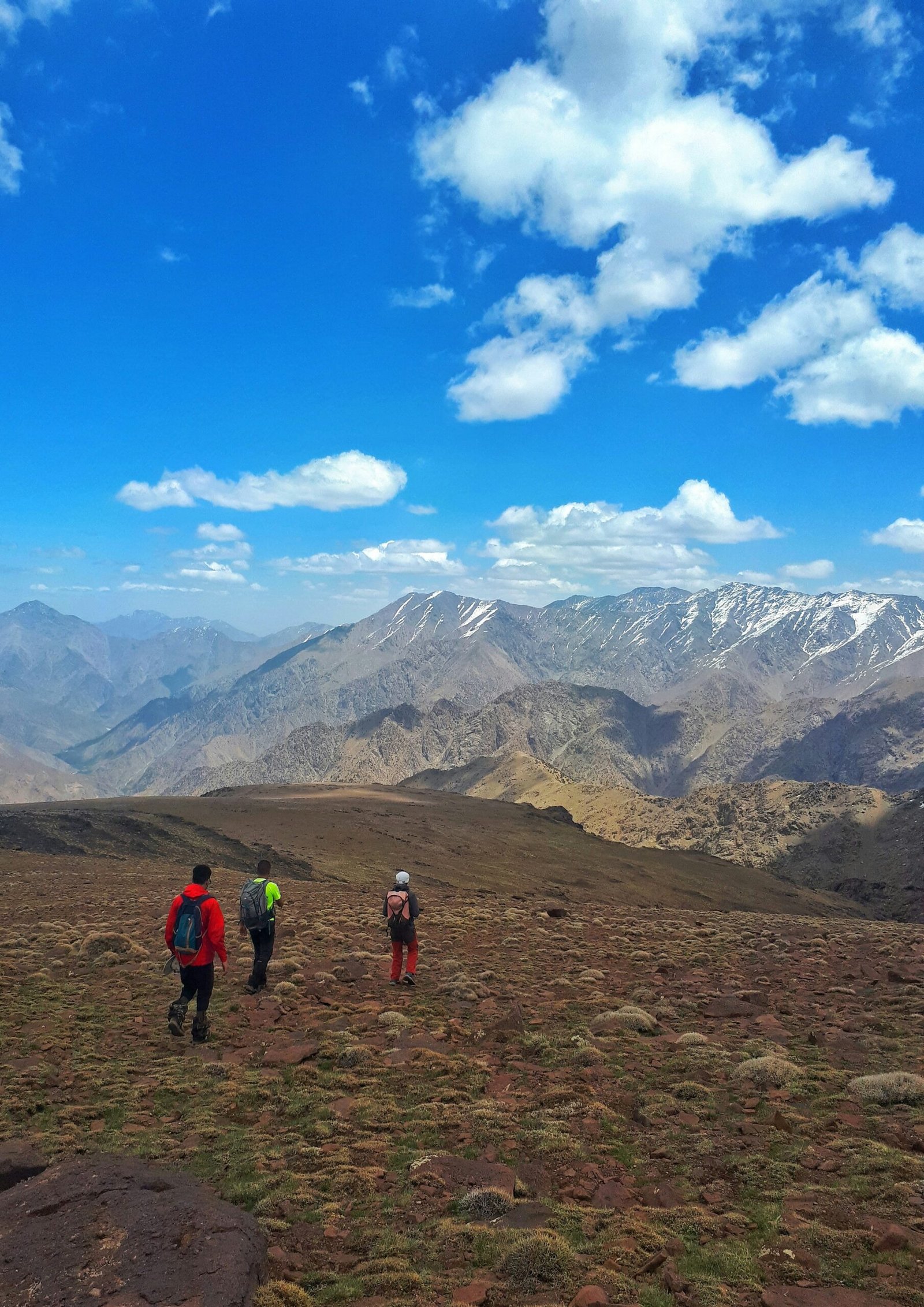
The trek begins in Imlil, where guides and mule handlers load gear onto the animals that will carry supplies up the mountain. The first stretch winds through terraced orchards and small hamlets before the trail steepens into open, rocky terrain — a gradual introduction to the altitude that lies ahead.
- 02
Overnight at the Toubkal Refuge
Most itineraries spend the first night at the Toubkal Refuge (Refuge du Toubkal), a mountain hut around 3,200 meters that serves as base camp for the summit push. Dinner and an early night here are essential — the thinner air and a 4 a.m. wake-up call make sleep precious.
- 03
The Pre-Dawn Summit Push
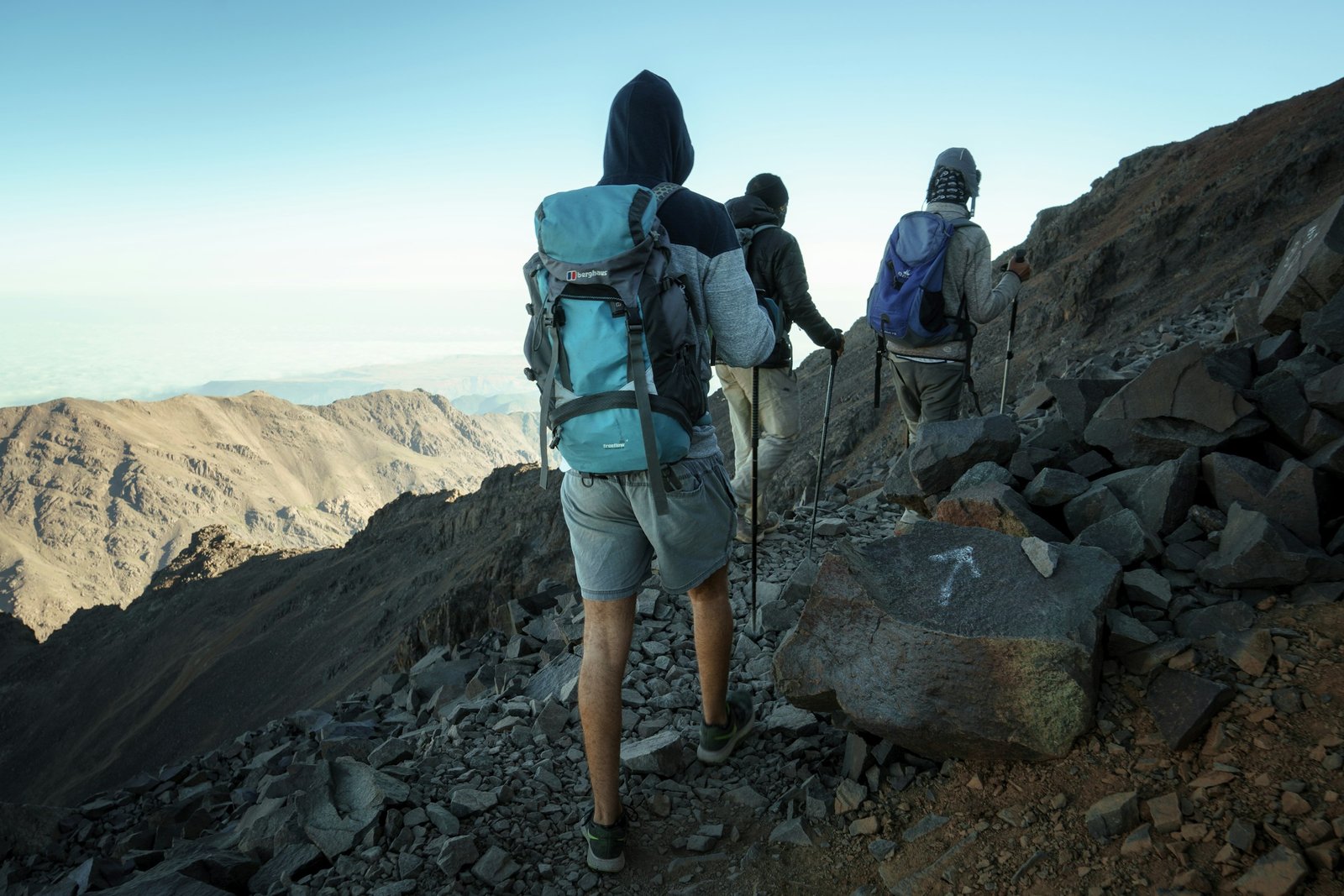
Groups leave the refuge well before sunrise to reach the summit in time for the views and to descend before afternoon weather rolls in. The final approach is a long, steady grind over scree and switchbacks, rewarded by a sunrise that spills gold across the High Atlas from the highest point in North Africa.
Practical Tips
Fly into Marrakech, then travel by grand taxi or arranged transfer to Imlil (about 1.5 hours). Most trekkers book a guide and mules through an operator in Imlil or Marrakech in advance, especially in peak season.
Sturdy hiking boots, layered clothing, a warm jacket for the summit push, sunscreen, a headlamp, and a refillable water bottle. In winter, crampons and an ice axe are essential and should be arranged with your guide.
Late spring through autumn (May–October) offers the most straightforward, snow-free trekking. Winter ascents are possible but require mountaineering experience and proper equipment due to snow and ice.
Guided treks typically run $150–450 for two to four days, depending on group size, refuge vs. camping, and whether mules are included for gear.
Final Thoughts
Trekking Mount Toubkal isn’t about technical difficulty — it’s about the steady, humbling climb from a quiet Berber village to the highest point in North Africa, one mule-track step at a time. Whether you’re chasing the sunrise from the summit or simply the stillness of the high refuge the night before, it’s one of the most rewarding two-to-four-day journeys Morocco has to offer.
Keep Exploring Morocco
Planning more of your trip? Browse our full destinations guide or discover more activities and adventures across the country.