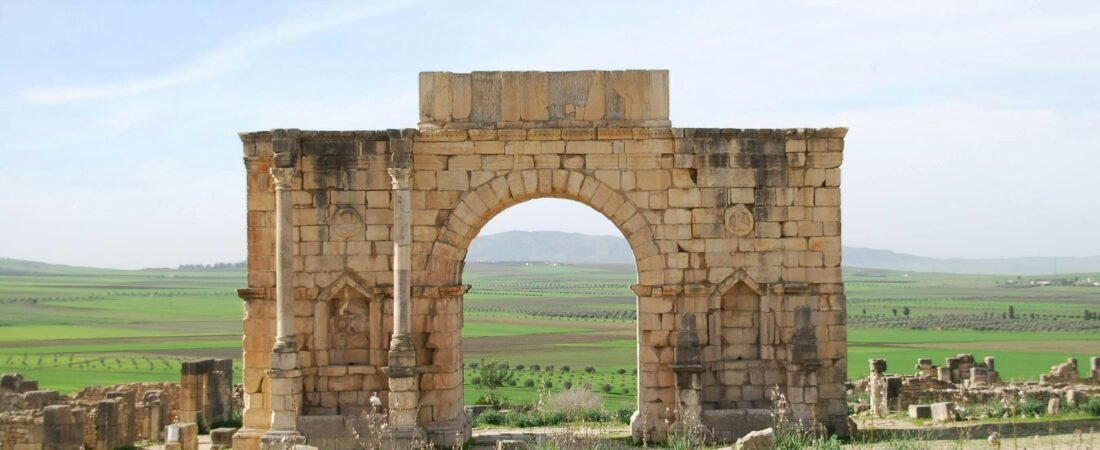
A UNESCO-listed Roman city at the foot of Mount Zerhun, where mosaic floors and a triumphal arch still stand in Morocco’s fertile Saïss plain.
Columns rise out of a green plain that still smells of olive trees, and beneath your feet, mosaic floors that have survived two thousand years of weather keep their color and their stories. Volubilis is Morocco’s largest and best-preserved Roman archaeological site, spread across a low hill near the foot of Mount Zerhun, roughly 20 kilometers from Meknes. It is a place where the line between empire and edge of empire blurs — a Roman city that thrived at the western edge of the known world, then was slowly abandoned to the wind and the wheat fields.
“Here, at the far edge of Rome’s map, the mosaics still remember the names of gods no one prays to anymore.”
What Makes Volubilis Special
Volubilis began as a settlement of Carthaginian traders in the 3rd century BC, before falling under the growing influence of Rome. Around 25 BCE, it became a key city of the Kingdom of Mauretania under Juba II, a Berber prince who had been raised and educated in Rome and installed by Emperor Augustus. When Rome later annexed the kingdom outright in 40 AD, Volubilis grew into an administrative and agricultural hub on the empire’s southwestern frontier, prized for its olive oil and grain.
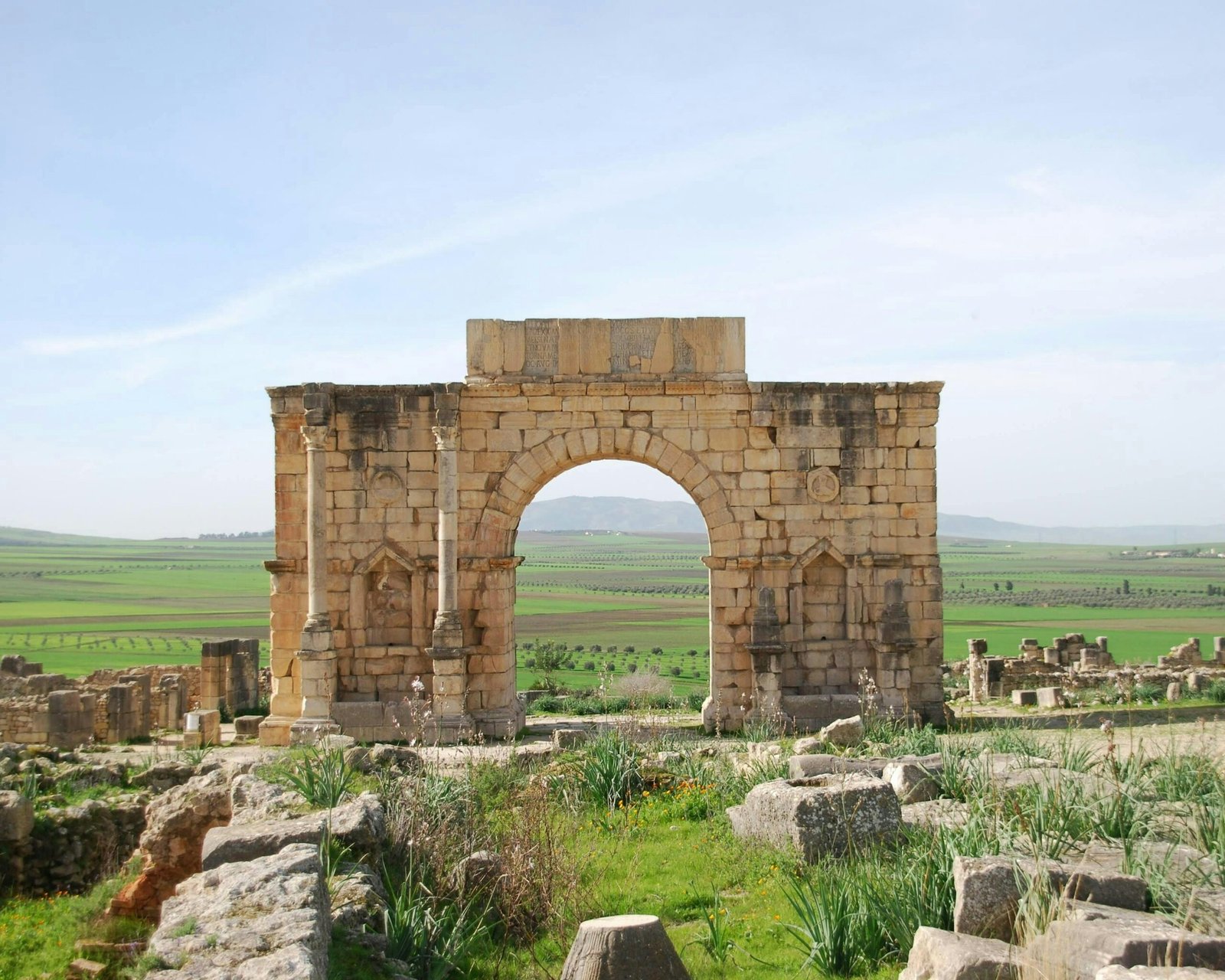
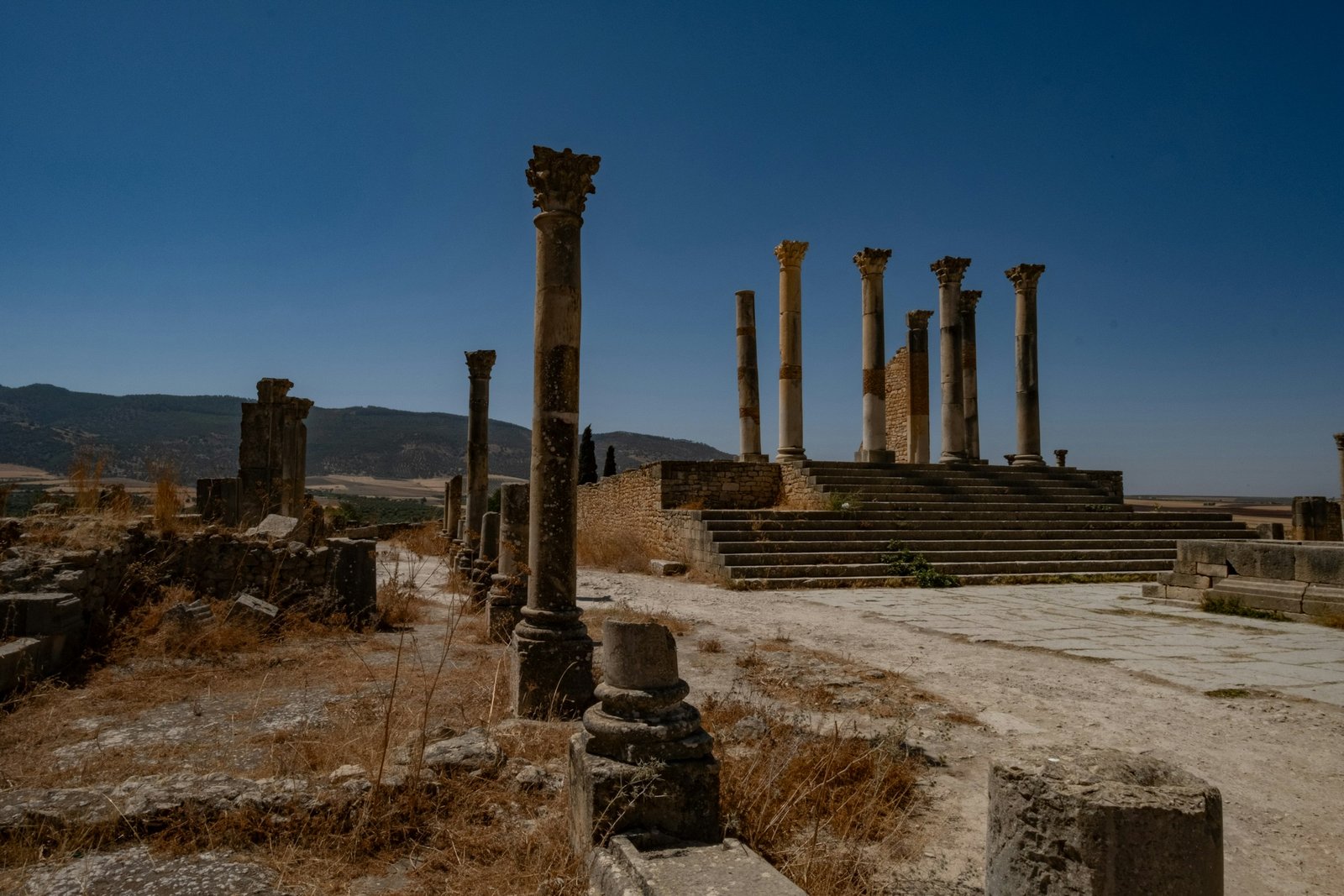
At its height in the 2nd and 3rd centuries AD, the city held as many as 20,000 residents behind more than two kilometers of defensive walls. Its most significant monuments date from this period, including a capitol, a basilica, public baths, and the Triumphal Arch — a marble monument raised in 217 AD to honor the emperor Caracalla and his mother, Julia Domna, originally topped with a bronze chariot pulled by four horses. Wealthy residents built townhouses decorated with elaborate mosaic floors depicting mythological scenes, many of which remain in place today, exposed to the open sky.
Rome’s formal control faded by the late 3rd century, but Volubilis endured. Local Berber and later Christian and Muslim communities continued to inhabit the site for centuries afterward, and it briefly served as a base for Idris I, founder of Morocco’s first Islamic dynasty, before the capital shifted elsewhere. In 1997, UNESCO inscribed Volubilis as a World Heritage Site, recognizing it as an exceptionally well-preserved example of a Roman colonial town on the empire’s furthest frontier.
Top Things to Do in Volubilis
- 01
See the Triumphal Arch
The city’s most photographed monument, raised in 217 AD for Emperor Caracalla, still frames the view down the site’s main street, the decumanus maximus.
- 02
Walk the Mosaic Floors of the Townhouses
Several elite residences, including the House of Orpheus and the House of the Athlete, preserve intricate mosaic floors depicting mythological scenes, still in situ after nearly two millennia.
- 03
Explore the Capitol and Basilica
These civic buildings from the 2nd and 3rd centuries formed the administrative heart of the Roman city and remain among its most substantial standing structures.
- 04
Hire a Licensed Guide
Guides at the site entrance can point out mosaic details, building functions, and inscriptions that are easy to miss walking through independently.
- 05
Combine with Moulay Idriss Zerhoun
The hillside town of Moulay Idriss, one of Morocco’s holiest sites, sits just a few kilometers away and is easily visited on the same day as Volubilis.
Practical Tips
Volubilis is about 20 km from Meknes and roughly 60 km from Fez. Grand taxis, organized day tours, and private drivers all run from both cities.
Morning visits avoid both the midday heat and the largest tour groups; spring and autumn bring the most comfortable temperatures for walking the open site.
There is very little shade across the ruins, so sun protection, water, and comfortable walking shoes for uneven stone paths are essential.
An entrance fee applies, and official guides are available on-site for an additional cost; booking a guide is worthwhile for understanding the layout and mosaics.
Most visitors base themselves in Meknes or Fez and visit Volubilis as a half-day trip rather than staying overnight near the site.
Final Thoughts
Volubilis is a rare place where you can trace the arc of an empire from a single hillside — a Carthaginian trading post, a Roman provincial capital, and a Berber and early Islamic settlement, all layered into the same ground.
For a country better known for its medinas and deserts, Volubilis is a reminder that Morocco has always sat at a crossroads, and that some of its oldest stories are written in stone and mosaic rather than in the souks.
Keep Exploring Morocco
Planning a longer trip through the imperial cities? Browse our full destinations guide for more of Morocco’s history, mountains, and coastlines.